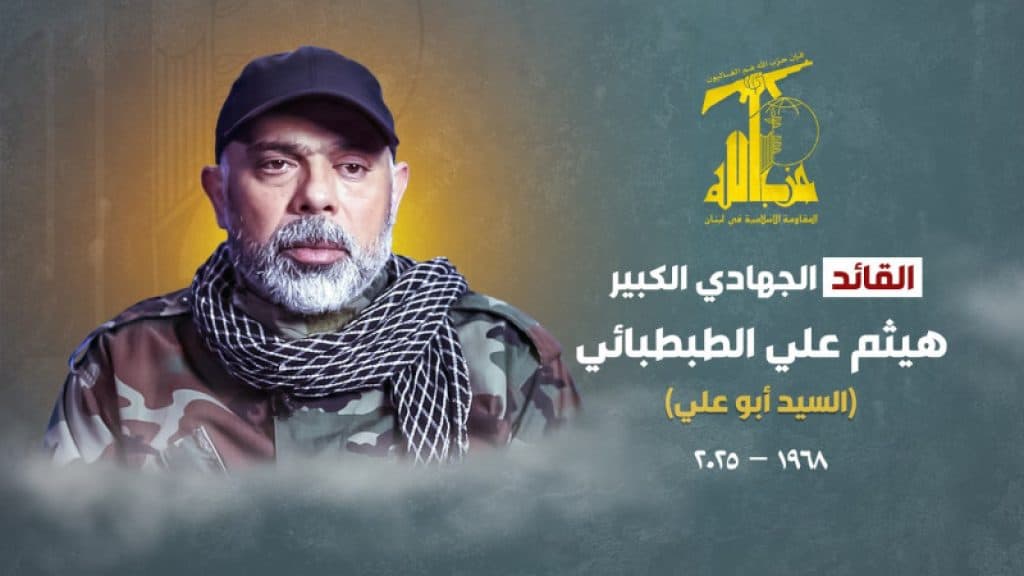
The Israel Defense Forces (IDF) killed Hezbollah Chief of Staff Haytham Ali Tabatabai and four additional operatives in a strike on an apartment in Beirut’s Dahieh suburb on November 23. Tabatabai was among the last legacy senior Hezbollah commanders to survive the recent war with Israel, a conflict that decimated much of the group’s upper echelon.
Hours after the strike, Hezbollah acknowledged the killing of Tabatabai. It also identified Qasem Barjawi, Mustafa Barou, Rifaat Hussein, and Ibrahim Hussein as the four other members of the group who were killed in the attack.
Israeli Prime Minister Benjamin Netanyahu lauded the IDF’s successful strike and declared that Tabatabai was a “mass murderer whose hands are soaked in the blood of many Israelis and Americans.” Netanyahu vowed that Israel would not allow Hezbollah to “rebuild its power” and “pose a threat to the State of Israel.”
Tabatabai was previously rumored to have been killed in an IDF airstrike in southern Lebanon in September 2025. However, the report was never confirmed.
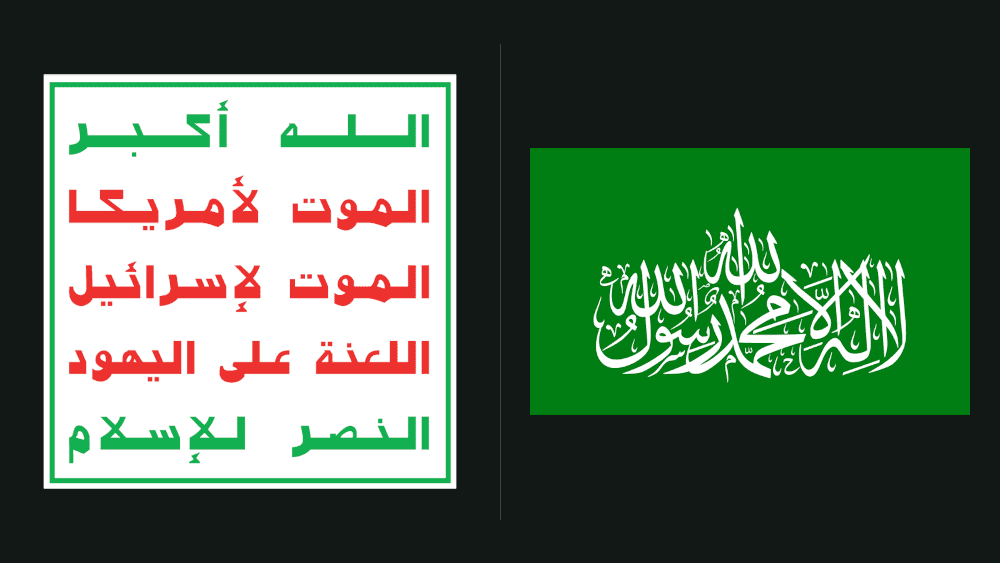
Hamas, Palestinian Islamic Jihad, and other Hezbollah allies published statements of support for Tabatabai and Hezbollah following Tabatabai’s killing.
“The Al Qassam Brigades [Hamas] commend the role of the martyred commander ‘Sayyid Abu Ali’ in supporting the Palestinian people and their resistance during the Battle of Al-Aqsa Flood,” Hamas said.
“Our pledge in Saraya al-Quds [Palestinian Islamic Jihad] and the Palestinian resistance is to continue the path […] and to persist in our jihad and defense of Palestine and its holy sites until the entire land is liberated from the filth of the usurping Zionists,” Palestinian Islamic Jihad stated.
Secretary of the Supreme National Security Council of Iran Ali Larijani offered his “deepest condolences” and accused Netanyahu of carrying out a “reckless adventure,” framing the killing of Tabatabai and his comrades as a dangerous escalation.
Hezbollah held funerals in Beirut for Tabatabai and other Hezbollah members killed in the strike on Monday.
A senior Hezbollah special forces commander
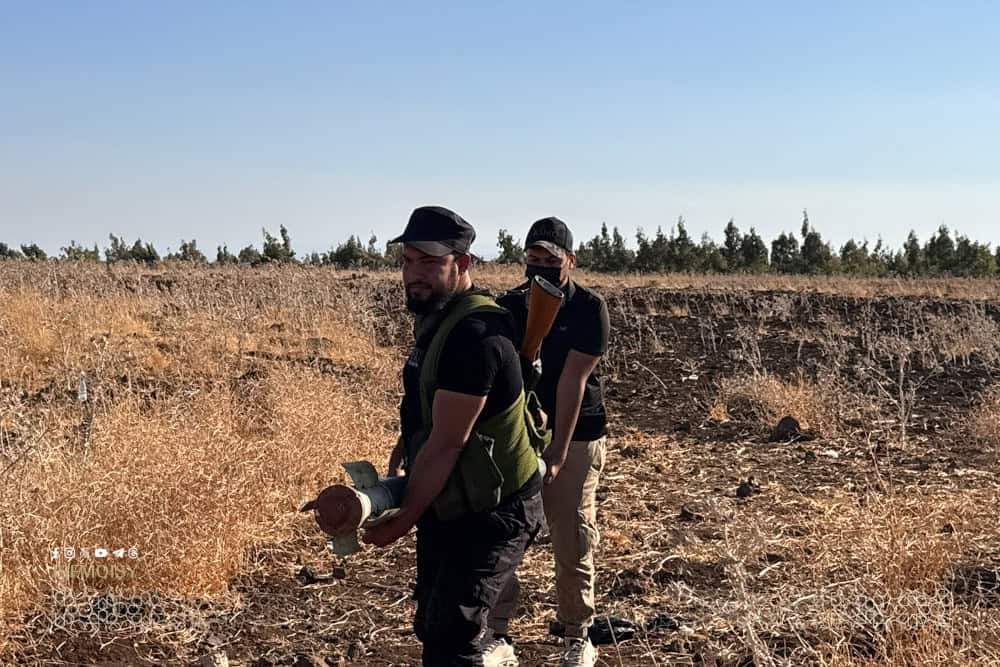
Tabatabai has an extensive history serving in Unit 3800, Hezbollah’s special operations branch that supports Iran’s goal of establishing and building up Shiite militias in the Middle East, particularly in Syria, Yemen, and Iraq. Unit 3800 is somewhat analogous to Iran’s Islamic Revolutionary Guards Corps-Qods Force (IRGC-QF), which serves as Iran’s external special operations branch and provides support for Shiite militias throughout the Middle East. Iran supported and assisted Hezbollah in establishing Unit 3800.
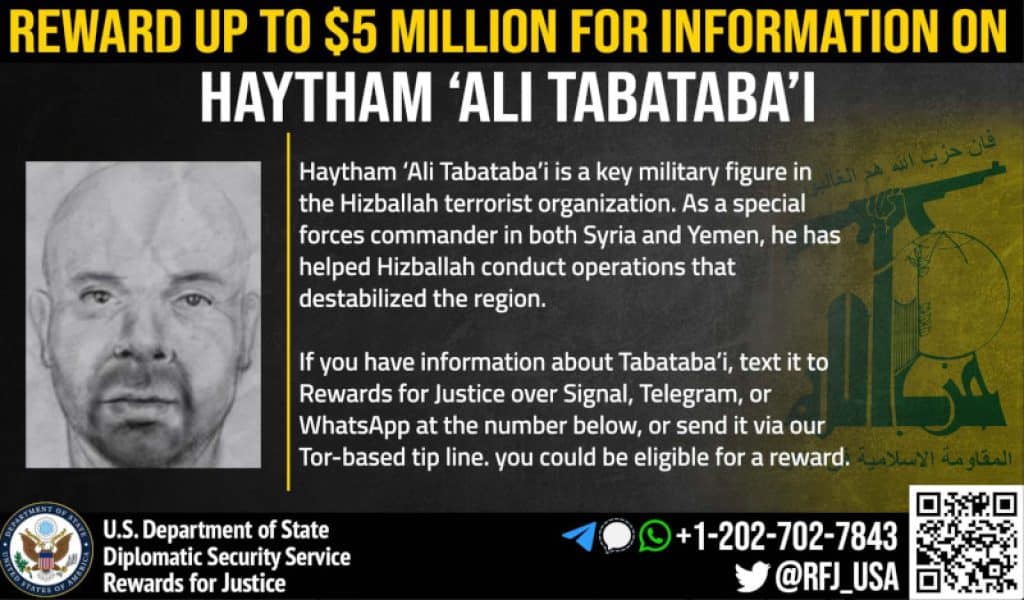
The US State Department listed Tabatabai as a Specially Designated Global Terrorist in October 2016, and its “Rewards for Justice” program issued a $5 million bounty for information that would lead to his arrest and prosecution. In its designation, State noted that Tabatabai “has commanded Hezbollah’s special forces, has operated in Syria, and has been reported to be in Yemen.”
“Tabatabai’s actions in Syria and Yemen are part of a larger Hizballah effort to provide training, materiel, and personnel in support of its destabilizing regional activities,” State’s designation of Tabatabai continued.
Tabatabai is also reported to have served as the commander of Hezbollah’s Radwan Force, another special operations unit that is tasked with infiltrating northern Israel to conduct attacks. The Radwan Force, which is named after slain Lebanese Hezbollah commander Imad Mughniyeh (aka Hajj Radwan), also fought against Al Qaeda and other jihadist groups during the Syrian Civil War.