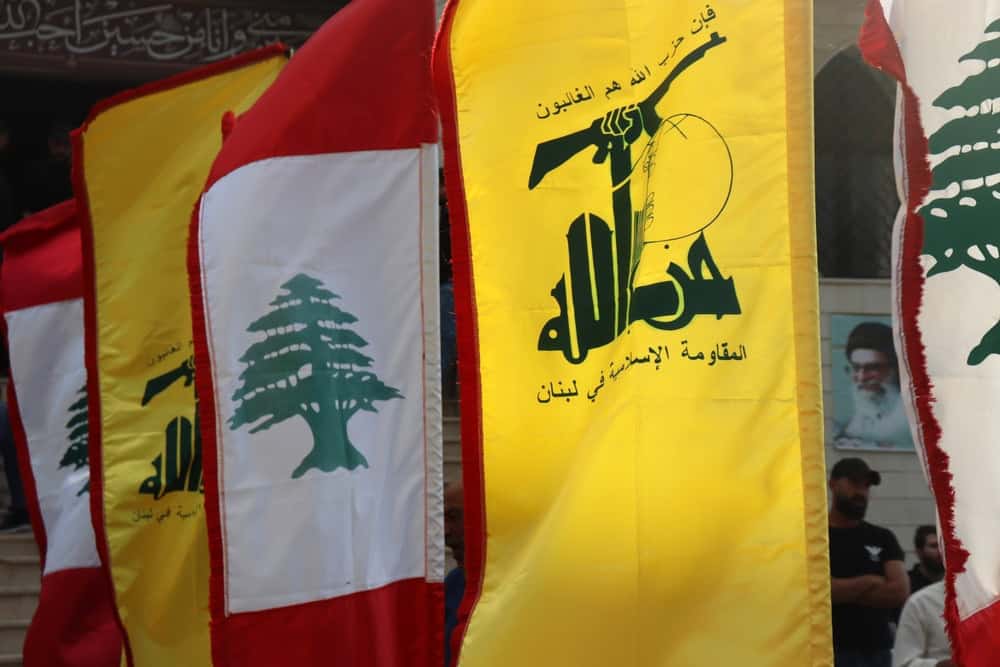
Hezbollah is reportedly reestablishing its presence and rebuilding intelligence networks in three southern Lebanese villages designated to test the group’s disarmament, despite the Lebanese Armed Forces (LAF) declaring operational control over those areas in September. The reports come amid stalled negotiations over independent verification of the LAF’s operations and new reporting that the US-led military coordination mechanism considers the pilot program unsuccessful.
On November 9, George Hayek of the Beirut-based newspaper Al Modon reported that the Military Coordination Group for Lebanon (MCG4L), headed by US Marine Corps Lieutenant General Joseph Clearfield, had assessed the pilot program as unsuccessful in Zawtar al Gharbiyeh, Froun, and Srifa. Hezbollah, the report said, was exploiting the return of displaced residents to restore its presence, while disputes over searches of private property and implementation delays impeded the LAF’s work.
Citing diplomatic sources familiar with Washington’s position, Al Modon also reported that US officials viewed a lack of political will, rather than inadequate LAF capabilities or international assistance, as the main obstacle to implementation. Military negotiations held at US Central Command (CENTCOM) headquarters in Tampa, Florida, from October 20 to 22 had failed to produce an agreement on independent verification, the newspaper said.
The three pilot villages were selected as initial implementation areas under the June 26 US-brokered Trilateral Framework between Lebanon, Israel, and the United States. The agreement’s security annex establishes a four-stage process: clearing unauthorized armed personnel, weapons, and military infrastructure; verifying clearance through an agreed third party; establishing exclusive LAF operational control to prevent their return; and beginning Lebanese-led reconstruction. The annex also calls for ongoing verification alongside clearance operations.
Israel withdrew its forces from Zawtar al Gharbiyeh in July, allowing the LAF to deploy there. Froun and Srifa were already outside Israeli-held territory, although the LAF reinforced its existing presence in the villages.
Ongoing reports of Hezbollah’s return to the pilot zones
On November 5, the Israeli outlet Ynet reported that Hezbollah was gradually returning to the three villages more than 100 days after the pilot program began. According to military correspondent Elisha Ben Kimon, Hezbollah had resumed some of its civilian activities and reintroduced operatives as part of broader efforts to restore its intelligence-gathering capabilities. The report also described Hezbollah reconnaissance of Israeli military positions along the northern border.
Ben Kimon reported that Israel considered the LAF’s searches insufficient, particularly its reluctance to enter and inspect private property. Negotiations over independent verification remained stalled.
A November 6 investigation by the Arabic-language outlet Erem News provided additional details. Citing Lebanese security sources, the outlet reported that local Hezbollah operatives were moving covertly in Zawtar al Gharbiyeh, Froun, and Srifa to collect intelligence, survey former military positions, assess damage to the group’s infrastructure, and examine opportunities for redeployment.
The sources described efforts to preserve local communications networks, former supply routes, and access to underground facilities. They said Hezbollah was avoiding an overt armed presence and relying on operatives familiar with the villages and their residents. Surveillance and military restrictions reportedly complicated moving heavy weapons into the areas.
The reported return predates the November accounts. On October 7, Israel’s public broadcaster Kan reported that Hezbollah operatives had resumed limited activities in all three pilot zones, operating under civilian cover and through local intermediaries to collect intelligence, assess damage, and reestablish the group’s presence.
Kan’s Arab affairs correspondent, Roee Kais, also quoted an unnamed Lebanese political figure opposed to Hezbollah who criticized Beirut’s inability to prevent the group’s return and argued that disarmament was as important as securing Israel’s withdrawal.
Hezbollah’s civilian organizations resume operations
Hezbollah-affiliated civilian organizations have also returned to the pilot villages.
On August 20, This Is Beirut published an investigation by Claudia Groeling and Ralph Atrach documenting the return of Hezbollah’s Islamic Health Organization, its healthcare and emergency-services arm, to Zawtar al Gharbiyeh.
During a July 23 visit, the reporters observed an Islamic Health Organization ambulance entering the village under LAF escort, while ambulances belonging to the Lebanese Red Cross and the Risala Scouts of Amal, a Hezbollah-allied Lebanese Shiite political party, were denied entry. A security source told the outlet that only Hezbollah-affiliated emergency vehicles had been permitted to enter.
A local source also reported that Hezbollah’s rabet, its local liaison officer responsible for military affairs, had returned and was moving openly around the village. The source said Hezbollah personnel were using affiliations with the Islamic Health Organization and the Hezbollah-linked Wa Taawano relief association to facilitate their return.
Ynet’s November 5 report also cited October footage showing Islamic Health Organization personnel operating alongside LAF soldiers and Amal’s Risala Scouts in Froun during the recovery of a body following an explosion involving remnants of war.
Representatives of Hezbollah’s broader civilian network have openly rejected restrictions associated with the pilot program. In an October 19 investigation, the independent Egyptian outlet Mada Masr interviewed Wa Taawano director Afif Shuman, who asserted his organization’s right to operate anywhere in southern Lebanon and rejected coordination with the ceasefire-monitoring mechanism. Hajj Ali Khazaal, Hezbollah’s municipal affairs official for southern Lebanon, separately rejected the framework itself.
The LAF claims operational control as verification remains unresolved
On September 9, the LAF announced that it had achieved operational control over the three pilot zones. The army reported establishing six checkpoints and 13 observation posts, conducting continuous patrols, and confiscating approximately 1,818 weapons and pieces of ammunition.
However, 1,560 items—approximately 86 percent of the total—were classified as unspecified light ammunition. The army did not identify how many seized items belonged to Hezbollah, any Hezbollah operatives disarmed or arrested, or any Hezbollah command centers, tunnels, or weapons depots dismantled in the villages.
The LAF said it had searched an unspecified number of residences with their owners’ consent. It acknowledged that the program’s phases and subsequent implementation measures had not been fully agreed upon.
Arrangements for independent verification remain unresolved. The October negotiations at CENTCOM’s Tampa headquarters failed to settle the identity and authority of a mutually acceptable third-party verifier. According to Al Modon’s November 9 report, Washington continues seeking an arrangement allowing independent inspections and certification of areas cleared by the LAF.
Israeli military activity has also complicated implementation. On November 6, the Lebanese publication L’Orient Today reported that Israeli military vehicles had advanced toward Zawtar al Gharbiyeh’s water reservoir the previous evening, prompting Lebanese soldiers to take positions opposite them. The confrontation ended when the Israeli vehicles withdrew toward Israeli-held Zawtar al Sharqiyeh around midnight.
The LAF’s posture toward Hezbollah
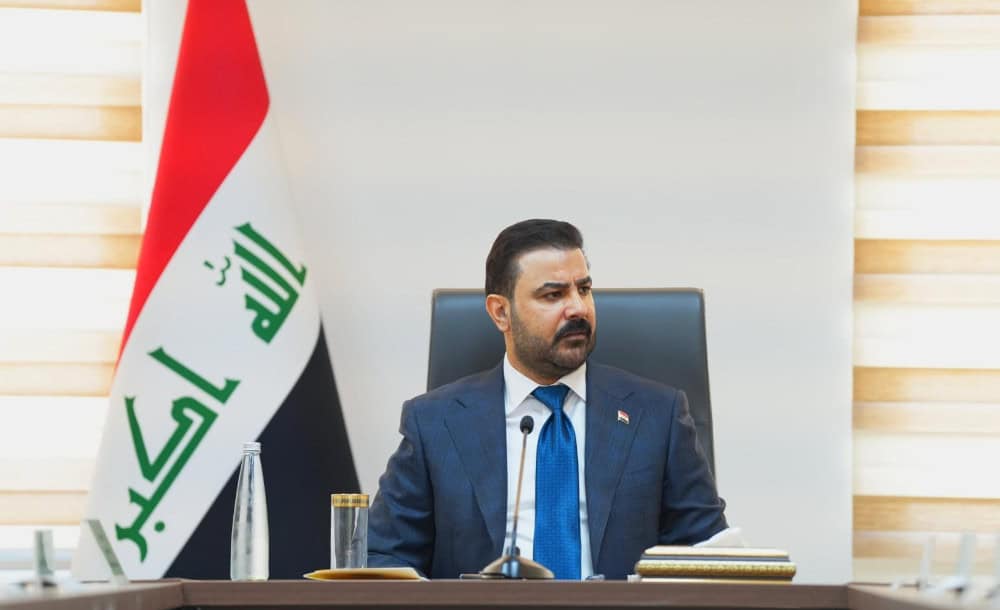
On November 6, LAF Commander General Rodolphe Haykal reiterated the army’s priorities during a meeting with senior officers at LAF headquarters in Yarzeh, southeast of Beirut. Haykal identified the preservation of “internal unity, stability, and civil peace” as the army’s foremost priority, while reaffirming its commitment to implementing the political authorities’ decisions and extending state authority throughout Lebanese territory. He also identified the continued presence of Israeli forces in Lebanon as “the fundamental problem and the foremost threat facing our nation.”
Haykal’s latest statement echoes his repeated refusal to clash with Hezbollah after the Lebanese government banned Hezbollah’s military activities on March 2 and ordered the LAF to disarm the group. Accordingly, the army has adopted a non-confrontational posture toward Hezbollah.
The LAF and Hezbollah maintain various forms of security coordination and deconfliction, including negotiated access to Hezbollah positions and transfers of military sites and equipment to the army since the November 2024 ceasefire. An LAF officer told This Is Beirut in August that troops encountering Hezbollah obstruction during disarmament operations would refer the matter through their chain of command for a political decision.
On September 3, Colonel Raja Amer, deputy commander of the LAF’s South Litani Sector, told CNN that soldiers would proceed gradually and avoid violence against Lebanese citizens while refusing to tolerate illegal activity. Asked whether concerns about another civil war drove the approach, he emphasized acting slowly and reasonably.
That month, Al Modon reported that the LAF’s additional deployment in Nabatieh did not include orders to initiate Hezbollah’s disarmament. The report concerned Nabatieh, rather than the pilot villages.
An anonymous senior LAF officer told the Hezbollah-sympathetic outlet The Cradle on October 12 that the army was obligated to implement decisions of Lebanon’s constitutional authorities but must consider civil peace, military cohesion, and the consequences of confronting Hezbollah.
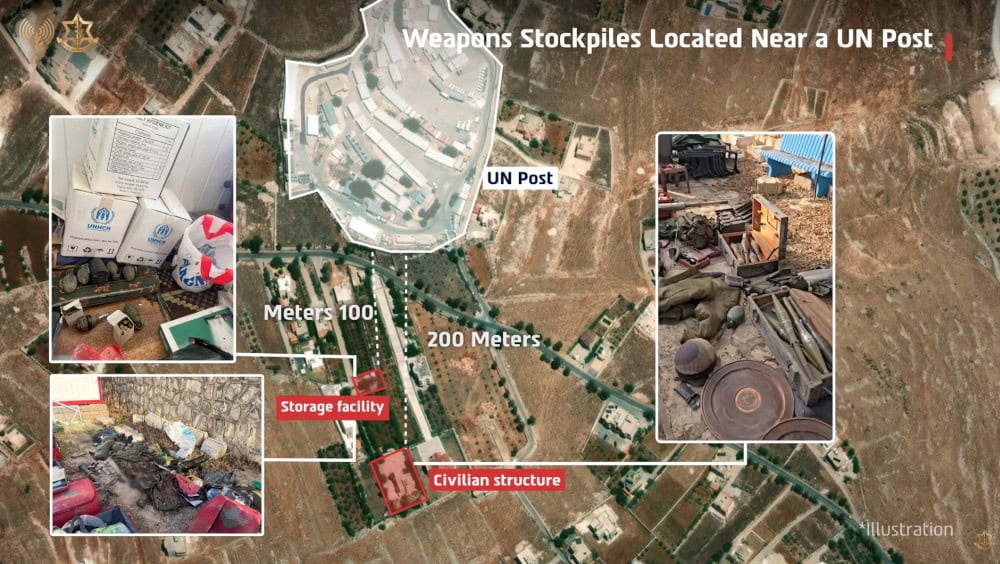
On October 20, Israeli military spokesperson Lieutenant Colonel Ella Waweya accused LAF personnel of coordinating with Hezbollah to facilitate weapons transfers, citing a military facility in Kafra, outside the pilot zones. The LAF rejected the allegations, disputed Israel’s identification of the footage, and said the ceasefire-monitoring committee documented its clearance operations.