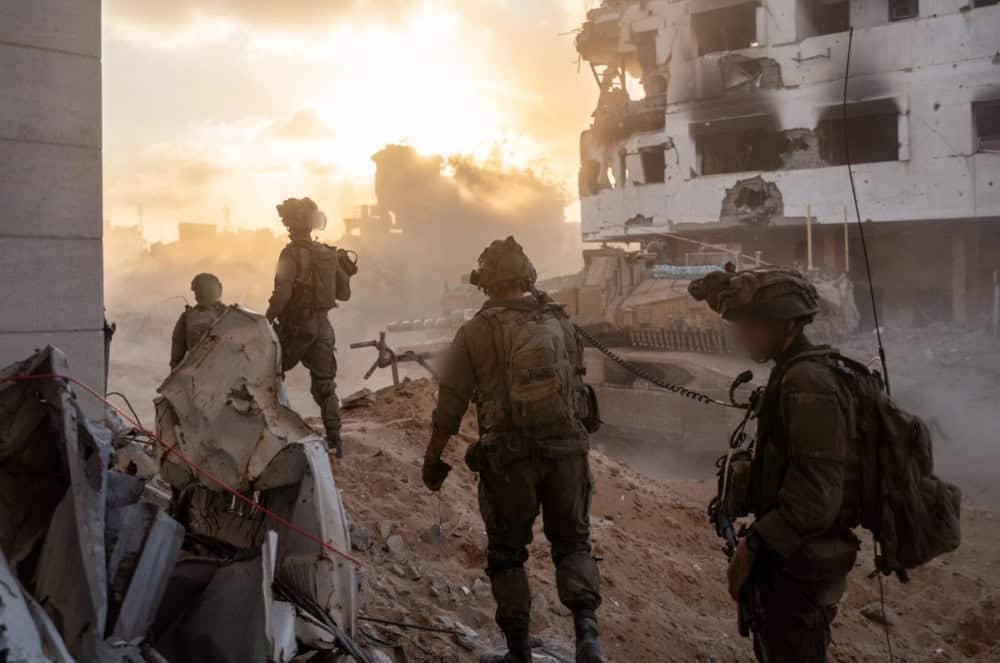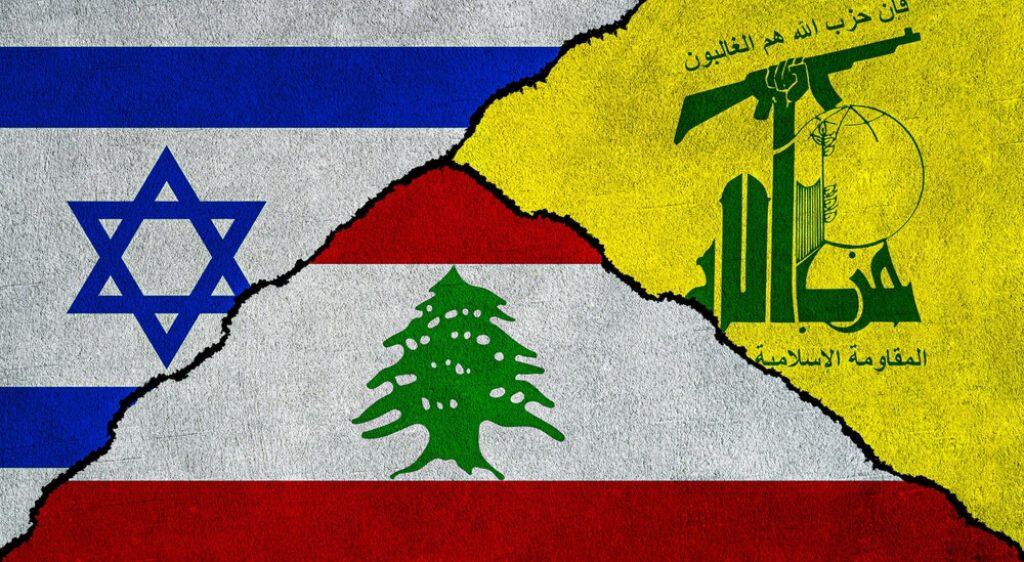
The Lebanese Armed Forces (LAF) is reinforcing its presence in the southern Lebanese city of Nabatieh after several days of intensified Israeli military operations. Lebanon’s Al Modon newspaper reported that the step followed coordination among Lebanese President Joseph Aoun, Parliament Speaker Nabih Berri, and Prime Minister Nawaf Salam, as well as discussions between Aoun and LAF Commander General Rodolphe Haykal. Official sources told the outlet that LAF would reinforce its existing positions in Nabatieh in an effort to contain Israeli escalation and avoid further attacks. They stressed, however, that “the objective is to reinforce LAF’s deployment, not to begin a [Hezbollah] disarmament process or make the city weapons-free.”
Other Lebanese outlets independently confirmed that the LAF was intensifying its activity in Nabatieh, though none independently reported that Hezbollah’s disarmament had been excluded from the mission. Al Jadeed, a privately owned Lebanese television channel based in Beirut, said the LAF was preparing to station troops at several fixed points inside the city while increasing patrols through its neighborhoods. An-Nahar likewise reported an expanded Army presence and regular patrols. In addition, Elnashra noted that the intensified patrols were intended to reassure residents worried that Israeli forces might advance toward Nabatieh after taking nearby Ali al Taher Ridge.
Later on September 8, the LAF clarified that reports describing the activity as the beginning of a new deployment were inaccurate. Army units, it said, were already present throughout Nabatieh and other southern areas outside of Israeli control before the current escalation. The LAF said it had instead “intensified its missions” in several areas “to reassure residents.” It did not describe those intensified missions as a disarmament operation.
The June 26 Trilateral Framework Between the United States of America, the State of Israel, and the Republic of Lebanon, however, directly links the LAF’s assumption of full security responsibility to Hezbollah’s disarmament. Lebanon committed to restore an exclusive state monopoly over armed force, completely and verifiably disarm non-state armed groups, dismantle their military infrastructure, and ensure groups retain no military or security role or capability anywhere in Lebanon. Israeli forces are to withdraw progressively as those Lebanese commitments are implemented and verified.
The framework created limited “pilot zones” to implement that bargain. The document’s Security Annex, which was not initially published but L’Orient-Le Jour authenticated, sets out four steps in sequence: legal measures against unauthorized armed personnel and destruction or disabling of non-state weapons and military infrastructure; third-party verification of that clearance; qualified LAF units assuming and maintaining sole operational control to prevent renewed non-state armed activity; and reconstruction. The Annex says the LAF will lead implementation, with success measured by verified disarmament and dismantlement, and separately commits the LAF to take “necessary operational measures” to disarm Hezbollah and other non-state armed groups.
American and Lebanese officials described the pilot zones accordingly when implementation began. A US official told Reuters on July 20 that the LAF would clear Hezbollah weapons and infrastructure, conduct verified clearance operations, and secure the areas against Hezbollah’s military return. A Lebanese official told Al Jazeera three days later that the zones were intended to become “completely free of weapons and any military activity or manifestations.”
One of those zones is Zawtar al Gharbiyeh, a town in Nabatieh District. The LAF announced on July 21 that its troops had begun deploying there through the Military Coordination Group for Lebanon, the mechanism established to coordinate implementation between Israel and Lebanon. Al Modon reported on September 8 that about 80 additional soldiers had arrived in Zawtar al Gharbiyeh and that the LAF force there was expected to grow to roughly 180 personnel.
Available public evidence does not show that the LAF has completed the framework’s weapons-clearance or verification stages in Zawtar al Gharbiyeh. Reuters reported on July 29 that establishing the first pilot zone there had required weeks of US-brokered negotiations between Israel and Lebanon and that the Framework still lacked an agreed timetable and verification mechanism.
During an August 20 visit, This Is Beirut reported that soldiers waved its reporters’ black Audi with tinted windows through the main LAF checkpoint without checking the occupants’ identities or inspecting the vehicle. Two vehicles immediately ahead of it, including a van, also passed without identification checks. An LAF intelligence source familiar with the operation told the outlet that the LAF regarded its primary responsibilities there as disposing of unexploded ordnance, clearing rubble, and assisting residents rather than prioritizing Hezbollah’s disarmament. A local source residing in Zawtar al Gharbiyeh told the outlet that he could identify no case in which the LAF had dismantled a Hezbollah weapons depot or military infrastructure there.
A separate This Is Beirut report quoted an LAF officer who said that troops had been ordered to establish checkpoints, control access to Zawtar al Gharbiyeh, and prevent residents from bringing weapons or military equipment into the town. The officer nevertheless said that the LAF “lacks the mandate to confront Hezbollah” because it receives its mandate from Lebanon’s political authorities. If Hezbollah obstructed a disarmament operation, he said, troops at the scene could not independently challenge the group and would instead report the matter through the chain of command for the government to determine how to respond.
A senior officer in the command responsible for the area later described the LAF’s approach more directly. Speaking to CNN from Zawtar al Gharbiyeh, LAF Colonel Raja Amer said the “final objective” was exclusive Lebanese state authority inside the pilot zone.
CNN Arabic identified Amer as the deputy commander of the LAF’s South Litani Sector, the LAF command covering the area south of the Litani River.
CNN’s Jeremy Diamond asked why the LAF was not entering homes and confiscating weapons. Amer said doing so required a full LAF deployment, “full recovery of the south,” and an Israeli ceasefire. The colonel then cautioned against “doing things in violence against our own people.” Asked whether Lebanon’s history of civil war explained the LAF’s reluctance to act aggressively against Hezbollah, Amer said, “We will do this slowly” and “in a reasonable way.” Asked whether preventing another civil war was a central Army responsibility, Amer answered, “For sure,” adding, “That is something from the pillar of the thinking of the army. Who will fight the children of this country?” He nevertheless said that the LAF would not accept illegal activity.
That position predates the pilot-zone experiment. On March 2, the Lebanese Cabinet prohibited all Hezbollah military and security activity, ordered the group to surrender its weapons, directed security agencies to take immediate measures against violations and arrest offenders, and instructed the LAF to begin “immediately and firmly” implementing its plan to establish state control over weapons north of the Litani River, “using all means” necessary to ensure implementation.
Five days later, Lebanese Army Commander-in-Chief General Rodolph Haykal publicly defined the considerations that would govern the LAF’s response. He said that Israeli attacks were obstructing implementation but also noted that LAF decisions would be calibrated to safeguarding Lebanon, national unity, internal stability, and the military institution itself. The solution was “not solely a military one,” Haykal said, and required parallel political and official action. He identified ending Israeli attacks and strengthening the LAF as the two fundamental pillars of a solution.
Haykal subsequently continued to elevate avoiding internal conflict among the LAF’s priorities. On April 21, he called civil peace “the strongest weapon” for protecting Lebanon. In his May 22 order to troops, he again described civil peace and national unity as among the country’s principal safeguards. No coercive nationwide campaign to seize Hezbollah’s arsenal followed the March 2 decision by the Lebanese Cabinet to prohibit the group’s military and security activity.
Lebanon’s political leadership has adopted the same approach. Even while announcing the Lebanese Cabinet’s March 2 decision, Prime Minister Salam said, “We do not seek a confrontation with Hezbollah.” Six days later, he reiterated that the cabinet’s decision “must be implemented,” but when asked how, he again answered, “We are not seeking a confrontation with Hezbollah.”
President Aoun has likewise treated the state monopoly over arms as a settled objective while reserving its implementation for political dialogue. He has said that the decision to establish exclusive state control over weapons has already been taken and that the remaining issue is how to implement it. Aoun said that process would proceed through bilateral dialogue between the presidency and Hezbollah “away from force,” without a fixed deadline, because civil peace was a “red line.”
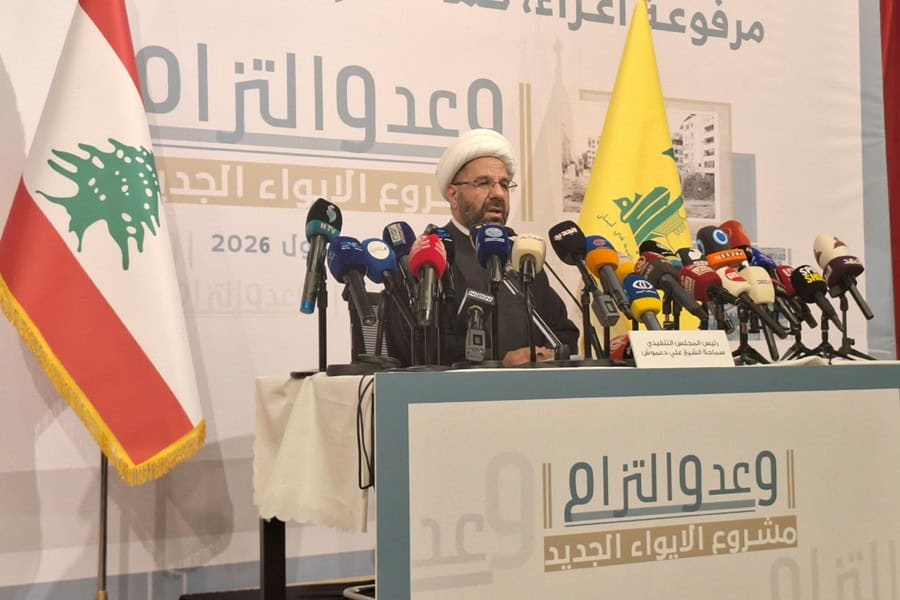
Hezbollah has explicitly rejected disarmament. Secretary-General Naim Qassem said on June 17 that “any project to disarm us will not pass.” After the framework was signed, he specifically rejected linking Israeli withdrawal to disarming Hezbollah throughout Lebanon, calling the formula “a very dangerous proposal that crosses all red lines.”