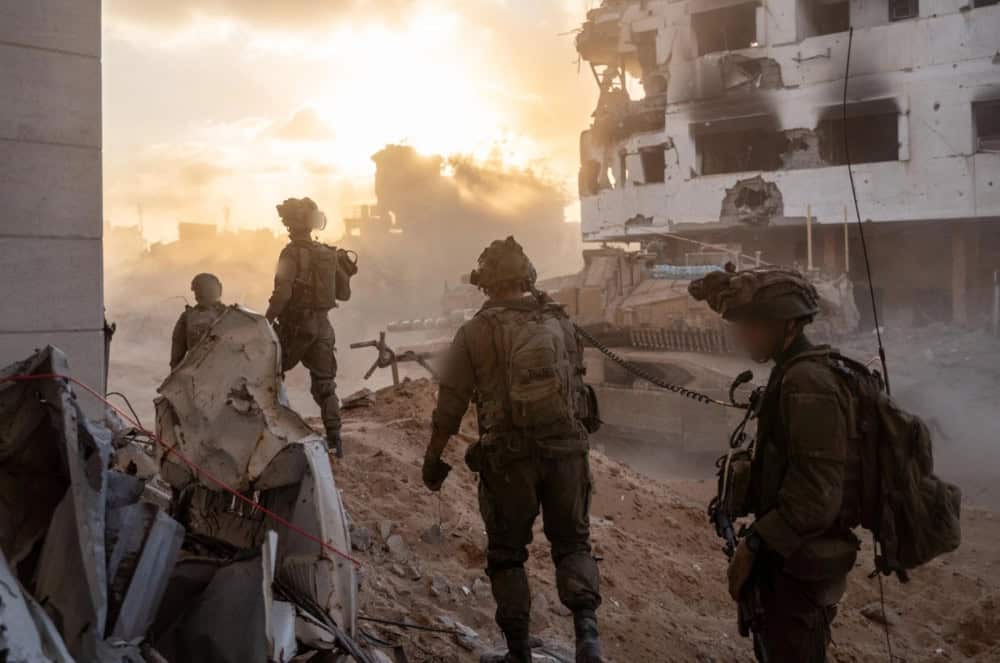
The US-backed Board of Peace (BoP) remains unable to build its first military facility in Gaza, even as it prepares Hamas weapons-collection sites and expands reconstruction partnerships. Meanwhile, Hamas-affiliated officials continue to administer public services and regulate trade despite the group’s July announcement that it had dissolved its government. A dispute over commercial-import fees also interrupted shipments from Israel this week.
On October 14, The Guardian reported that Israel prevented the Louisiana-based company Arkel International from beginning construction of an outpost the BoP commissioned in August. The roughly 100-by-100-meter facility at a former Gaza Humanitarian Foundation site would accommodate rotating deployments of 150 International Stabilization Force (ISF) troops drawn from a larger contingent of 500 personnel from Morocco and Kosovo. BoP officials believe this initiative will make progress only after Israel’s October 27 elections.
Separately, the Israeli public broadcaster Kan reported on October 12 that Israel approved the entry of an American company working under the BoP to identify potential Hamas weapons-handover sites in Israeli-controlled southern Gaza. A board official confirmed continued coordination with Israel through an August disarmament working group and said decommissioning could begin once authorizations and cooperation guarantees were secured. However, Israeli security officials accused Hamas of rebuilding its military capabilities and preparing attacks, and no weapons handover has been confirmed.
On October 13, the National Committee for the Administration of Gaza (NCAG) signed a memorandum of understanding with the German Agency for International Cooperation (GIZ) at NCAG’s temporary headquarters in Cairo. NCAG chief Ali Shaath and GIZ country director Alexander Solyga signed the agreement in the presence of BoP High Representative Nikolay Mladenov. It provides technical cooperation on economic recovery, municipal services, education, employment, water, agriculture, and energy, including needs assessments and capacity-building. No funding commitment or implementation timetable was announced.
The NCAG remains outside Gaza, where Hamas retains administrative influence. An October 6 Washington Institute assessment describes a decentralized Hamas-linked network managing population registries, municipal infrastructure, aid distribution, limited taxation, policing, and salaries through civil servants and local intermediaries. The evaluation reports stronger bureaucratic continuity in central Gaza than in the fragmented northern and southern districts. Israel controls roughly 60 to 70 percent of the territory.
On October 14, Israel’s Coordinator of Government Activities in the Territories (COGAT) said Gazan merchants had suspended commercial-import coordination over Hamas’s demands for 10,000 shekels (about $3,220) per truck and 30 percent of sales in cash. COGAT also alleged that Hamas detained a merchant’s son over nonpayment.
Gaza’s truckers’ union disputed Israel’s explanation, while an official from Gaza’s Ministry of Economy said the payment was a donation for civil-servant salaries. Gaza’s Hamas-affiliated Government Media Office denied imposing taxes, calling the contribution voluntary. By October 15, commercial imports from Israel had reportedly stopped for two days, although humanitarian shipments and commercial goods from Egypt continued entering.
The BoP’s $2.45 billion, six-month recovery plan remains stalled over the sequencing of Hamas’s disarmament and Israel’s withdrawal. Israeli Prime Minister Benjamin Netanyahu insists that Hamas disarm first, while the proposed roadmap links disarmament to a phased withdrawal.
Meanwhile, the IDF reported 31 ceasefire violations by Hamas and other Palestinian terror groups in Gaza from October 1 to 15:
- On October 1, the IDF announced that it killed Amar Mahmoud Hamed al Refi, a platoon commander in Hamas’s military wing, in Gaza City the previous day. Refi had recently planned attacks against Israeli forces and civilians and worked to rebuild Hamas’s military capabilities while “systematically violating the ceasefire agreement,” according to the Israeli military.
- Later the same day, the IDF reported that it killed Muhammad Abd al Aziz Muhammad Nagar, a Hamas operative who infiltrated Israel during the October 7 massacre, in southern Gaza the previous day. Nagar was subsequently “presented as a journalist,” without acknowledging his affiliation with Hamas’s military wing, according to the IDF. The military said Nagar had recently planned attacks against Israeli forces and civilians and worked to rebuild Hamas’s military capabilities.
- Also on October 1, the IDF announced that it killed Bilal Mahmoud Suleiman Samri, an operative in the rocket array of Palestinian Islamic Jihad’s (PIJ) Khan Younis Brigade, in Khan Younis the previous day. Samri had planned attacks and “carried out ambushes against IDF forces operating in the Yellow Line area” while violating the ceasefire, according to the Israeli military.
- Later the same day, the IDF reported that it killed Muhammad Jamal Mahmoud Abu al Shaar, a Hamas squad commander who infiltrated Kibbutz Beeri during the October 7 massacre, in Gaza City earlier that week. Shaar participated in the abduction of six Israelis, including Sharon Hertzman-Avigdori, Noam Avigdori, and Shoshan Haran, according to the Israeli military.
- Also on October 1, the IDF announced that it killed Muaz Abd al Galil Sakav al Labisi, a commander in PIJ’s military wing, in Jabalia earlier that week. Labisi had infiltrated Israel during the October 7 massacre and recently planned attacks against Israeli forces and civilians while “systematically violating the ceasefire,” according to the Israeli military.
- On October 2, the IDF and Shin Bet announced that they killed Thamer Hamaida, a sniper in Hamas’s military wing, in Khan Younis the previous night. Hamaida had planned attacks and conducted sniper operations against Israeli forces and civilians throughout the war, according to the Israeli military. The IDF said it conducted the strike to “remove the threat he posed.”
- On October 3, the IDF reported that it killed Ahmed Mahmoud Khar Ramlaoui, a commander in the rocket unit of PIJ’s Shujaiya Battalion, in Gaza City the previous day. Ramlaoui had recently planned attacks against Israeli forces and civilians and worked to rebuild PIJ’s military capabilities while “systematically violating the ceasefire agreement,” according to the Israeli military.
- Later the same day, the IDF announced that it killed Munir Ibrahim Mizrahi, the head of a PIJ anti-tank missile squad, in Gaza City the previous day. Mizrahi had recently planned attacks against Israeli forces and civilians and worked to rebuild PIJ’s military capabilities while violating the ceasefire, according to the Israeli military.
- On October 4, the IDF announced that it killed Saqr Nabil Mousa Qaisi, a Hamas Nukhba operative who infiltrated Israel during the October 7 massacre, in Khan Younis. Qaisi also directed the Turkish organization Deniz Feneri, which the IDF said presented itself as a humanitarian organization while maintaining ties with senior Hamas and Turkish officials. According to the military, Qaisi used the organization to secure employment for Hamas operatives and provide them with financial assistance, while its leadership conducted fundraising activities supporting Hamas. The IDF accused Qaisi of the “exploitation of the humanitarian sector to support terrorist activities.”
- Later the same day, the IDF reported that it killed Maad Jamal Abu Nseir, a commander in Hamas’s military wing, in Khan Younis. The military said the strike was conducted to remove an immediate threat and that it had taken measures to minimize civilian casualties, including the use of precision munitions and aerial surveillance.
- Also on October 4, the IDF announced that it killed Mahmoud Ibrahim Diab Alayan, an operative in Hamas’s observation unit, in Khan Younis the previous day. Alayan had recently planned attacks against Israeli forces near the Yellow Line and worked to rebuild Hamas’s military capabilities while “systematically violating the ceasefire agreement,” according to the Israeli military.
- On October 5, the IDF and Shin Bet announced that they killed Ibrahim Mustafa Suleiman Abu Omeir, a commander in Hamas’s Nukhba unit, in Nuseirat over the weekend. Abu Omeir had infiltrated Israel during the October 7 massacre and recently planned attacks against Israeli forces and civilians, according to the Israeli military. He had also worked to rebuild Hamas’s military capabilities while “systematically violating the ceasefire.”
- On October 7, the IDF reported that it killed two Hamas operatives who had exited Kamal Adwan Hospital in northern Gaza, including Mohammed Tamos, a sniper in Hamas’s military wing who also worked as a civil defense employee. According to the Israeli military, one of the operatives had transported explosives from the hospital and planted them near the Yellow Line to target Israeli forces. The IDF accused Hamas of using medical facilities to support military operations and “turning spaces designated for treating the civilian population into spaces used to advance terrorist activities.”
- On October 8, the IDF announced that it killed an unidentified operative who crossed the Yellow Line in southern Gaza the previous day. According to the Israeli military, the operative had attempted to “sabotage operational infrastructure” and posed an immediate threat to Israeli forces. The IDF said it struck the operative immediately after identifying the attempted sabotage.
- Later the same day, the IDF reported that it killed Ibrahim Alam, a commander in Hamas’s military wing, in Khan Younis earlier that week. Alam had infiltrated Israel during the October 7 massacre, participated in the murder of Israeli civilians, and abducted the body of IDF Sergeant Shaked Dahan to Gaza, according to the Israeli military.
- Also on October 8, the IDF announced that it killed Mutasim Muhammad Suliman Salah, an operative in Hamas’s military wing, in Khan Younis two days earlier. Salah had recently planned attacks against Israeli forces and civilians and worked to rebuild Hamas’s military capabilities while “systematically violating the ceasefire,” according to the Israeli military.
- Later the same day, the IDF reported that it killed Muhammad Hassan Nimr Yazgi, a commander in Hamas’s Shati Battalion, in Gaza City earlier that week. Yazgi had participated in holding Israeli hostages, including Emily Damari, Romi Gonen, and Matan Engrest, in captivity during the war, according to the Israeli military.
- Also on October 8, the IDF announced that it killed Muhammad Fouzi Muhammad Awad Jamil, an operative in Hamas’s Daraj Tuffah Battalion, in Jabalia two days earlier. Jamil had recently planned attacks against Israeli forces and civilians and worked to rebuild Hamas’s military capabilities while systematically violating the ceasefire, according to the Israeli military.
- On October 9, the IDF reported that it killed two PIJ operatives in Gaza City the previous day: Hussam Walid Hassan Abu al Atta, a commander in PIJ’s rocket battalion, and Magdi Muein Yusuf al Ayoubi, another operative in the group’s military wing. Both had recently planned attacks against Israeli forces and worked to rebuild PIJ’s military capabilities while “systematically violating the ceasefire agreement,” according to the IDF.
- Later the same day, the IDF announced that it killed Muhammad Aja, a platoon commander in Hamas’s military wing, in the Al Farqaan area of Gaza the previous day. Aja had recently planned attacks against Israeli forces and worked to rebuild Hamas’s military capabilities while “systematically violating the ceasefire agreement,” according to the Israeli military.
- Also on October 9, the IDF reported that it killed an unidentified operative who crossed the Yellow Line in northern Gaza. According to the Israeli military, the operative posed an “immediate threat” to Israeli forces, which struck and killed him shortly after spotting the crossing. The IDF said its forces remained deployed in accordance with the ceasefire agreement.
- On October 10, the IDF and Shin Bet announced that they killed Muhammad Abu Shaluf, a platoon commander in PIJ’s military wing who infiltrated Israel during the October 7 massacre, in Khan Younis earlier that week. Shaluf had recently planned attacks against Israeli forces and civilians while “systematically violating the ceasefire,” according to the Israeli military.
- Later the same day, the IDF and Shin Bet reported that they killed Musa Atf Musa Abu Daun, a Hamas Nukhba operative, in Khan Younis the previous day. Daun had recently planned attacks against Israeli forces and civilians and worked to rebuild Hamas’s military capabilities while violating the ceasefire, according to the Israeli military.
- Also on October 10, the IDF announced that it struck a gathering of Hamas Nukhba operatives in Gaza City, killing several members of the group, including Maad Mazen Hamza Hassona and Mohammed Riad Hadar Arhim. The operatives had recently planned attacks against Israeli forces and civilians and worked to rebuild terrorist infrastructure while “systematically violating the ceasefire,” according to the Israeli military.
- Later the same day, the IDF reported that it killed Mohammed Walid Saadi Nahala, a commander in PIJ’s anti-tank missile unit, in the Daraj Tuffah area of northern Gaza. Nahala had recently planned attacks against Israeli forces and civilians and worked to rebuild terrorist infrastructure while violating the ceasefire, according to the Israeli military.
- On October 11, the IDF and Shin Bet announced that they killed Sham Jamal Muhammad Abu Galala, a company commander in Hamas’s Nukhba unit, in Khan Younis the previous week. Abu Galala had been “one of the leaders of the raid on the Kissufim outpost” and participated in the abduction of Israelis during the October 7 massacre, according to the Israeli military.
- Later the same day, the IDF reported that it killed an unidentified operative who crossed the Yellow Line in southern Gaza. According to the Israeli military, the crossing posed an “immediate threat” to Israeli forces, who killed the operative after identifying him. The IDF said troops remained deployed in the area in accordance with the ceasefire agreement.
- On October 13, the IDF announced that it killed three operatives in the Popular Front for the Liberation of Palestine’s (PFLP) military wing during a meeting in Khan Younis two days earlier. The operatives included Muhammad Abu Hujaj, an engineering operative; Yusuf Abu Razeq, a deputy squad commander; and Abd al Hamid Jadallah, a rocket operative. According to the Israeli military, the group had gathered to plan attacks against Israeli forces.
- Later the same day, the IDF reported that it killed Salah al Din Iyad Abd al Hamid and Izz al Din Iyad Diab Barhoum, two Hamas Nukhba operatives from its Rafah Brigade, in southern Gaza the previous day. Both had recently planned attacks against Israeli forces and civilians and worked to rebuild Hamas’s military capabilities while “systematically violating the ceasefire,” according to the Israeli military.
- On October 14, the IDF announced that it killed Mumen Ahmed Salama Ay, a commander in Hamas’s military wing, in Gaza City the previous day. Ay had participated in holding Israeli hostages in captivity during the war and served as an assistant to commanders of Hamas’s Gaza Brigade, according to the Israeli military.
- On October 15, the IDF reported that it killed Basel Nabil Abd al Rahman Kashta and Ahmed Rajaa al Shaer, specifying that they were “involved in smuggling weapons and additional military equipment into Gaza Strip territory.”