After maintaining a military presence in Somalia for almost 20 years, Uganda has started a full withdrawal from the country, Gen. Muhoozi Kainerugaba, chief of Uganda’s armed forces, announced on Oct. 29. Around the same time, US forces also withdrew from Baledogle Military Airfield, a strategically important base in southern Somalia. With the government in Mogadishu remaining fractured, the withdrawals could create opportunities for Al Qaeda’s Shabaab to expand its influence.
Kainerugaba, who is the son of Ugandan President Yoweri Museveni, announced in a now-deleted post on X that he was ordering the withdrawal of troops from Somalia. The announcement came just days after Museveni and Somali President Hassan Sheik Mohamud met to discuss Somalia’s security situation.
Museveni and other Ugandan officials have routinely criticized the current political chaos in Mogadishu, leaving additional Ugandan security guarantees uncertain. Financial questions over the future of the African Union (AU) mission in Somalia, particularly as the United States has cut funding to the United Nations mission in Somalia—the logistical backbone of the AU there—have also likely weighed heavily in Kampala’s calculus. The UN’s political mission in Mogadishu closed its doors just days after Muhoozi’s tweets.
Chris Magezi, the acting spokesman of Uganda’s military, additionally stated on Nov. 2 that “the Uganda People’s Defence Forces [UPDF] will gradually withdraw all its forces in Somalia, including those currently deployed under the African Union Support and Stabilization Mission in Somalia (AUSSOM) by the close of 2027.” The withdrawal is reportedly beginning with troops deployed under bilateral arrangements with Mogadishu, with the AU-deployed forces to begin withdrawing next year.
The spokesman added that the first cohort of troops to withdraw has already returned to Uganda. At the same time, the UPDF deployed a new battle group to Somalia as part of a previously scheduled rotation supporting the African Union mission.
Uganda’s military has been deployed in Somalia since 2007, when it was the first to send troops as part of the then-African Union Mission in Somalia (AMISOM). The UPDF was instrumental in securing Mogadishu from Shabaab in 2011. UPDF troops have since been responsible for security in Somalia’s Banadir Region, which includes Mogadishu, and its Lower Shabelle region, where it has faced stiff battles with the Al Qaeda branch over the years.
Uganda currently has around 6,500 soldiers in Somalia, roughly 4,500 of which are deployed with the AU’s Support and Stabilization Mission in Somalia (AUSSOM). Around 2,000 are deployed as part of bilateral agreements with Mogadishu. Unless additional agreements with both the AU and Somalia are struck, all forces will apparently leave by the end of next year.
The loss of the UPDF will likely put significant strain on the Somali National Army (SNA), which has struggled to maintain security in areas where Shabaab remains active, particularly the Lower Shabelle region. On October 26, Shabaab claimed to have killed hundreds of Somali soldiers in an ambush near Leego, close to the border between the Lower Shabelle and Bay regions. The attack involved suicide car bombs and explosive-laden drones, though the group’s claimed death toll has not been independently verified.
Uganda’s withdrawal comes amid Ethiopia’s plans to withdraw 3,000 troops, uncertainty over Burundi’s continued military presence, and ongoing political disputes between Mogadishu and several Somali federal member states. Together, these developments could weaken efforts to contain Shabaab and create opportunities for the group to expand its territorial control.
US troops pull out of strategic airfield
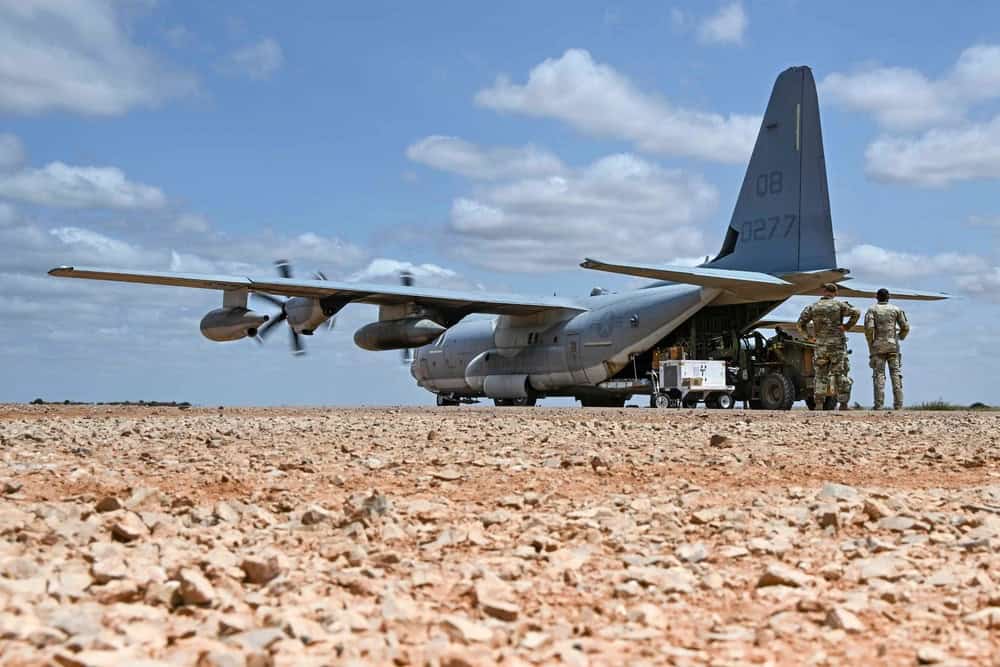
Around the same time Uganda began its withdrawal, US forces also reportedly departed the strategic Baledogle airfield, approximately 90 kilometers northwest of Mogadishu in Somalia’s Lower Shabelle region. The airfield has been a key piece of American infrastructure in Somalia, playing an integral role in the US’s counter-terrorism strategy in the country.
The Somali outlet Horn Observer first reported that US troops left the base in late October, leaving the UPDF and the SNA in charge. US officials later confirmed to Task & Purpose that American troops had relocated elsewhere in Somalia. The officials indicated that US forces could return to Baledogle, though no plans for their return have been announced.
Turkish forces deployed in Somalia have already visited the former US base and reportedly expressed interest in taking over the facility and expanding its infrastructure. Turkish control over Baledogle may complicate American efforts to return at some point.
Turkey has steadily built up its presence in Somalia, including establishing a massive base and training complex in Mogadishu and conducting airstrikes against Shabaab and potentially against political rivals of President Mohamud.
Like Uganda, the US has expressed frustration with the Somali government. Washington has announced plans to end its support for UN logistics serving the African Union mission, while also signaling plans to expand its military infrastructure in other parts of Somalia, particularly Jubaland and Puntland, whose leaders are at odds with President Mohamud. Expanding these military partnerships allows the US to maintain pressure on Shabaab and Islamic State forces in Puntland despite ongoing political instability in Mogadishu.
The American pullout from Baledogle does not signal an overall US withdrawal from Somalia. In addition to growing military ties and infrastructure in Jubaland and Puntland, the US has also steadily conducted airstrikes against both Shabaab and the Islamic State this year, with no indications these operations are slowing.
On November 5, the US military’s Africa Command (AFRICOM) announced an airstrike against Shabaab’s forces in Lower Shabelle. In mid-October, AFRICOM also launched a strike against the group in Puntland, which had previously been the site of intense American and Emirati strikes against the Islamic State in the region. As Puntland winds down its anti-Islamic State fight for its announced anti-Shabaab campaign, more American strikes against the Al Qaeda branch in Puntland are expected.
AFRICOM has increasingly shifted its focus back to Shabaab this year, following a period in 2025 when its air campaign concentrated largely on Islamic State forces in Puntland. Given Baledogle’s strategic importance to US operations against Shabaab, the decision to withdraw from the airfield raises questions about Washington’s broader military strategy in Somalia.