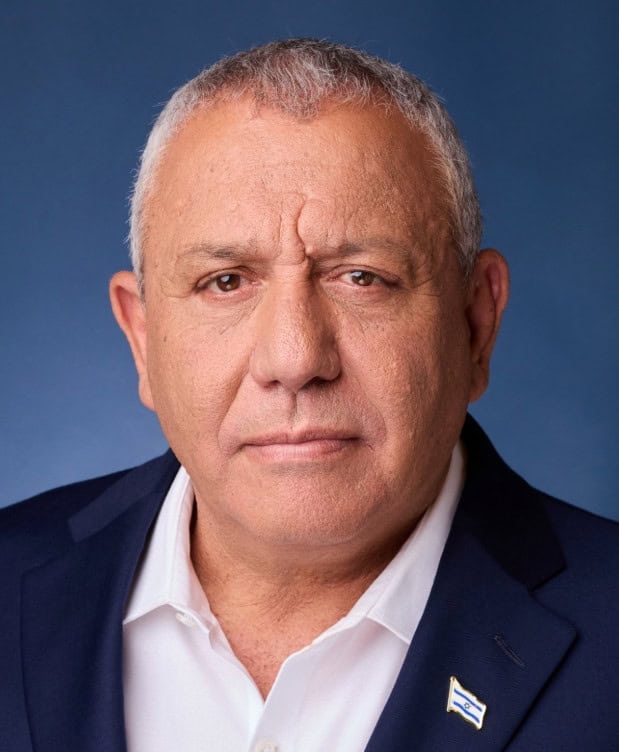
Record turnout among Arab voters nearly doubled the representation of Arab-led parties in Israel’s October 27 parliamentary election. The country’s leading Arab parties, Joint List and Ra’am, won a combined 19 seats in the 120-member Knesset, potentially giving them decisive influence over the next government. Neither Israeli Prime Minister Benjamin Netanyahu nor his main rival, former military chief Gadi Eisenkot, secured the 61 seats necessary to govern.
The final results gave Netanyahu’s Likud 27 seats and Eisenkot’s Yashar 21. Former Prime Minister Naftali Bennett’s B’Yachad won 12; the Joint List 11; Yair Golan’s Democrats and Mansour Abbas’s Ra’am eight each; and Avigdor Liberman’s Yisrael Beytenu seven. Netanyahu’s partners—United Torah Judaism (UTJ), Itamar Ben Gvir’s Otzma Yehudit, Aryeh Deri’s Shas, and Bezalel Smotrich’s Religious Zionism—won seven, seven, six, and six, respectively. Netanyahu’s bloc fell from 68 seats in the outgoing Knesset to 53, while Eisenkot’s four-party Jewish-led bloc secured 48.
National turnout reached 77.9 percent, with more than 5.7 million votes cast. According to the Israel Democracy Institute, turnout in Arab and Druze localities, excluding voters in mixed cities, rose from 53.2 percent in 2022 to approximately 77 percent. In unrecognized Bedouin villages in the Negev, participation increased from about 38 to 74 percent. The Arab-led parties received roughly 840,000 votes, 64 percent more than in 2022, and their 19 seats surpassed their previous record of 15. The institute attributed the surge partly to concerns over violent crime, living costs, and the treatment of Arab citizens by the outgoing government.
The two Arab parties differ on how to exercise their influence. Abbas’s Islamist Ra’am, which participated in the 2021–2022 Bennett coalition, campaigned on joining the next government and reducing crime in Arab communities. The Joint List, an alliance of Hadash, Ta’al, and Balad led by Yousef Jabareen and featuring Ahmad Tibi, favors supporting an anti-Netanyahu government without joining it. On November 5, its representatives told Israeli President Isaac Herzog they would provide outside support despite disagreements with Eisenkot, including over military operations.
On November 5, both Arab parties endorsed Eisenkot during Herzog’s consultations, giving him the recommendations of 67 lawmakers, compared with 46 for Netanyahu. However, recommendations do not guarantee support for an eventual governing coalition; they only indicate that Eisenkot will likely receive the mandate from Herzog to form a government.
This path faces opposition within Eisenkot’s own bloc. Liberman rejected a minority government dependent on Arab support, while Bennett and Eisenkot have also opposed governing with the Arab parties. Eisenkot has demanded that prospective coalition partners accept Israel as a Jewish and democratic state, universal military or civilian service, and Hamas’s designation as a terrorist organization whose military and governing capabilities must be dismantled.
Netanyahu also suffered another setback on November 5 when all seven UTJ lawmakers declined to recommend a candidate. UTJ said support for any future government depends on legislation preserving military-service exemptions for full-time yeshiva students, which Netanyahu failed to enact. The party is reportedly considering supporting an Eisenkot government without joining it.
Meanwhile, Netanyahu has alleged possible foreign interference, including Qatari funding intended to boost Arab turnout. Israeli authorities are investigating suspected foreign financing and separate allegations of vote-buying in the Negev; Qatar denies involvement. The Central Elections Committee certified the election on November 4, saying the evidence presented did not establish irregularities that could have changed the results.
Herzog must select a candidate to form a government by November 11. The nominee will receive 28 days, with a possible 14-day extension, to secure a coalition. The new Knesset will be sworn in on November 10, but Netanyahu remains caretaker prime minister until another government takes office. If coalition efforts fail, Israel could face another election.
As Israel grapples with parliamentary politics, Hamas and other Palestinian terror groups violated the ceasefire 52 times from October 16 to November 5, according to the Israel Defense Forces (IDF):
- On October 16, the IDF announced that it killed Muhammad Muhammad Abd al Halq Hala, a Hamas weapons-production commander who infiltrated Israel during the October 7, 2023, massacre, in northern Gaza the previous day.
- Later the same day, the IDF reported that it killed Ahmad Jabrin Tawfiq Dalhan, an operative with the Popular Front for the Liberation of Palestine (PFLP), in a separate strike in Khan Younis the previous day. Dalhan had recently planned attacks against Israeli forces, according to the military.
- Also on October 16, the IDF announced that it killed Maher Walid Amer al Hatseeni, the head of a Hamas Nukhba cell that raided the Re’im military camp on October 7, October 7, 2023, in southern Gaza two days earlier.
- On October 17, the IDF announced that it killed Mahmoud Khaled Mohammed al Dahon, a Hamas Nukhba operative who fired anti-tank missiles at Israeli forces during the war, two days earlier.
- Later the same day, the IDF reported that it killed Abidah Suheil Hamad al Ratgah, a sniper in Hamas’s military wing, the previous day.
- Also on October 17, the IDF announced that it killed Adham Khalil Mohammed al Aroq, a Hamas operative who infiltrated Israel during the October 7 massacre.
- Later the same day, the IDF reported that it killed Abdul Qadir Guda, an operative in Hamas’s military wing. The military said the four operatives had recently worked to rebuild Hamas’s capabilities while violating the ceasefire.
- On October 19, the IDF announced that it killed Abdullah Muhammad Khamis Jabber, who helped operate Hamas’s weapons-production headquarters, in Daraj Tuffah over the weekend.
- Later the same day, the IDF reported that it killed Muad Ahmad Mustafa Sabag, a Hamas cell commander, in a separate strike in Daraj Tuffah over the weekend.
- Also on October 19, the IDF announced that it killed Amer Bashir Muhammad Hurani, an operative in Hamas’s engineering battalion, in a separate strike in Jabalia over the weekend.
- On October 20, the IDF and Shin Bet announced that they destroyed one of three Hamas weapons depots across Gaza the previous week. The depots collectively contained RPGs, rockets, launchers, Kalashnikov rifles, and other weapons.
- Later the same day, the IDF and Shin Bet reported that they destroyed a second Hamas weapons depot in Gaza the previous week. The IDF said it issued civilian warnings and used precision munitions.
- Also on October 20, the IDF and Shin Bet announced that they destroyed a third Hamas weapons depot in Gaza the previous week. The military said Hamas’s military wing used the three depots.
- Later the same day, the IDF reported that it struck two suspects who crossed the Yellow Line, which divides Israeli-controlled territory from Hamas-controlled areas in Gaza, in southern Gaza the previous day and attempted to sabotage military infrastructure. The IDF confirmed hits.
- Also on October 20, the IDF and Shin Bet announced that they killed Thamer Muhammad Ibrahim al Saba, a Hamas Nukhba operative involved in abducting Shani Louk on October 7, 2023, in Jabalia the previous day.
- Later the same day, the IDF and Shin Bet reported that they killed Akram Bassam Shaaban Yassin, a senior official in Hamas’s General Security Apparatus, in Gaza City earlier that day.
- On October 21, the IDF and Shin Bet announced that they killed Musa Abd Muhammad Hamuda, who they said was a Hamas Nukhba operative involved in planning a September 2025 attack that killed four Israeli soldiers, in Gaza City earlier that week.
- Later the same day, the IDF reported that it killed Abdullah Manir Mahmoud Haraz, a deputy platoon commander in the PFLP’s rocket array who developed sniper positions, in Daraj Tuffah earlier that week.
- Also on October 21, the IDF announced that it killed Muhammad Wail Mustafa Shashaa, a sniper in Hamas’s Daraj Tuffah Battalion, in a separate strike in Gaza City earlier that week.
- On October 22, the IDF and Shin Bet announced that they killed Ramadan Muhammad al Shaada Diab, head of the Popular Resistance Committees in Khan Younis, the previous day. The military linked the organization to attacks alongside Hamas.
- On October 25, the IDF announced that it killed Ala Ibrahim Namr Arshi, a Hamas squad commander involved in transferring funds from Iran and Turkey to Hamas’s military wing, in Gaza City the previous week.
- Later the same day, the IDF reported that it killed Karam Riad Hassan Abu Batikhan, a Palestinian Islamic Jihad (PIJ) operative involved in transferring funds to Hamas, in a separate strike in Nuseirat the previous week.
- Also on October 25, the IDF and Shin Bet announced that they destroyed a Hamas weapons storage facility containing rifles, a rocket launcher, and rockets in central Gaza the previous week.
- On October 26, the IDF and Shin Bet announced that they killed Muhammad Halawa, a commander in Hamas’s military intelligence branch, in the Gaza City area two days earlier.
- Later the same day, the IDF reported that it killed Ahmad Zahir Fouad Abu Udeh, an engineering commander in Hamas’s military wing, in a separate strike the previous week.
- Also on October 26, the IDF announced that it struck three operatives emerging from a tunnel shaft west of the Yellow Line in Khan Younis the previous day. The IDF reported secondary explosions at the site.
- Later the same day, the IDF reported that it killed Ala Abu Zaid, an operative in PIJ’s military wing, in one of several strikes across Gaza the previous day.
- Also on October 26, the IDF announced that it killed Hamdan Sulaiman Ibrahim Abu Umra, an operative in PIJ’s military wing, in a strike across Gaza the previous day.
- Later the same day, the IDF reported that it killed Fawzi Salam Udat Allah Suarka, a Hamas sniper who established positions targeting Israeli forces, in a strike in Gaza the previous day.
- Also on October 26, the IDF announced that it killed Muhammad Anan Muhammad al Ruwag, a Hamas Nukhba cell commander, in a separate strike in northern Gaza over the weekend.
- Later the same day, the IDF reported that it destroyed a building used as a sniper position against Israeli forces in northern Gaza the previous day.
- On October 27, the IDF announced that it killed an unidentified operative who crossed the Yellow Line in southern Gaza earlier that day. The military said the crossing posed an immediate threat.
- On October 28, the IDF announced that it killed Ahmed Muhammad Ahmed Burqa, a Hamas Nukhba operative involved in abducting Alexander Dancyg and other Israelis on October 7, 2023, in southern Gaza the previous week.
- Later the same day, the IDF reported that it killed Omar Awawda, a Hamas Nukhba squad commander, and Mutaz Mahmoud Muhammad al Nimr, a Nukhba operative, in one strike in northern Gaza over the weekend.
- Also on October 28, the IDF announced that it killed Ans Akram Muhammad Hamaida, a Hamas Nukhba commander who raided the Sufa military outpost on October 7, 2023, in Khan Younis earlier that week.
- Later the same day, the IDF reported that it killed Ashraf Mahmoud Yusuf Dahlan, a Hamas platoon commander who infiltrated Israel on October 7, 2023, in Gaza City earlier that week.
- Also on October 28, the IDF announced that it killed Mahmoud Atman Abdullah Alwan, a Hamas Nukhba commander in the Western Jabalia Battalion, in Gaza City two days earlier.
- On October 30, the IDF and Shin Bet announced that they destroyed a Hamas weapons depot in al Bureij the previous night. The facility held RPGs, explosives, rockets, rifles, grenades, and ammunition.
- Later the same day, the IDF and Shin Bet reported that they destroyed a second Hamas weapons depot in Gaza City the previous night. The IDF said Hamas’s military wing used the site.
- Also on October 30, the IDF and Shin Bet announced that they killed Muhammad Alian Buk, a Hamas Nukhba operative, in Khan Younis earlier that week.
- Later the same day, the IDF and Shin Bet reported that they killed three Hamas operatives in a separate strike in Rafah: commander Mahmoud Jaber al Sayed Abu Labda, Mahmoud Abu Na’ama, and Muhammad Hamed Shariki Sultan.
- Also on October 30, the IDF announced that it killed Hamas commanders Ihab Gamal Abu Takiya and Ibrahim Ghad Muhammad Abu Ashiba in one strike in Nuseirat the previous day. Abu Takiya had helped hold Israeli hostages, according to the military.
- On November 2, the IDF announced that it killed Mohammed Kamel Atef Qdeih, a Hamas Nukhba operative who raided Kibbutz Nir Oz on October 7, 2023, in Khan Younis two days earlier.
- Later the same day, the IDF reported that it killed Diaa Abdel-Mahsen Mohammed Abu al Rous, a Hamas Nukhba operative, in a separate strike in Nuseirat two days earlier.
- Also on November 2, the IDF announced that it killed Nabil Hamad, a department head in Hamas’s recruitment apparatus, in northern Gaza two days earlier.
- Later the same day, the IDF reported that it killed Mohannad Nader Mahmoud Dahdouh, a Hamas sniper commander, in a separate strike in northern Gaza two days earlier.
- Also on November 2, the IDF announced that it killed Wael Naif Fahmi Musallam, a Hamas Nukhba operative who infiltrated Israel on October 7, 2023, in northern Gaza on October 22.
- Later the same day, the IDF reported that it killed Arafat Kamal Muhammad Arair, a Hamas rocket squad commander, in a separate strike in northern Gaza on October 22.
- On November 4, the IDF and Shin Bet announced that they killed Mahmoud Ghaad Muhammad Qah, the head of a Hamas sniper cell, in Khan Younis earlier that week.
- Later the same day, the IDF and Shin Bet reported that they killed Asaad Sulaiman Sulaiman Kashta, an Army of Islam operative involved in smuggling items into Gaza, in a separate strike in Khan Younis earlier that week.
- Also on November 4, the IDF and Shin Bet announced that they killed four operatives in one strike in Khan Younis: Hamas members Muhammad Zakaria al Gamal, Muhammad Amin al Nams, and Saher Muhammad Zaarab, and PIJ sniper Muhammad Ali Abu Shaar.
- Later the same day, the IDF and Shin Bet reported that they killed Jamal Abu Said, a senior Hamas military intelligence official who held Omer Shem Tov captive, in Gaza City earlier that week.