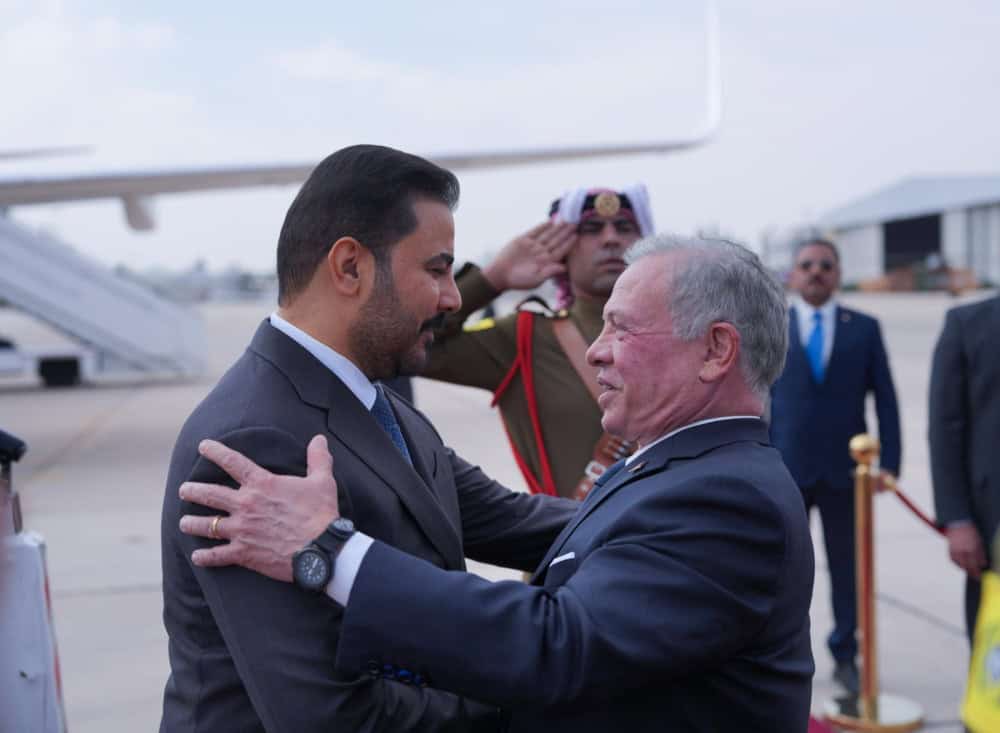
Iraqi Prime Minister Ali al Zaidi traveled to Jordan on October 26 for a series of meetings with Jordanian officials. Among the topics discussed was a desire to “increase cooperation and coordination in various fields, particularly the economic, commercial, industrial, and security ones,” Zaidi’s office said. The visit to Jordan coincided with a controversy over the closure of a border crossing with Iran. In addition, Iraq’s defense minister conducted an aerial inspection of Iraq’s border with Syria and Jordan on October 24, underscoring broader border security concerns.
Iraq’s focus on border security comes as the US and Israel reportedly may return to carrying out strikes on Iran. In the past, this has resulted in increased Iranian attacks on Iraq, primarily targeting Kurdish Iranian opposition groups. US Central Command also noted in July that “there were more than 600 attempted attacks on U.S. citizens and facilities by Iran-aligned terrorist militias in Iraq.”
On October 21, Iraq closed the Sheeb border crossing with Iran in the Iraqi governorate of Maysan. Iraq is seeking to review security arrangements at the border. In September, a drone attack on Saudi Arabia’s East-West oil pipeline was carried out from Maysan. Iranian-backed militias in Iraq have usually conducted these types of attacks. Iraq has been seeking to rein in these groups and place their weapons under state control.
The Maysan border closure led to anger among local provincial officials, who threatened civil disobedience over the development. On October 25, Baghdad issued an arrest warrant for the local provincial chairman over these threats. Iraq’s prime minister has also ordered an investigation into the border controversy. The closure has led to anger in Iran and among tribal leaders in Maysan.
Zaidi is also planning a trip to Syria, according to Kurdistan24. The visit was supposed to take place before his trip to Jordan, but it was postponed. “On the timing, the sources clarified that the visit was originally planned to take place before al-Zaidi’s Amman trip, but was moved back due to the events that occurred in Jordan, which were given priority. The Syrian side is now conducting a security assessment before responding to Baghdad, and is expected to provide a response quickly, with the visit to be arranged as soon as preparations are complete,” Kurdistan24 noted.
Iraqi Defense Minister Naif Mukayif al Shammari conducted an “inspection tour along the Iraq-Syria border strip, within the sector of Nineveh Governorate,” the Iraqi News Agency said on October 24.
Beyond its border security challenges, Iraq continues to grapple with the integration of armed groups into its security forces. The government is continuing to integrate Yazidi members of the Shingal Resistance Units (YBS) into local security forces. The YBS is linked to the Kurdistan Workers’ Party (PKK), which is designated as a terrorist group by the US, Turkey, and other countries. The integration process is raising security concerns in Iraq’s autonomous Kurdistan Region, which borders the Sinjar region where the YBS operates.
Iraq is also worried that tensions with Iran could spill over into the country, affecting efforts to rein in the country’s Iran-backed militias. For instance, the Islamic Resistance in Iraq, an umbrella group of pro-Iran militias, accused the US of violating Iraq’s airspace on October 24.
In addition, two figures affiliated with Asaib Ahl al Haq (AAH), a US-designated Foreign Terrorist Organization, joined Iraq’s cabinet on October 15. They include Deputy Prime Minister Laith al Khazali, a senior AAH leader, and Labor and Social Affairs Minister Mohammed al Mousawi, a member of the militia’s political party, Sadiqoun. The appointments happened as Zaidi continued to pledge to bring all militia weapons under state control by June 30, 2027.