
-
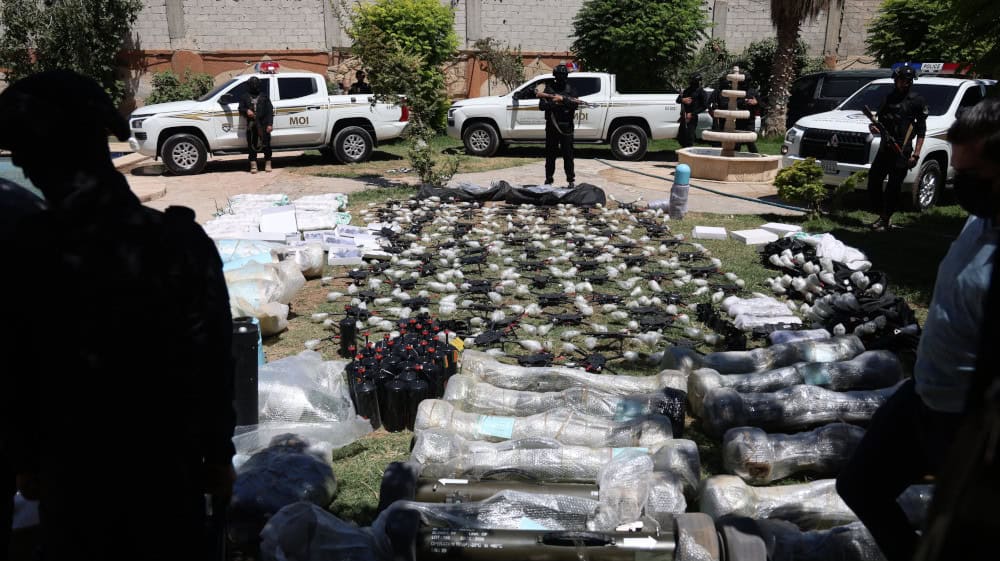
Syria intercepts advanced weapons bound for Hezbollah from Iraq
On July 16, Syrian authorities intercepted a weapons shipment concealed in an Iraqi oil tanker and bound for Hezbollah in Lebanon. The tanker contained a wide range of sophisticated weapons and components, including first-person-view drones, fiber-optic spools, drone warheads, anti-tank missiles, and cruise-missile components.
-
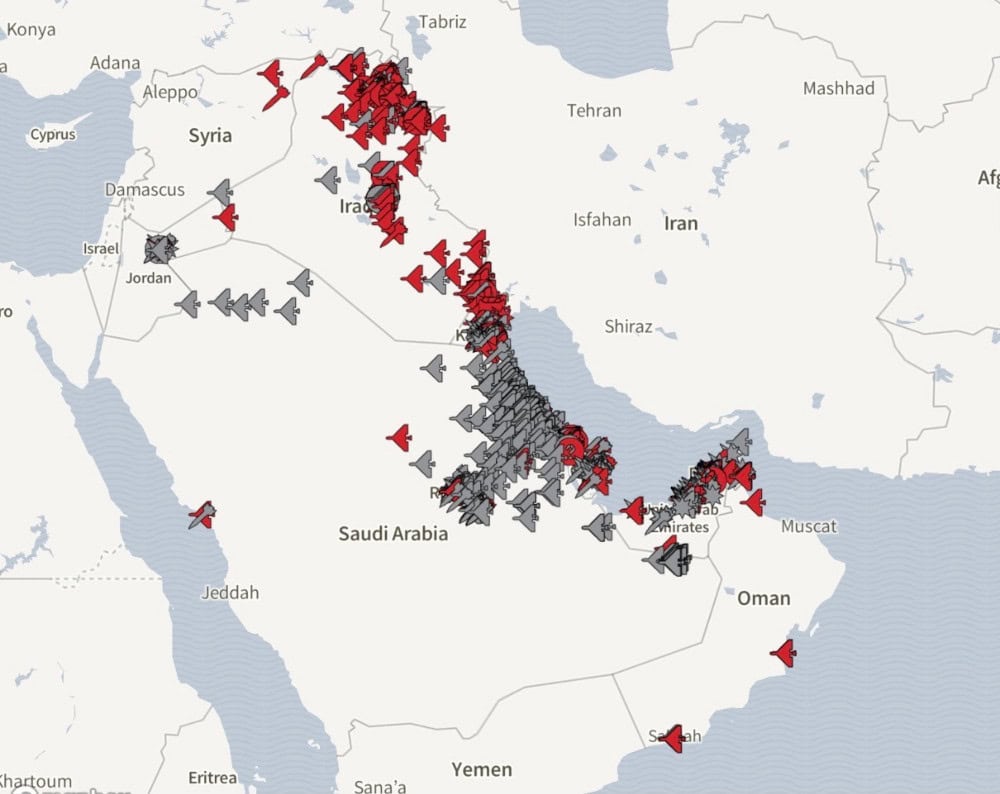
Iran’s war against regional states: UAE bore the brunt, Iraqi Kurdistan still under fire
The ceasefire between the US and Iran has largely held since April 8, and large-scale Iranian barrages targeting predominantly Arab states have ended. However, some attacks, particularly against Iraqi Kurdistan, have continued.
-
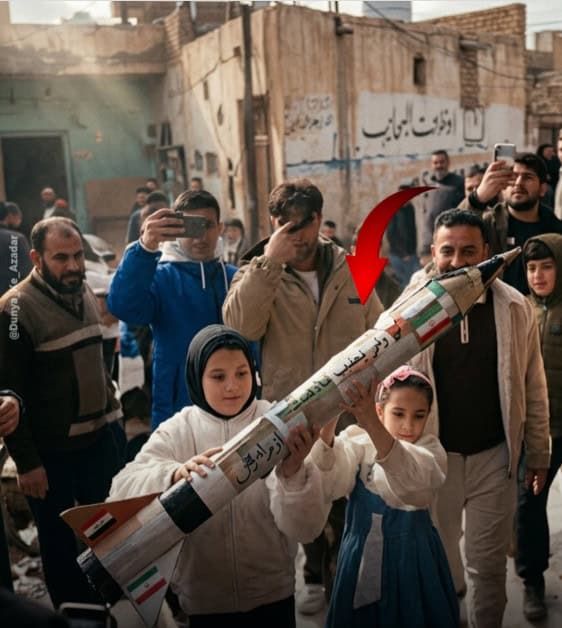
Iraqi fundraising drives linked to militias channel support to Iran and Hezbollah
Efforts described by Iran-backed Iraqi militias as humanitarian campaigns increasingly show signs of serving as a parallel financial pipeline that also fuels Iran’s current war effort and regional proxy network. Across Iraq, groups aligned with Tehran are mobilizing donation drives framed as a religious obligation and in wartime solidarity.
-
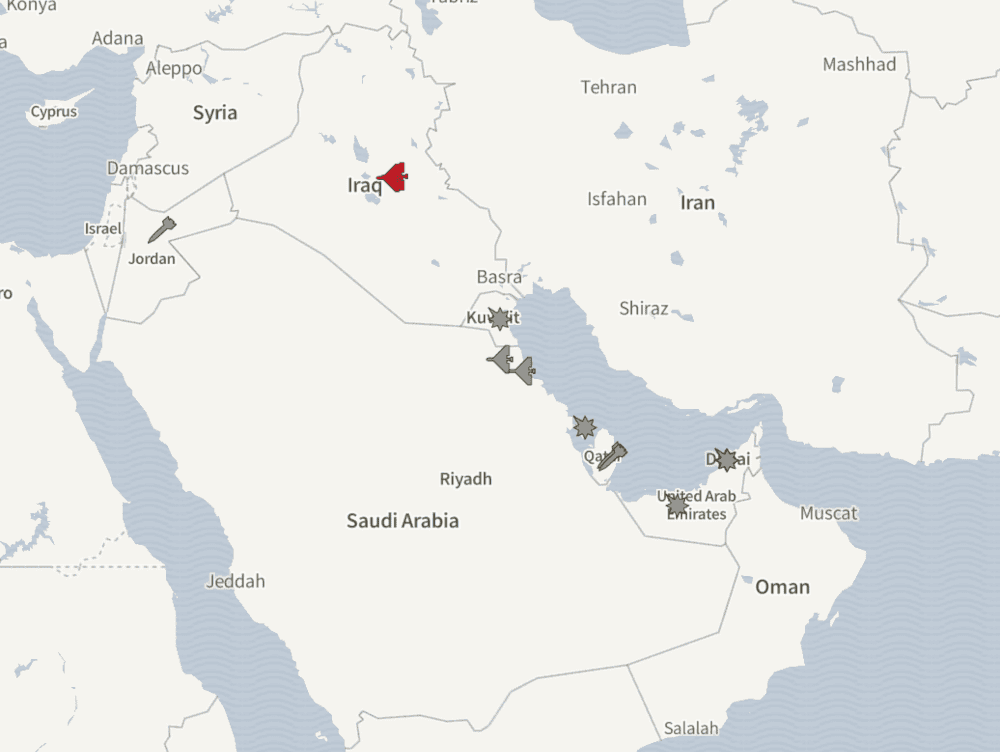
Despite ceasefire, Iran and its militias continue attacking regional states (April 2–8 updates)
Iran and its allied militias launched numerous drones and missiles against regional countries between April 2 and April 8, continuing attacks after a ceasefire between Iran and the United States was announced yesterday. Across this period, the attacks remained concentrated on the Gulf, Jordan, Iraq, and Iraqi Kurdistan, with repeated mass-interception events in the United…
-
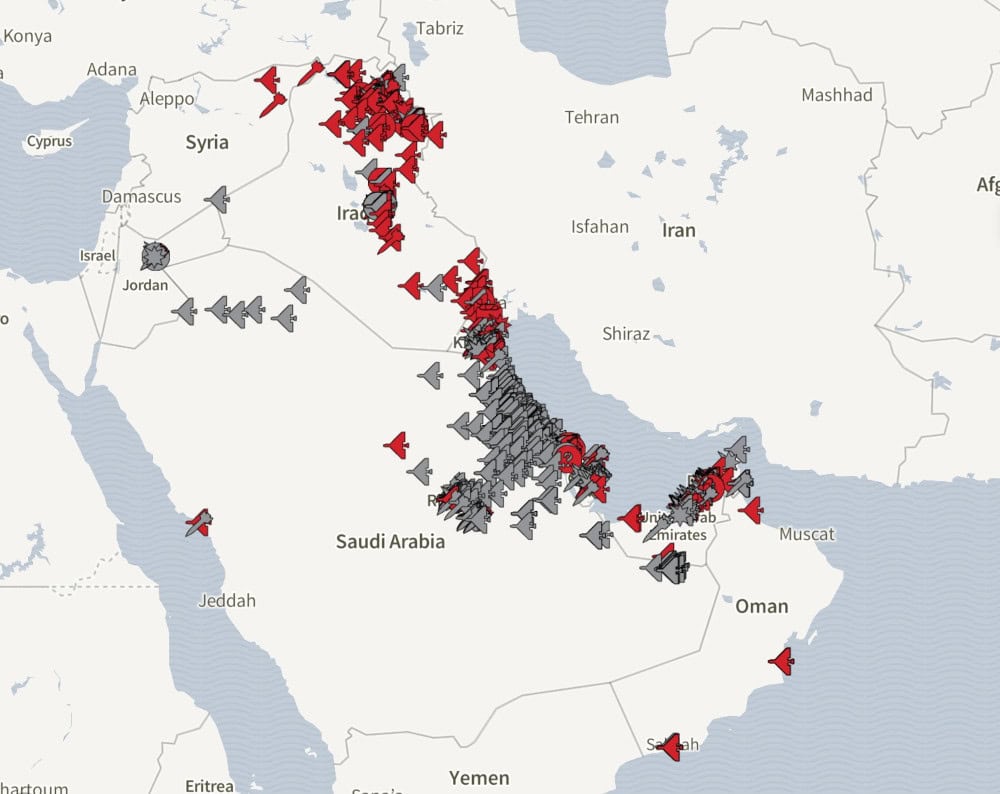
Iran and proxies fire fewer total projectiles, increase accuracy in attacks on region (March 28–April 1 updates)
Between March 28 and April 1, Iran and its allied militias continued launching drones, missiles, and rockets against regional countries—with less overall frequency but more accuracy. The attacks targeted energy infrastructure, airports, military facilities, ports, and residential areas.
-
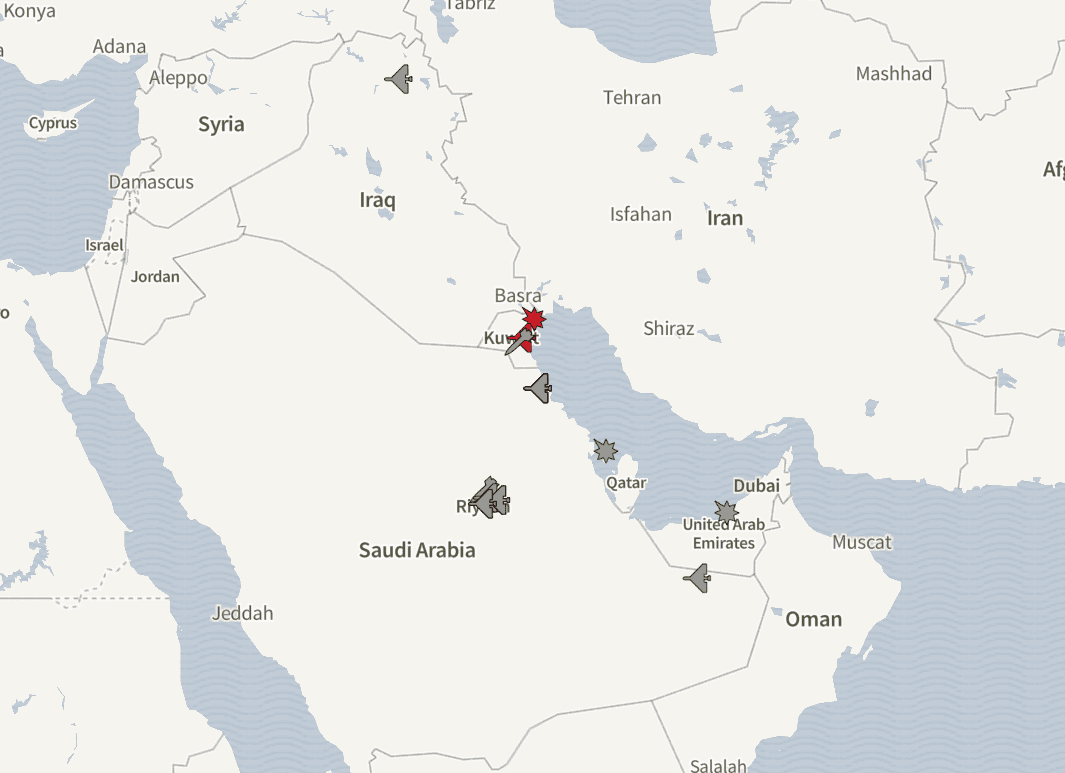
Iran and proxies continue attacking energy facilities, residential areas, and Arab capitals (March 24–27 updates)
Between March 24 and March 27, Iran and its allied militias continued launching drones and missiles against Arab countries. The attacks targeted energy infrastructure, airports, military facilities, ports, and residential areas in Saudi Arabia, the United Arab Emirates, Kuwait, Bahrain, Iraq, and Jordan.
-
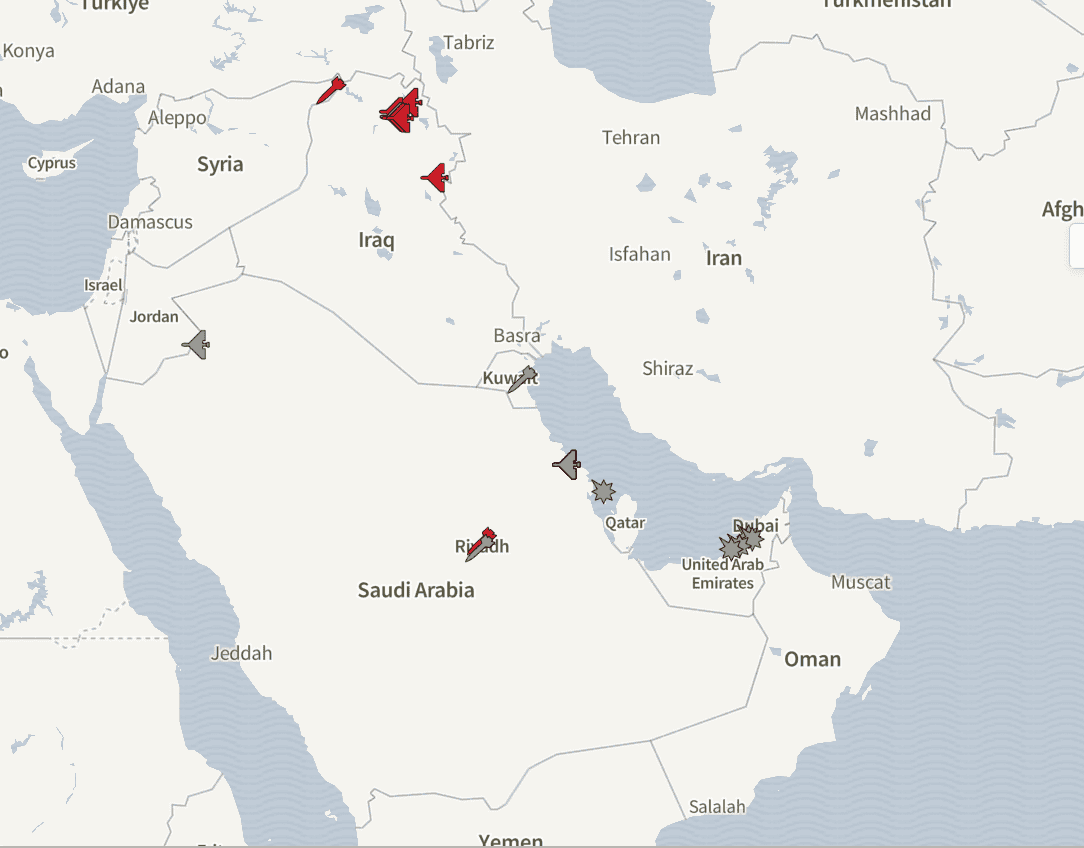
Iran and proxies continue attacking regional airports, energy facilities, military bases, and residential areas (March 20-23 updates)
Between March 20 and March 23, Iran and its allied militias continued launching drones, missiles, and rockets against Arab countries, targeting energy infrastructure, airports, military bases, diplomatic facilities, and residential areas.
-
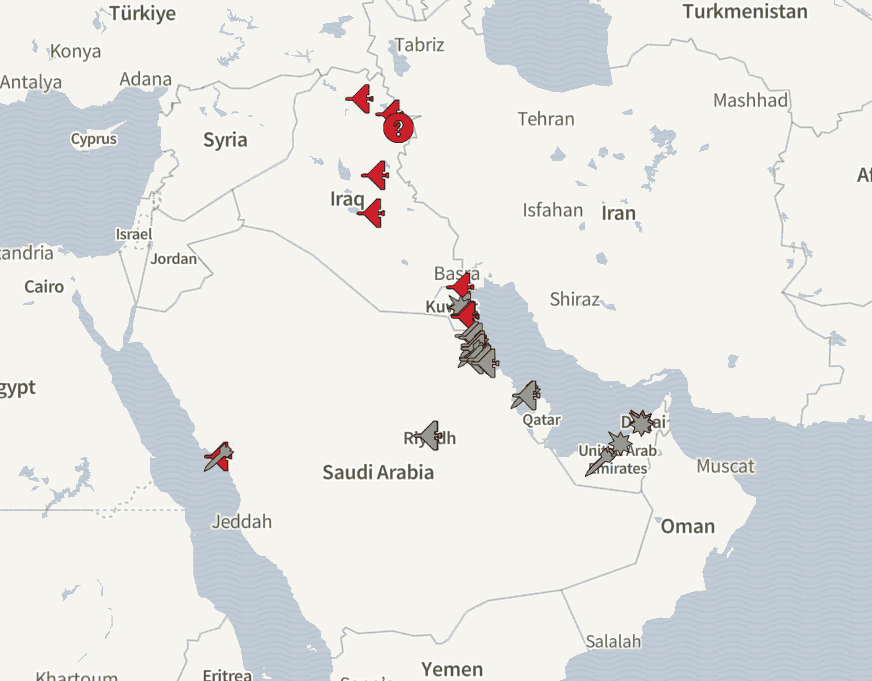
Iranian drones and missiles hit ports, oil and gas facilities, and US bases in the region (March 17-19 updates)
Between March 17 and March 19, Iran and its allied militias continued launching drones, missiles, and rockets across the Middle East. The attacks targeted energy infrastructure, airports, military bases, diplomatic facilities, and residential areas in Saudi Arabia, the United Arab Emirates, Qatar, Kuwait, Bahrain, and Iraq.
-
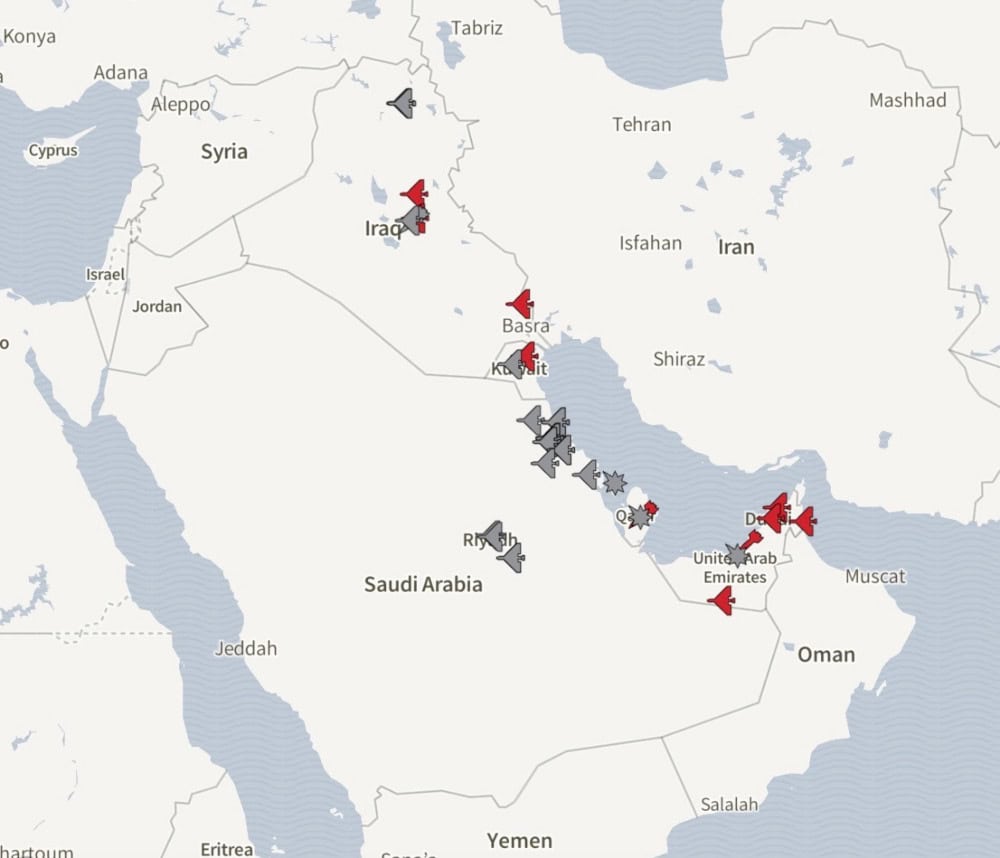
Iranian drones and missiles hit regional oil fields, airports, military bases, and ports (March 13-16 updates)
Between March 13 and March 16, Iran and its allied militias continued launching drones, missiles, rockets, and other attack platforms across the Middle East, targeting energy infrastructure, airports, military bases, residential areas, diplomatic facilities, and oil fields.
-
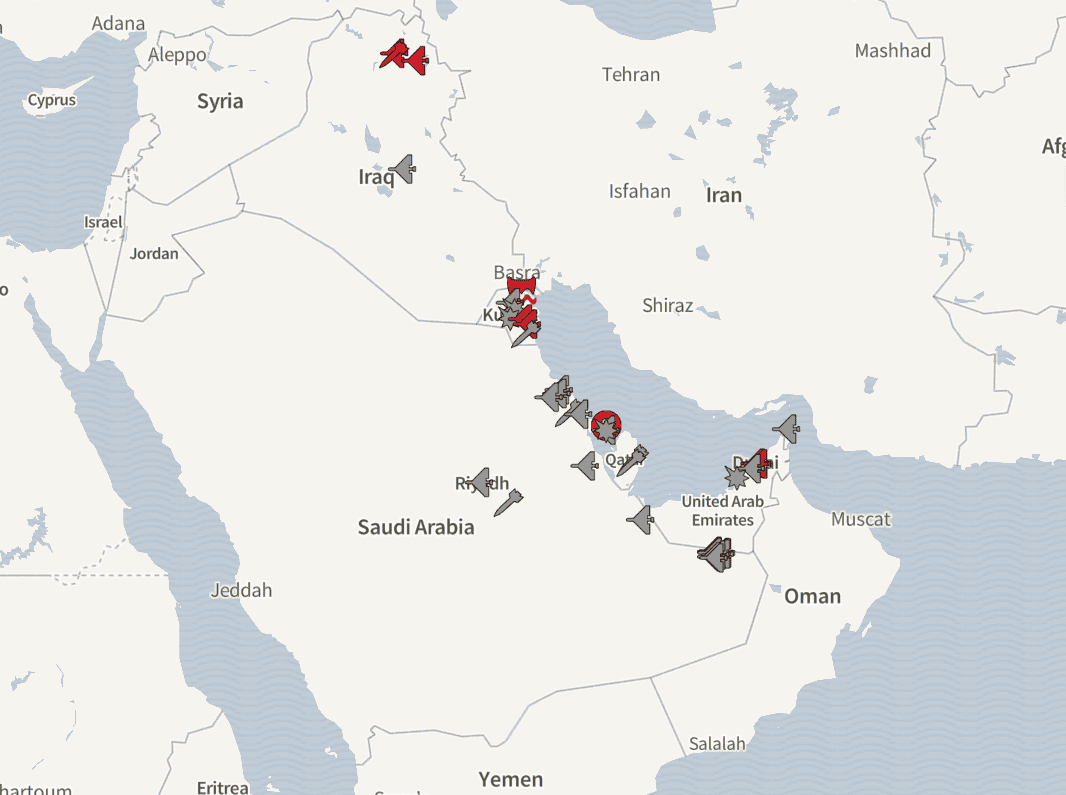
Iranian drones and missile barrages hit energy infrastructure, airports, and residential buildings in the Arab World (March 11-12 updates)
Between March 11 and March 12, Iran and its allied militias continued launching drones and missiles across the Middle East, targeting energy infrastructure, airports, military bases, residential areas, diplomatic facilities, and maritime targets in Iraq, Saudi Arabia, Kuwait, Bahrain, Qatar, the United Arab Emirates, Jordan, and Oman.
-
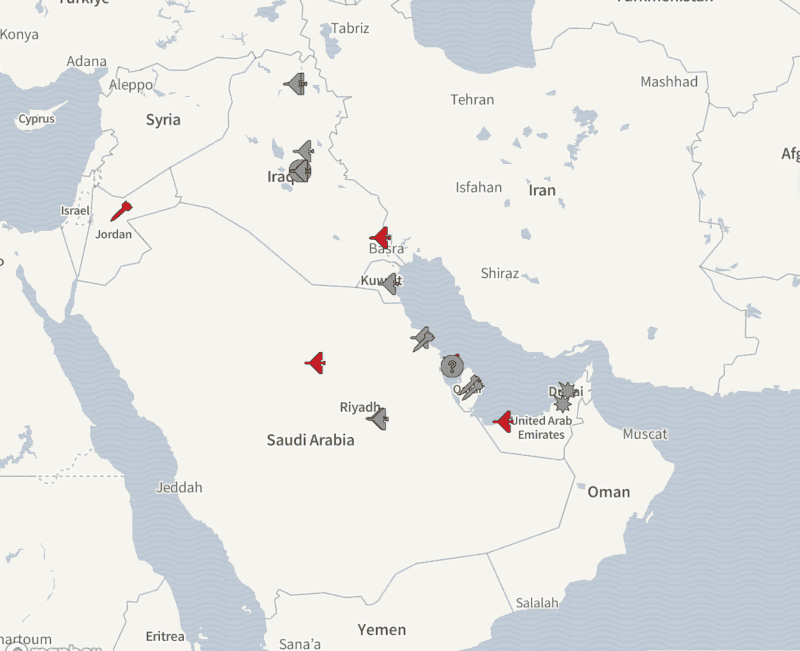
Iranian drone and missile barrages strike Arab states across the region (March 9-10 updates)
Iran and its allied militias continued launching drones and missiles across the Middle East between March 9 and 10, targeting energy infrastructure, airports, military bases, residential areas, and industrial facilities in Iraq, Saudi Arabia, Kuwait, Bahrain, Qatar, the United Arab Emirates, and Jordan.
-
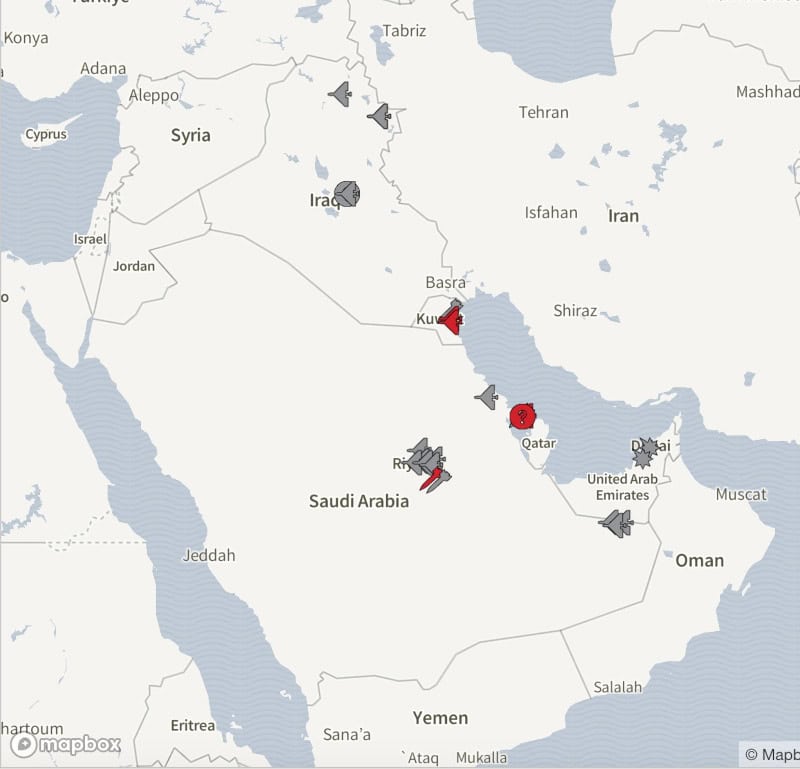
Iran continues striking civilian infrastructure and US bases in the Gulf (March 7–8 updates)
Between March 7 and 8, Iran continued launching drones and missiles across the Persian Gulf, targeting energy infrastructure, airports, military bases, government buildings, and urban areas in Saudi Arabia, Kuwait, Bahrain, and the United Arab Emirates.
-

Iran and proxy militias strike energy infrastructure, US bases, and Gulf capitals on March 6
On March 6, Iran and its aligned militias continued their campaign of missile and drone attacks across the Middle East, targeting civilian infrastructure, military installations, airports, and political sites in Bahrain, Iraq, Kuwait, Saudi Arabia, Qatar, and the UAE.
-
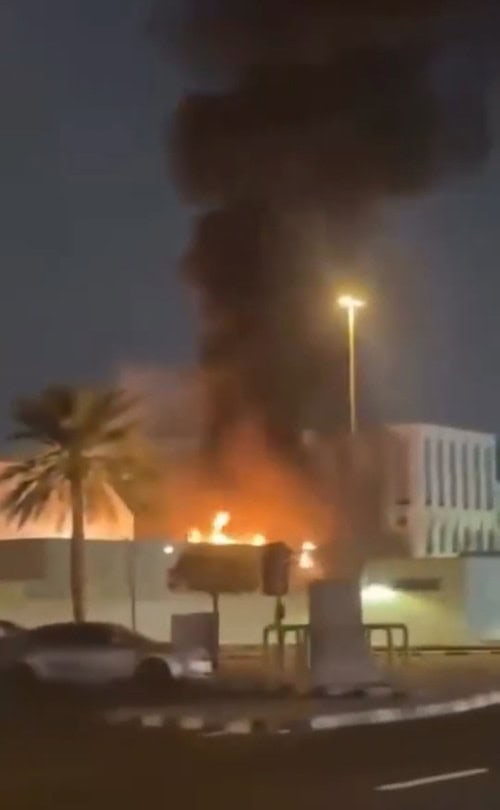
Iran targets US bases, diplomatic missions, and oil infrastructure in Arab countries on March 3–5
Between March 3 and March 5, Iran continued retaliating against the joint United States-Israeli military campaign by conducting widespread strikes across Arab Gulf countries using ballistic missiles, cruise missiles, and drones. Attacks were launched against Jordan, Oman, Saudi Arabia, Bahrain, Qatar, Kuwait, and the United Arab Emirates.
-

Iran expands retaliation for US-Israel campaign across Arab states (February 28–March 2)
The Tehran regime responded to the US-Israeli military campaign against it by launching coordinated missile and drone strikes across the Middle East on the first three days of the conflict. The attacks struck multiple Gulf Arab states and targeted civilian infrastructure, airports, ports, and military sites, with notable targets and impacts in the UAE, Bahrain,…
-
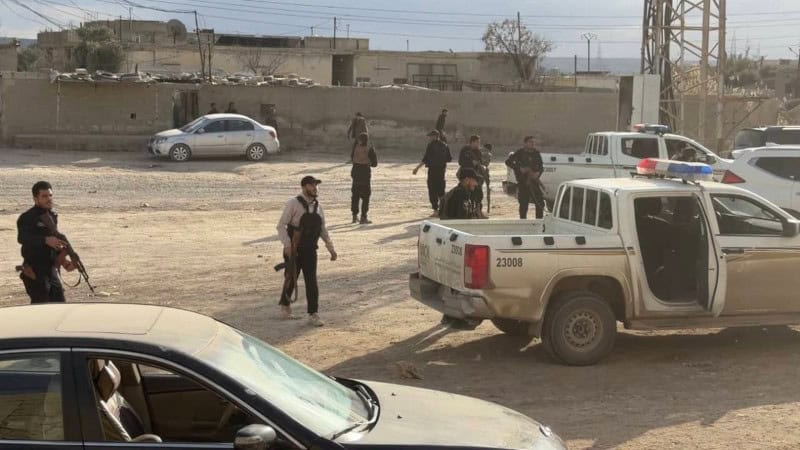
Islamic State ramps up attacks on Syrian government after issuing threats
The Islamic State intensified attacks against Syrian government forces in February. The uptick followed a voice recording released by the group’s spokesman, Abu Hudhayfah al Ansari, that announced “a new phase of operations” in Syria.
-

Fighting intensifies between Damascus and Syrian Democratic Forces as diplomatic talks resume
Battles between Syrian government forces and the Kurdish-led Syrian Democratic Forces (SDF) have continued to intensify despite a US-mediated ceasefire agreement. The latest clashes have involved drone strikes, rocket and artillery fire, and suicide bombings.
-
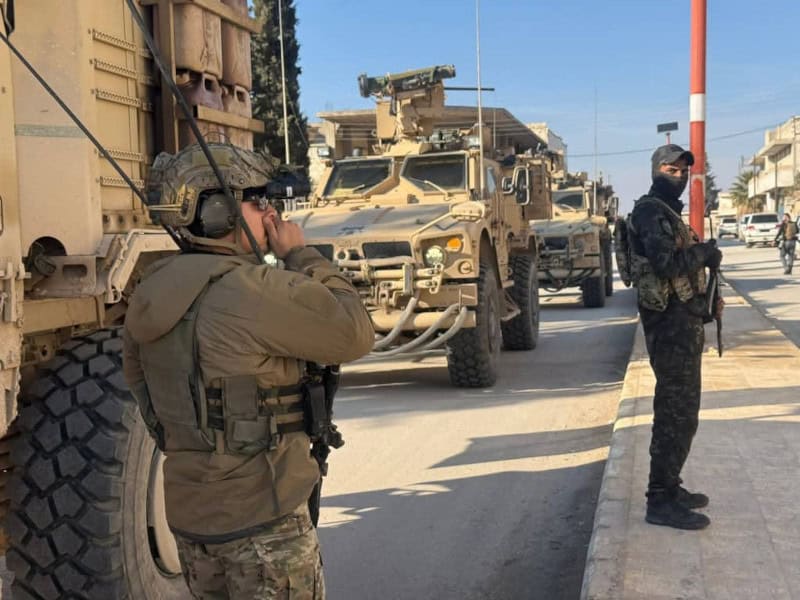
Kurdish-led Syrian Democratic Forces withdraw from Aleppo province after clashes with Syrian government
Following intense fighting between the Kurdish-led Syrian Democratic Forces (SDF) and Syrian government forces, SDF commander Mazloum Abdi ordered the withdrawal of his personnel from contested areas of Aleppo province.
-

Syrian army besieges Kurdish neighborhoods in Aleppo following clashes
Syrian army units have surrounded the Kurdish-majority neighborhoods of Sheikh Maqsoud and Ashrafiyeh in Aleppo, both of which are controlled by the Kurdish-led Syrian Democratic Forces (SDF). The siege, which followed clashes, is the latest escalation after the two sides failed to move forward on a March 2025 agreement to integrate the SDF into the…
-
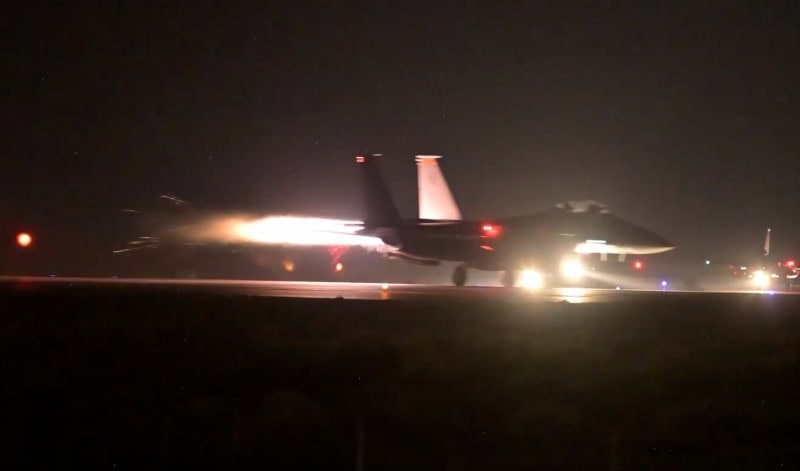
US launches widespread airstrikes against Islamic State in Syria after deadly Palmyra attack
On December 19, US Central Command announced that US forces conducted “a large-scale strike against ISIS infrastructure and weapons sites in Syria.” Al Arabiya reported that the United States hit “70 ISIS targets in sites in central Syria.”
-

3 Americans killed, 3 injured in Islamic State ambush attack in Palmyra, Syria
US Central Command announced that “two U.S. service members and one U.S. civilian were killed, and three service members were injured, as a result of an ambush by a lone [Islamic State] gunman in Syria.” A Syrian government official confirmed reports that the attacker was a member of the government’s security forces, stating that he…
-
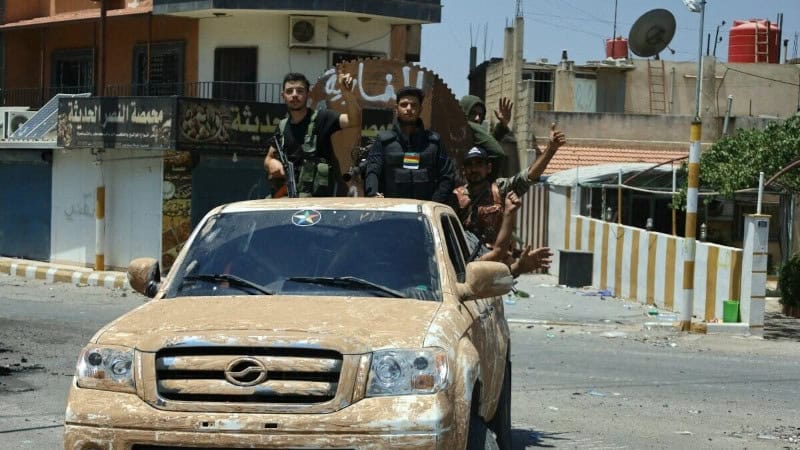
Instability grows in Syria’s Druze heartland as ‘National Guard’ militia arrests opponents
On November 29, members of Suwayda’s National Guard, a militia affiliated with Druze spiritual leader Hikmat al Hijri, carried out a series of arrests against political opponents in Syria’s predominantly Druze Suwayda province.
-

Israel’s Beit Jinn raid highlights potential Hamas-linked networks in southern Syria
On November 27, the Israel Defense Forces (IDF) launched an operation in the southern Syrian village of Beit Jinn to arrest operatives linked to the Lebanese Muslim Brotherhood.
-

Palestinian Islamic Jihad reportedly rebuilding its presence in Syria
Israel’s public broadcaster KAN reported on November 26 that Palestinian Islamic Jihad has been “increasingly strengthening its military wing in Syria in recent weeks,” particularly around Palestinian refugee camps in Damascus.
-
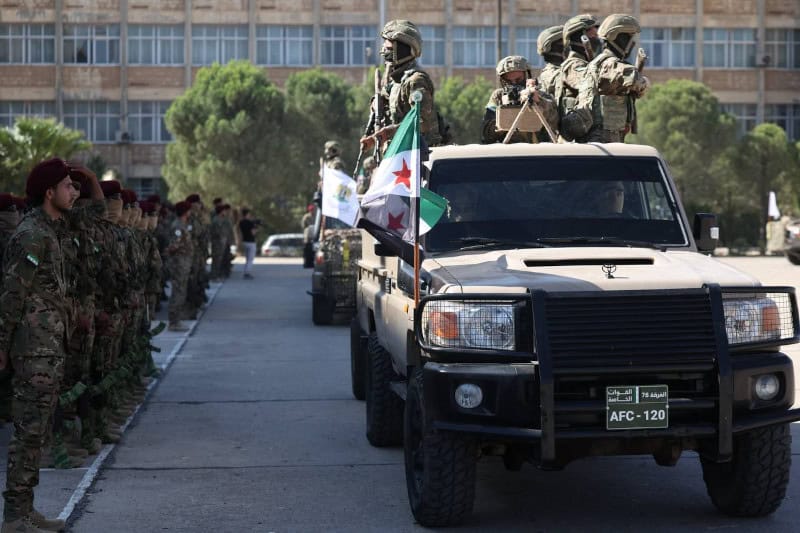
Clashes erupt between Syrian government troops and Kurdish-led Syrian Democratic Forces
On November 19, the Syrian Army and the Syrian Democratic Forces (SDF) battled near Maadan, Syria. While the two factions have not entered into full-blown conflict, tensions between them are rising as the end-of-year deadline for an integration agreement signed in March 2025 approaches.
-
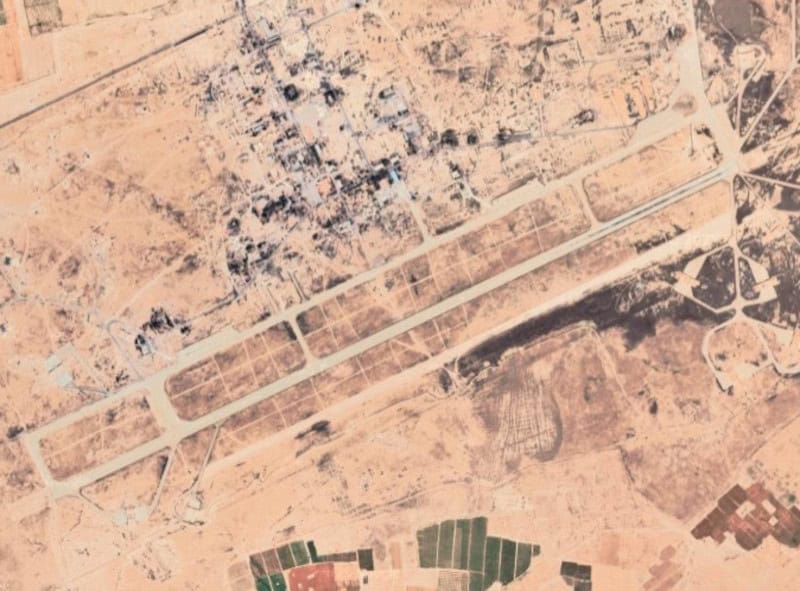
United States reportedly eyes military foothold in Damascus, Syrian official denies the claim
A Reuters report claims that the United States will establish a military presence at an airbase in Damascus, Syria, “to help enable” a security agreement between Syria and Israel.
-
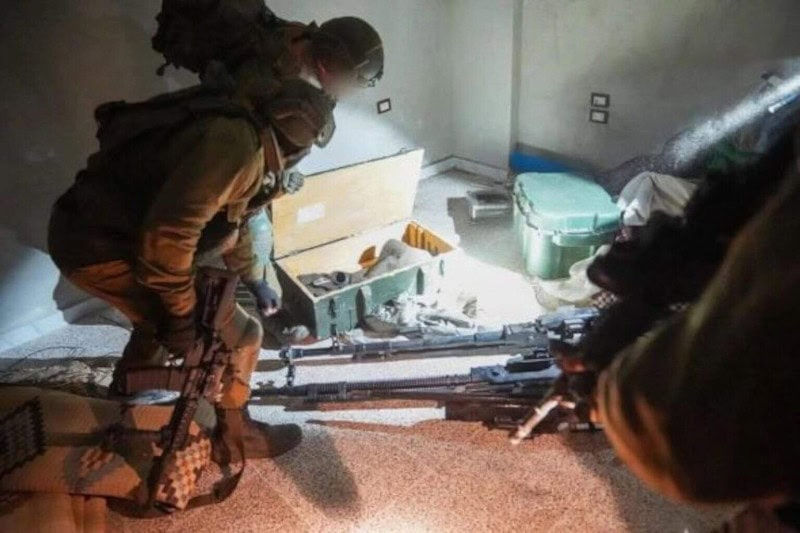
Israel and Syria close to a security agreement
On September 23, US Special Envoy for Syria Thomas Barrack claimed that Syria and Israel “are close to striking a ‘de-escalation’ agreement in which Israel will stop its attacks while Syria will agree not to move any machinery or heavy equipment near the Israeli border.”
-

Profiles of militias in newly formed Druze national guard in Suwayda, Syria
On August 23, armed factions in the Suwayda province in Syria announced the formation of a National Guard under the leadership of the Druze spiritual leader Hikmat al Hijri.
-
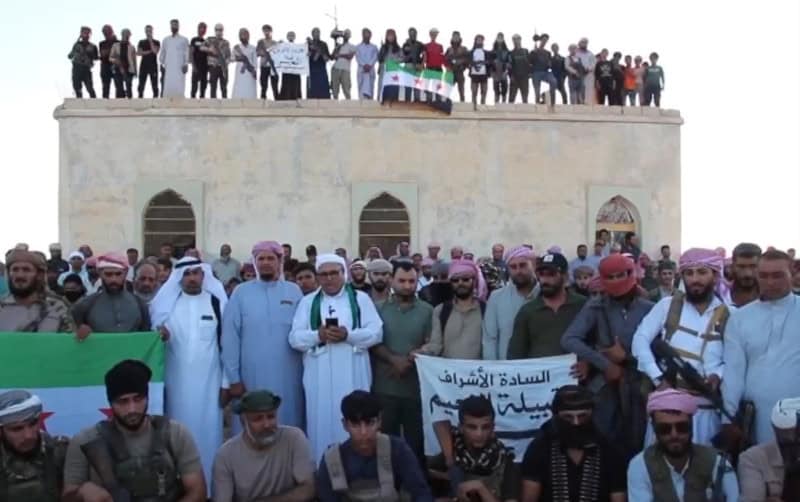
Sunni Arab tribes mobilize against the Syrian Democratic Forces
Several Sunni Arab tribes in northeast Syria, which encompasses 30 percent of the country and is currently under the control of the Kurdish-led Syrian Democratic Forces (SDF), have called for a general mobilization against the SDF.
-
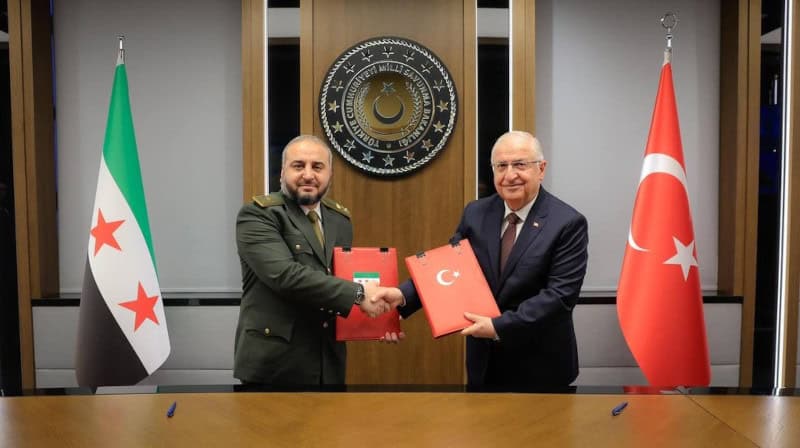
Turkey ramps up military support for Syria
The Turkish Ministry of Defense announced that Turkish Minister of Defense Yasar Guler and Syrian Minister of Defense Murhaf Abu Qusra signed a memorandum of understanding regarding the training of Syrian troops and a military consultancy after talks in Ankara.
The Team
Meet the Team Behind the Vision
Our dedicated team combines diverse skills and shared passion to bring innovative solutions to life. Together, we collaborate, create, and strive to exceed expectations every day. Learn more about the people driving our mission forward.
Alex Johnson
Project Manager
Oversees project timelines and ensures seamless collaboration among team members to deliver results on schedule.
Alex Johnson
Project Manager
Oversees project timelines and ensures seamless collaboration among team members to deliver results on schedule.
Alex Johnson
Project Manager
Oversees project timelines and ensures seamless collaboration among team members to deliver results on schedule.