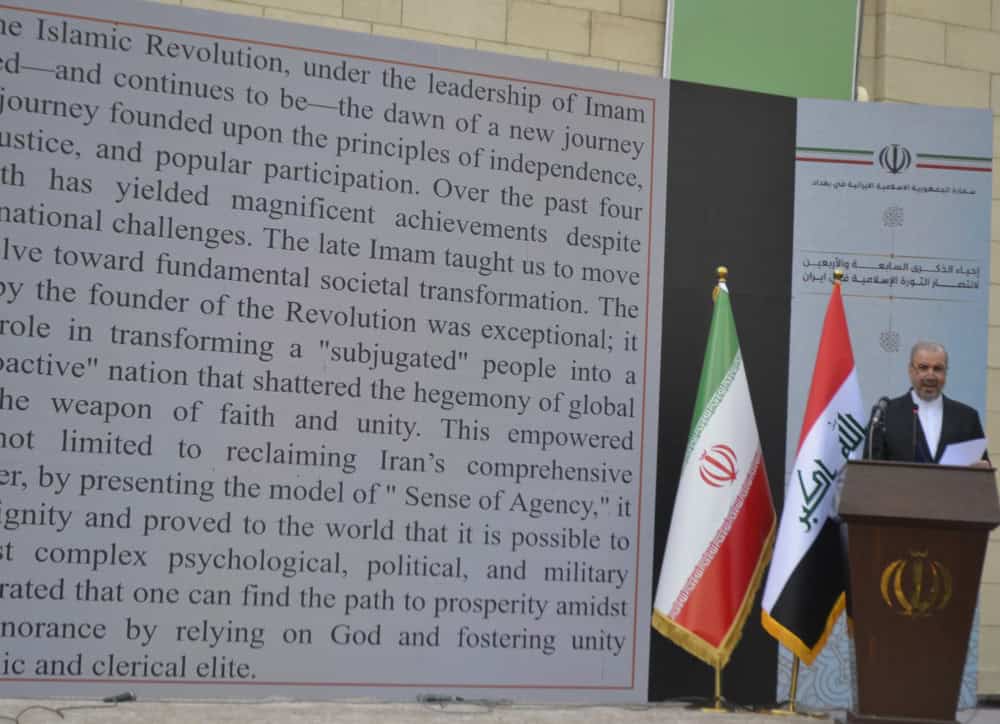
On October 20, Iranian Ambassador to Iraq Mohammad Kazem Al Sadegh said that Iraq has agreed to “expel the elements of the Iranian separatist terrorist groups from the Kurdistan Region of Iraq or to hand them over to Iran.” The statement comes amid reports that Iran has increased its operations in northwestern Iran against Kurdish opposition groups, particularly targeting the Kurdistan Free Life Party (PJAK). The new development also comes as the Kurdistan Workers’ Party (PKK) has withdrawn from several areas in northern Iraq as a peace process with Turkey unfolds.
The PKK announced its dissolution in May 2025, a decision that has influenced developments not only in Turkey but also in neighboring Iraq and Iran. PKK members withdrew from several locations in the Metina region of northern Iraq in early October. PKK leader Murat Karayilan confirmed in an October 11 interview that the group had withdrawn forces from several areas.
Turkey has been concerned about potential developments in Iran involving PJAK because of the group’s links to the PKK. “The activities of groups that fuel ethnic separatism, such as the terrorist organization PJAK, negatively affect
Iranian Foreign Minister Abbas Araghchi claimed in July that Turkey had helped prevent a Kurdish uprising in Iran. PJAK rejected these claims at the time. The group has also argued it should not be included in the PKK-Turkey peace process. “Those who want to sabotage the peace process in Northern Kurdistan (southeastern Turkey) and Turkey are bringing PJAK into question,” PJAK spokesperson Gelawej Ewrin said on August 30.
Iran’s pressure on Iraq to expel Kurdish Iranian opposition groups and Iran’s crackdown on PJAK appear to be linked. PJAK said as recently as August that it operates independently of the PKK. An officer in the Islamic Revolutionary Guard Corps (IRGC) who was killed in the Qandil mountain range on October 17 may have been killed in clashes with PJAK. Iran did not specify how he was killed, only noting he was a “martyr.” Qandil, along the Iran-Iraq border, has long been a major stronghold for the PKK and the PJAK.
In his October 20 statement, the Iranian ambassador to Iraq posted a photo from a February 2026 meeting in which five Kurdish Iranian opposition groups met to form a coalition. At the February meeting, representatives of the Democratic Party of Iranian Kurdistan (PDKI), the Kurdistan Free Life Party (PJAK), the Kurdistan Freedom Party (PAK), the Khabat Organization of Iranian Kurdistan, and one branch of the Komala Party of Iranian Kurdistan attended.
Iran has carried out more than 1,000 attacks on the Kurdistan Region of northern Iraq since the US and Israel began airstrikes on Iran on February 28, 2026. Many of these attacks have targeted Kurdish Iranian opposition groups. The most recent attack was on October 17, targeting Komala.
Iranian pressure on Iraq to expel Kurdish groups comes after the US withdrew forces from Iraq on September 30. Iran has demanded that Iraq rein in and relocate Kurdish opposition groups for years. Pro-regime media in Iran reported on the Iranian ambassador’s statement on October 20, with Mehr News and Press TV both mentioning the development.
Iranian pressure has also come in the wake of Kurdish leaders in the Kurdistan Regional Government seeking to reduce tensions with Iran over these opposition groups. Rudaw Media Network noted that the Iranian envoy’s statement followed an October 19 meeting of a joint committee overseeing a security agreement between Iran and Iraq. The meeting was “chaired by Iraqi National Security Advisor Qasim al-Aboudi and attended by Iranian officials and a delegation from the Kurdistan Regional Government (KRG),” Rudaw reported. The office of Iraq’s National Security Advisor did not mention the expulsion of the Kurdish opposition groups in a statement about the meeting.
The PDKI rejected Iranian demands in a statement on October 20. An Iraqi source also told Rudaw on October 20 that no agreement on expelling the groups from Iraq had been reached.