On November 19, the government-controlled Syrian army and the predominantly Kurdish, US-backed Syrian Democratic Forces (SDF) battled in the area of Maadan, east of Raqqa. According to Syrian government sources, SDF forces targeted Syrian army positions in the Maadan area of Raqqa’s countryside following heavy shelling towards the positions. The sources stated that the SDF was able to seize “several positions in Maadan and managed to kill two Syrian soldiers and wound a few more.”
In response, the Syrian Ministry of Defense stated that the “army quickly responded to the sources of fire and carried out a counterattack in which it regained the positions lost to SDF forces, pushing them to retreat.” The ministry added that the SDF attacks were “treacherous.”
The SDF’s narrative was different, as the group announced that it had foiled an attack by government-aligned forces east of Raqqa. The SDF further claimed that its retaliation was proportionate and aimed at preventing the military conflict from spreading.
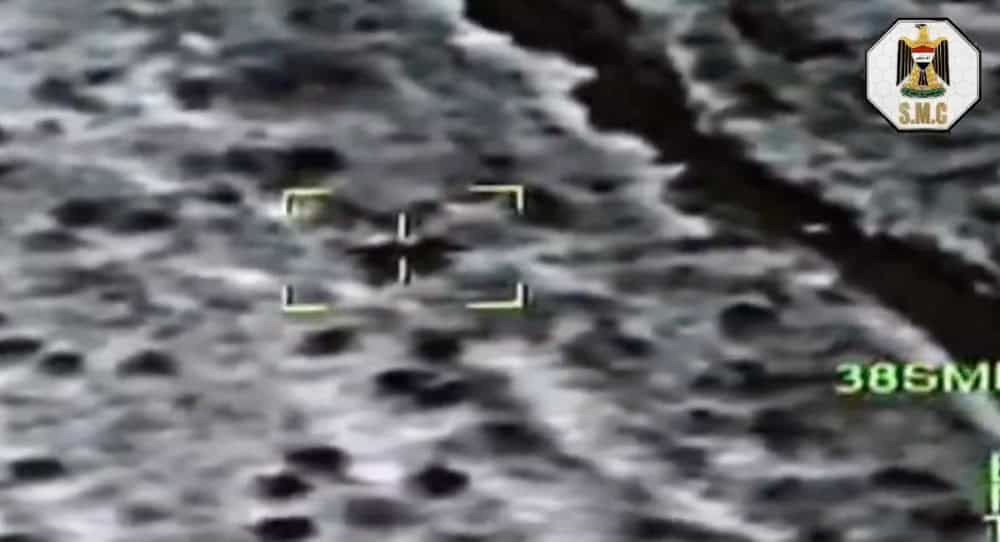
At the same time, the SDF said in a statement that its troops “had engaged targets used by the Islamic State to launch drones east of Raqqa” and claimed that its forces shot down two drones originating from “positions held by factions backed by the Damascus government.” The SDF also released what it said were video clips extracted from a shot-down “Matrice M30” drone, claiming the footage “shows ISIS [Islamic State] elements using those positions as bases for launching drones.”
Tensions between the Syrian government and the SDF had previously escalated on October 6, when Syrian troops clashed with SDF units in the Kurdish enclaves of Sheikh Maqsud and Ashrafiyeh in Aleppo. The confrontation began after government forces said they had discovered a tunnel allegedly used to smuggle weapons into the two neighborhoods.
A ceasefire was brokered the following day, on October 7, with the United States mediating between the two sides. The effort to implement the March 10 integration agreement was also part of the agenda during Syrian President Ahmad al Sharaa’s visit to Washington. During that visit, Washington confirmed Syria’s entry into the anti-Islamic State coalition. The US government also formally delisted Sharaa, formerly the leader of Al Qaeda’s Syrian affiliate, Jabhat al Nusra, as a Specially Designated Global Terrorist (SDGT).
Following Sharaa’s meeting with Trump, SDF commander Mazloum Abdi stated that the SDF was committed to “accelerating the integration of the SDF into the Syrian state.” In response, Syrian Foreign Minister Asaad al Shaibani claimed that there has been no “positive or practical progress in the agreement with Mazloum Abdi.” Syrian Minister of Interior Anas Khattab, whom the United States also delisted as an SDGT, stated that the SDF and the Syrian government would meet in the following days to discuss integrating the SDF’s military and security units.
Tensions between the two factions are rising and may intensify in the coming weeks as the end-of-year deadline for the integration agreement they signed in March 2025 approaches. Sharaa has repeatedly signaled that he has managed to prevent Turkey, which views the SDF’s core component, the People’s Defense Units (YPG), as a terrorist group and extension of the Kurdistan Workers Party (PKK), from military action to allow the political process to move forward.
It remains unclear how the Syrian government will respond if the integration plan is not implemented by the deadline. While neither side appears willing to enter a full-scale military confrontation, Turkish military action may be possible.