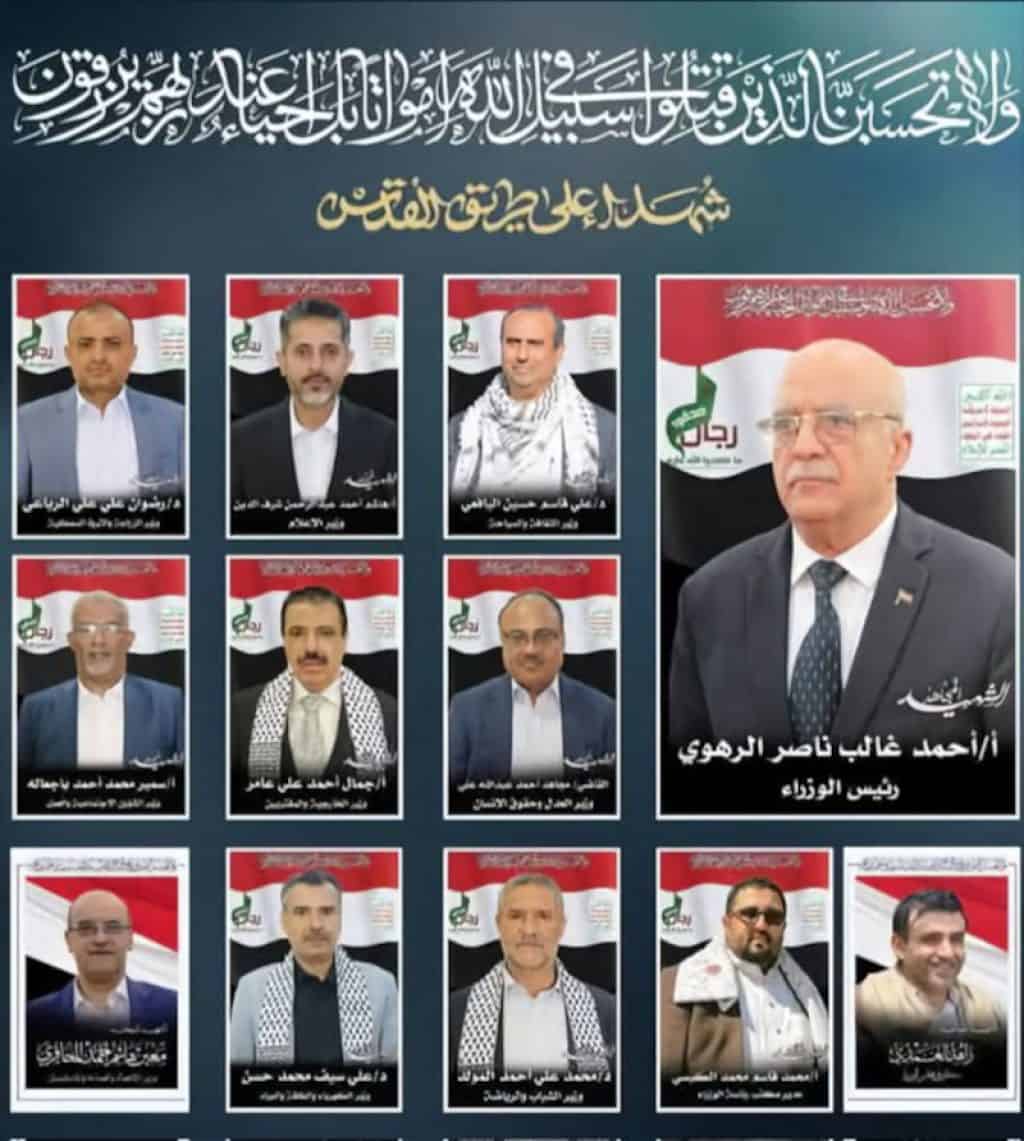
On August 28, the Israel Defense Forces (IDF) struck Sanaa, the Houthi-controlled capital of Yemen, killing Prime Minister Ahmed al Rahawi, along with nine ministers and two other top officials of the Houthi government in northern Yemen. The IDF confirmed Rahawi’s death on August 30, as did the Houthis, and the prime minister is the most senior Houthi figure killed by Israel.
“At the facility struck were senior officials responsible for the use of force, the military buildup of the Houthi terror regime, and the advancement of terror actions against Israel,” the IDF stated on August 30. Israeli Minister of Defense Israel Katz promised that the country will continue to target the Houthi leadership.
The IDF conducted the strikes in response to ongoing drone and missile attacks from the Houthis, including the use of cluster munitions for the first time on August 22. On August 24, the IDF initially targeted Houthi military and energy infrastructure, as it has done repeatedly since the Yemeni terrorist group began its attacks against Israel in October 2023 in solidarity with Palestinians in Gaza. Those strikes were followed four days later by strikes on Houthi leaders.
Mahdi al Mashat, the president of the Houthi government, gave a speech mourning the deceased individuals and threatening revenge. “To all companies present in the occupying entity [Israel], my final advice is to leave before it is too late. If the pure and innocent Yemeni blood is shed, the thrones of empires that ruled the world or most of it will fall,” Mashat said. He also asserted the group will continue its attacks against Israel in professed solidarity with Gaza.
The Iran-backed, Yemeni terror group held a funeral in Sanaa for the slain officials, and Mashat promoted First Deputy Prime Minister Mohammed Miftah to the position of acting prime minister on August 30.
On September 2 and September 3, the Houthis launched missiles and drones at Israel in response to Israel’s attacks. The group also claimed to have targeted an allegedly Israeli oil tanker in the northern Red Sea.
The Houthi leaders assassinated by Israel
- Ahmed al Rahawi had served as the prime minister of the Houthi-controlled government since August 2024. He previously held lower-level political positions until he was elevated to the Houthis’ Supreme Political Council, the group’s executive body, in 2019.
- Hashem Ahmed Sharaf al Din served as the minister of information and a government spokesperson. The Islamic Republic of Iran Broadcasting (IRIB), Iran’s official media organ, praised Din for his role in the media war against Israel.
- Jamal Ahmed Amer served as the minister of foreign affairs and expatriates. Prior to that position, he worked in foreign relations for the Houthis and as a journalist.
- Muin Hashem Ahmed al Mahaqri served as the minister of economy, industry, and investment.
- Ali Qasim Hussein al Yafii served as the minister of culture and tourism.
- Radwan Ali al Ruba’i served as the minister of agriculture, fisheries, and water resources.
- Mohammed Ali al Mawla served as the minister of youth and sports.
- Samir Muhammad Bajala served as the minister of social affairs and labor.
- Mujahid Ahmed Abdullah Ali served as the minister of justice and human rights.
- Ali Saif Muhammad served as the minister of electricity, energy, and water.
- Muhammad Qasim al Kubaisi served as the director of the Prime Minister’s Office.
- Zahed Muhammad al Amidi served as the secretary of the Council of Ministers.
The Houthi-Israel conflict
The Houthis have launched hundreds of drones and missiles at Israel, commercial shipping, and US forces, claiming these attacks are carried out in solidarity with Gazans during Israel’s war in the territory following the Hamas-led terror attacks on October 7, 2023. The Houthis have attempted to enforce naval and air blockades of Israel by frequently launching missiles at Israel’s Ben Gurion International Airport and attacking merchant ships connected to Israel. The Houthis’ claimed connections between various targeted ships and Israel have often been tenuous or fabricated.
The Houthis paused attacks on commercial shipping in the Red Sea for seven months following a ceasefire in Gaza that began in January, but resumed these attacks in July after the cessation of the truce, sinking two ships. The United States, Israel, and the United Kingdom have all carried out airstrikes against the Houthis in response to the group’s Red Sea terrorism that threatens global shipping. The US operation, termed Operation Rough Rider, struck over 1,000 targets and lasted from March 2025 to May 6, when the US and Houthis agreed to a ceasefire in which neither party would directly target the other.