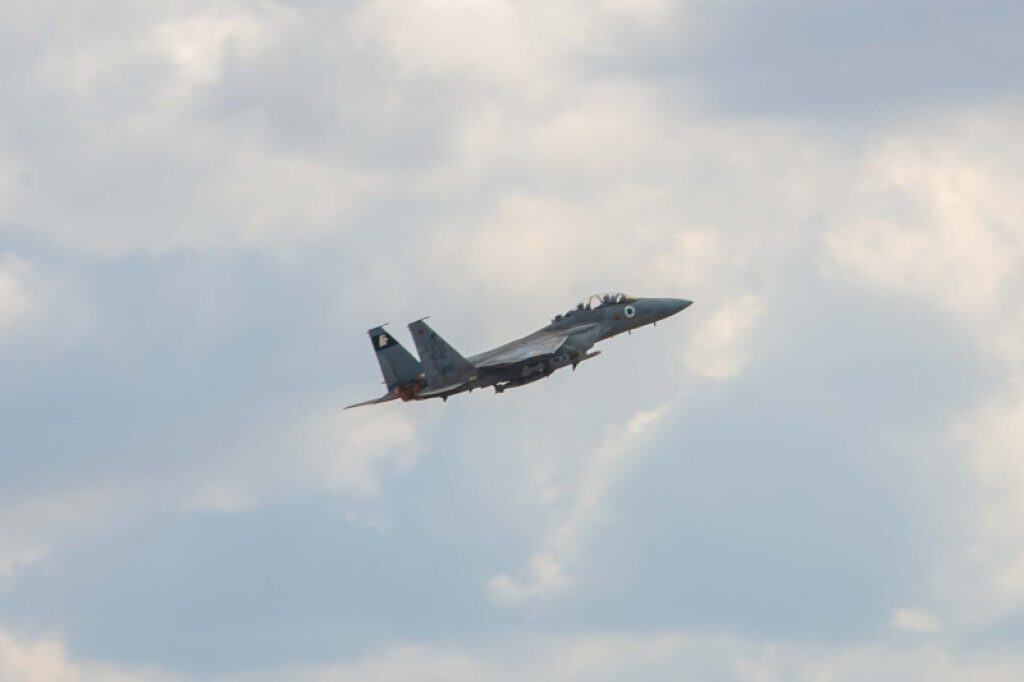
As the Houthis have continued to launch missiles at Israel, including firing a cluster munition for the first time on August 22, Israel responded with strikes in Houthi-controlled territory on August 24 and August 28.
On August 24, the IDF announced that Israel struck four targets in Sanaa, the Houthi-controlled capital of Yemen. The locations hit included military infrastructure in the presidential palace, the Hezyaz power plant, a fuel storage site, and possibly a power substation.
“These strikes were carried out in response to repeated Houthi attacks on Israel with missiles and UAVs [unmanned aerial vehicles]. The Houthis, backed by Iran, continue to exploit civilian infrastructure for terror purposes,” the Israel Defense Forces (IDF) stated. Israel has repeatedly targeted Houthi military sites, as well as power and economic infrastructure that enables the group’s terrorist attacks, since October 2023, when the Houthis began targeting Israel in solidarity with Hamas.
Israel followed up the strikes on August 24 with another round of strikes that targeted Houthi leaders on August 28. “Israel targeted the Houthi group’s chief of staff, defence minister and other senior figures in airstrikes on Sanaa in Yemen on Thursday, and was still verifying the outcome,” according to an Israeli military official speaking to Reuters. Israel conducted the operation as Houthi leader Abdulmalik al Houthi was delivering his weekly address.
Sources in Yemen have said that Houthi Prime Minister Ahmed al Rahawi, a political figurehead, was killed in Israel’s attacks. Other sources say that the group’s chief of staff, Mohammad al Ghamari, and minister of defense, Mohammed Nasser al Atifi, were targeted in a different attack, a claim confirmed by the IDF. The results of that strike are unknown.
Ghamari, a trusted Houthi military leader with extensive ties to Iran’s Axis of Resistance, Tehran’s network of allied regional proxies, was previously targeted in June and believed to have been injured. Both Ghamari and Atifi are important leaders in the Houthis’ military establishment. However, decision-making is concentrated in Abdulmalik and his inner circle, making individuals, even those with significant political titles such as Rahawi, less central to the group’s operations.
The Houthis quickly and vociferously denied that the airstrikes achieved success, insisting that no leaders were targeted.
It is unlikely that Israel or the Houthis will confirm the death of key leaders quickly if any were killed. Israel, though likely to release such information, will require time to conduct an assessment and verify deaths. The Houthis will likely delay the announcements and funerals of slain leaders, especially if important military figures were, in fact, assassinated.
Since the Houthis began their attacks on Israel and commercial shipping in November 2023, the United States, Israel, and the United Kingdom have been unable to successfully target key leaders of the Yemeni terrorist group, despite extensive air campaigns. If Israel killed high-profile figures, it likely indicates that its intelligence regarding the group has improved.