-
Sunni Arab tribes mobilize against the Syrian Democratic Forces
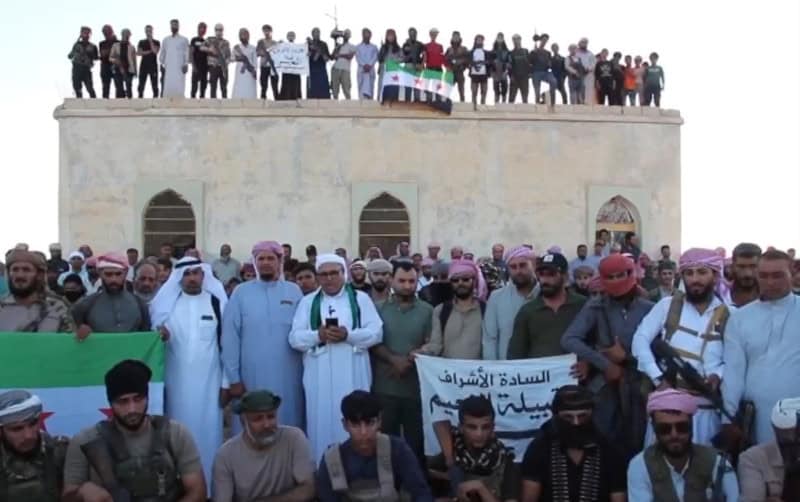
Several Sunni Arab tribes in northeast Syria, which encompasses 30 percent of the country and is currently under the control of the Kurdish-led Syrian Democratic Forces (SDF), have called for a general mobilization against the SDF.
-
Turkey ramps up military support for Syria
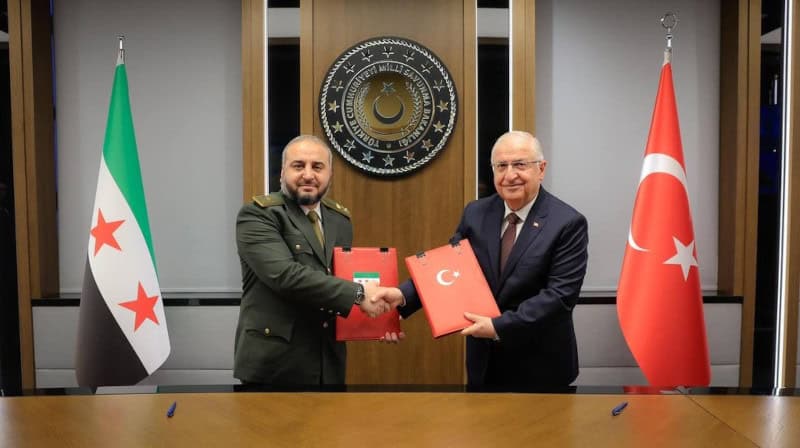
The Turkish Ministry of Defense announced that Turkish Minister of Defense Yasar Guler and Syrian Minister of Defense Murhaf Abu Qusra signed a memorandum of understanding regarding the training of Syrian troops and a military consultancy after talks in Ankara.
-
Clashes erupt in Syria’s Suwayda following US-brokered ceasefire
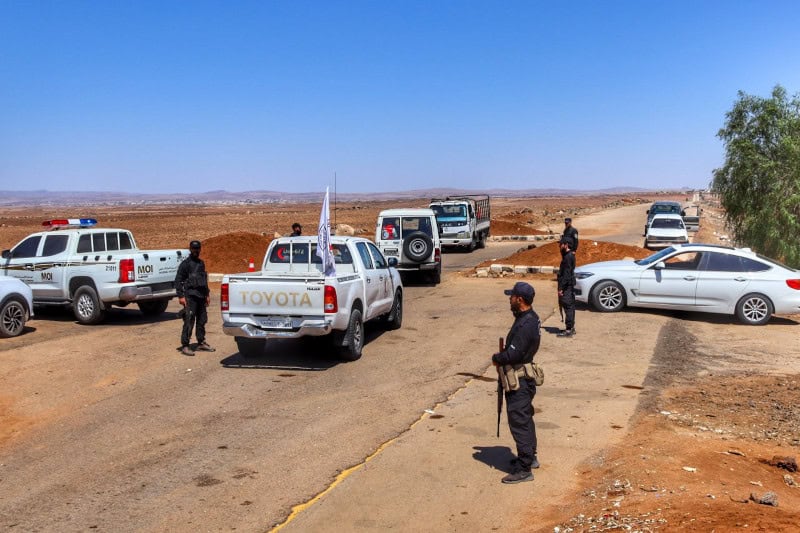
On August 3, clashes between local Druze militias, Sunni Arab tribal forces, and Syrian government troops reignited in Syria’s Suwayda province after a two-week hiatus following a US-brokered ceasefire.
-
UN report shows Islamic State and Al Qaeda exploiting post-Assad chaos in Syria
On July 29, the United Nations Security Council Analytical Support and Sanctions Monitoring Team released its latest report detailing terrorist group activities around the world. The section on Syria discussed the most recent developments related to the resurgence of the Islamic State and Al Qaeda, in addition to the difficulties of integrating various groups into the country’s military.

-
Analysis: Syrian Druze are not entitled to self-determination, and Kurds cannot yet pursue secession
Damascus’s new rulers may be unwilling or unable to protect Syria’s minorities, and calls have arisen to carve sovereign states for Kurds and Druze out of Syrian territory. However, these calls reflect a fundamental misunderstanding and misapplication of the principle of self-determination.

-
New head of anti-Islamic State mission in Iraq and Syria takes command
The anti-Islamic State coalition of Combined Joint Task Force-Operation Inherent Resolve received its new commander at a ceremony in Iraq on July 21, 2025. Brigadier General Kevin Lambert took over for Major General Kevin Leahy, who served in the role for a year. Lambert takes over as US allies in Syria may integrate into the new Syrian armed forces, and the US is weighing its next steps in the country.

-
Clashes intensify between Arab Bedouin tribes and Druze militias in Suwayda, Syria
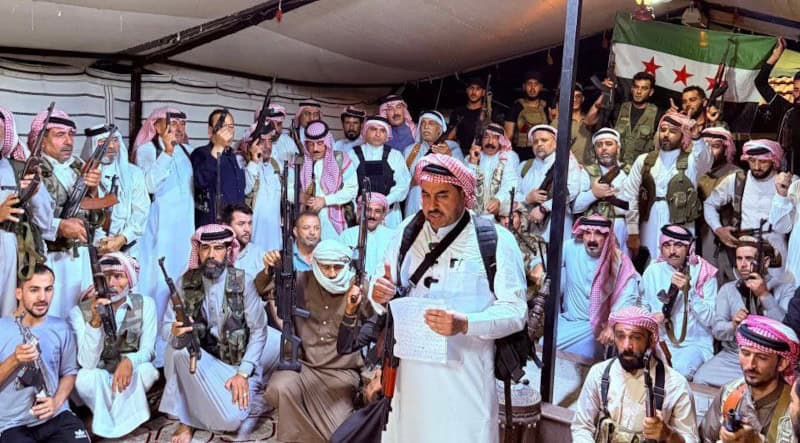
Clashes between Druze militias and Sunni Arab tribes have continued and grown after Syrian Army forces withdrew from the predominantly Druze governorate of Suwayda on July 16.
-
Israel intensifies airstrikes on Syria to deter attacks on Druze
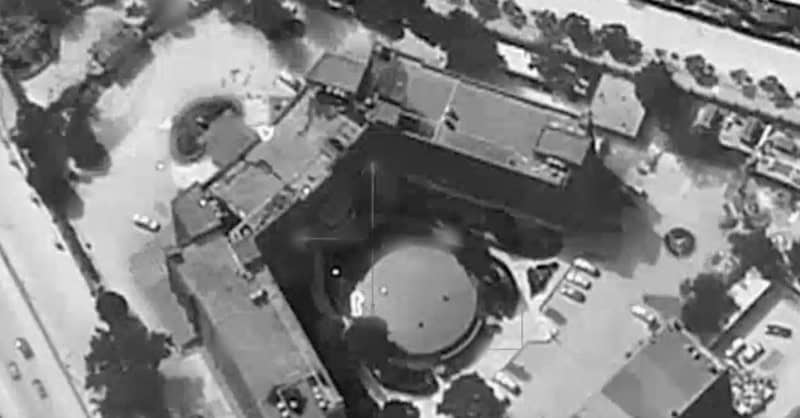
Israel has increased attacks on government sites in Damascus and carried out airstrikes against Syrian forces to deter attacks against the Druze minority in southern Syria. The Israel Defense Forces struck tanks and vehicles on July 14 and 15. On July 16, it expanded the campaign to target an area near the Syrian Presidential Palace and struck a military headquarters in Damascus. Israeli officials have vowed over the last six months to protect the Druze in Syria and keep southern Syria demilitarized.
-
Clashes intensify between Druze militias, Bedouin tribes, and government forces in southern Syria
Syrian Armed Forces entered the Druze-majority governorate of Suwayda for the first time on July 15, prompting severe clashes with Druze militias that have long resisted state control.

-
Analysis: Turkey still wants to join BRICS while pretending to be a NATO ally
Turkey’s attempt to join BRICS, a bloc that seeks to undermine the foundations of the Western world order, is only one of many transgressions against the interests of its ostensible allies in NATO, the US, and Europe.

-
Israeli forces raid Iran-backed cell in Syria for second time
The Israel Defense Forces (IDF) apprehended members of a cell in Syria who were working on behalf of the Iranian Islamic Revolutionary Guard Corps-Qods Force, the IDF said on July 7. It was the second operation in two weeks in which the IDF targeted suspects linked to Iran’s IRGC-QF in southern Syria. Israeli units of the 210th Division continue to carry out operations in Syria, including on Mount Hermon and along the Golan border.

-
Israel Defense Forces raid Iran-linked terror cell in Syria
The Israel Defense Forces (IDF) apprehended suspects in Syria who are part of “a terrorist cell operated by Iran,” the Israeli military said on July 2, one of several recent raids it has conducted along the border to detain suspects. IDF Chief of Staff Eyal Zamir visited the Golan on July 1 and met with Israeli officers. “We must maintain a high level of alertness and keep our eyes open at all times,” he said.

-
Iraqi military bases targeted in overnight strikes
Suspected Iran-backed militias targeted bases in Iraq that are known to have housed US troops and contractors as the ceasefire between Iran and Israel took effect. The Trump administration did not respond to last night’s attacks or previous attacks against US forces in Iraq and Syria.
-
Israel eliminates a key link between Hamas and Iran
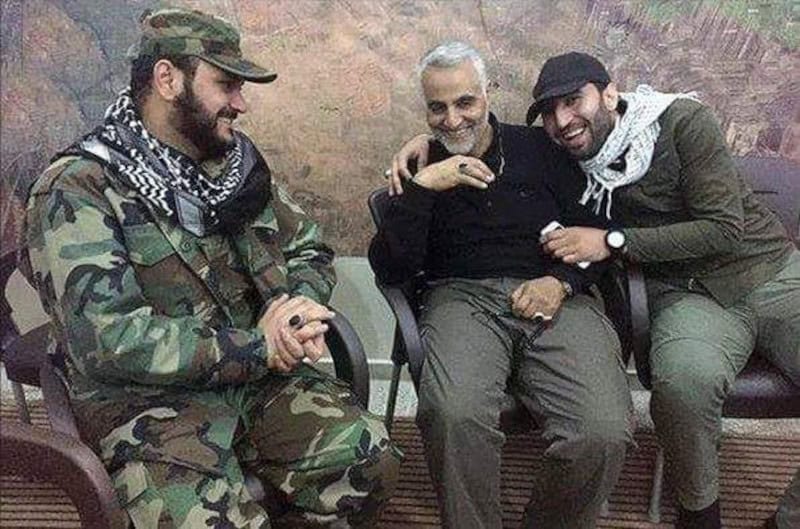
Israel killed a key Islamic Revolutionary Guard Corps-Qods Force (IRGC-QF) official who coordinated between Iran, Hamas, and other members of the Iran-led Axis of Resistance. The elimination is among the most notable high-ranking Iranian military officials killed in the current war.

-
Iran-backed militias attack 3 US bases in Syria
US bases in northeastern Syria came under fire from missiles launched by Iran-backed militias, according to a report from the region. The missiles were intercepted, and no US troops were injured. A US defense official did not deny the attacks took place.

-
US strike in northwestern Syria kills Islamic State’s external attack planner
As the US continues to reduce its military footprint in Syria, US Central Command launched an airstrike that killed Rakhim Boev, who it identified as “a Syria-based ISIS official who was involved in planning external operations threatening U.S. citizens, our partners, and civilians.”

-
Israel launches ground operation to arrest alleged Hamas militants in Syria
The Israel Defense Forces announced that “troops of the 3rd Brigade, under the command of the 210th Division, completed an operation to apprehend Hamas terrorists operating in the Beit Jinn area of Syria.”

-
Delegation from eastern Syria meets with government in Damascus
The Autonomous Administration of North and East Syria (AANES) sent a delegation to Damascus for the first round of talks aimed at the full integration of military and civilian institutions of the autonomous eastern Syria region into the state’s new institutions. The development comes as US forces are slowly withdrawing from the country.

-
Rocket fire marks first attack from Syrian territory on Israel since Assad’s fall
Two Syrian groups claimed the first attack against Israel since the fall of the Bashar al Assad regime in Syria. A Syrian official told Reuters that the attackers include “remnants of Assad-era militias linked to Iran” who “have a vested interest in provoking Israeli retaliation.”

-
Analysis: The Druze chessboard between Syria and Israel
On May 29, an Israeli security official stated that Israel will not intervene militarily in support of any group in Syria. This stance follows previous Israeli intervention to protect the Syrian Druze amid pressure from Israeli Druze to prevent human rights abuses. Israel’s evolving stance reflects a delicate balancing act between security, humanitarian, and political interests and may mark a turning point in Syria’s sectarian conflict.

-
Syria’s captagon industry continues to flourish despite new regime crackdowns
After toppling Bashar al Assad in December, Syria’s new leaders pledged to crack down on the captagon trade, which had generated billions of dollars for the Assad regime. However, subsequent efforts have failed to significantly curb the production and trafficking of the illicit stimulant.

-
US-backed Syrian Free Army secures airbase east of Damascus
The US-backed Syrian Free Army (SFA), which operates from the Tanf Garrison in southern Syria, has been working to secure and protect an airbase 45 miles east of Damascus. The Al Seen Military Airbase was previously used by the Assad regime and has been the site of “sabotage” recently, according to the SFA. The commander of the Syrian Air Force visited the facility on May 20.

-
Syrian military integrates Al Qaeda-linked terror group into its ranks
The Turkistan Islamic Party’s branch in Syria, an Al Qaeda ally, is being integrated into the new Syrian military as the 84th Division. The group’s leader, Abdul Haq al Turkistani, sits on Al Qaeda’s central governing council and directs the group’s operations in Syria. Despite this, the Trump administration is poised to lift sanctions on Syria.

-
Analysis: The PKK abandons armed struggle
The PKK, the Kurdish separatist group that has waged a decades-long secessionist movement inside Turkey, recently announced its decision to lay down its weapons and likely abandon its cause. However, the conditions of the compromise the opposing sides have reached are shrouded in secrecy, and many wonder if lasting peace will be achieved. Peace between the PKK and Turkey will have regional implications spanning the stability of Syria, Iraq, and Iran.

-
Trump presses Sharaa on foreign fighters as jihadists rise in Syria’s new army
President Donald Trump met with Syrian interim President Ahmad al Sharaa, a former Al Qaeda leader, and urged him to expel foreign jihadists from Syria. However, Sharaa has instead promoted several of these fighters to top military positions, including figures tied to Hayat Tahrir al Sham and Al Qaeda. While Damascus has taken limited, symbolic actions, such as suspending promotions and arresting select fighters, it continues to delay meaningful compliance with US conditions for sanctions relief.

-
President Trump meets with a Specially Designated Global Terrorist, lifts sanctions on Syria
US President Donald Trump met with Syrian interim president Ahmad al Sharaa, a US and UN-designated terrorist and the former leader of Al Qaeda’s branch in Syria, and committed to removing US sanctions on Syria.

-
Israel renews airstrikes in Syria as sectarian violence flares
Israel conducted several airstrikes in Syria between April 30 and May 3 after sectarian clashes erupted in the country. “The IDF has carried out a warning operation and struck elements of an extremist group that was preparing to continue attacks on the Druze population,” Prime Minister Benjamin Netanyahu and Defense Minister Israel Katz said on April 30. The IDF followed up with more strikes in Syria aimed at warning Damascus against harming members of the Druze minority, while others targeted military sites.

-
Clashes erupt between Druze militias and pro-government forces in Syria
Sectarian tensions are flaring again in Syria after a series of clashes first erupted in the Damascus suburb of Jaramana, a diverse area home to Druze, Christian, and Muslim communities. Reports indicate that 14 people were killed in fights between armed groups in the town, while at least 16 others were killed in Ashrafiyet Sahnaya.

-
Pro-Iranian Iraqi politicians, militia leaders object to Syrian president visiting Iraq
Pro-Iranian militia leaders and politicians in Iraq have objected to a possible visit by Syria’s new transitional President Ahmad al Sharaa. The latest statements, including accusations the Syrian leader committed crimes in Iraq in the early 2000s, came after Sharaa met with Iraqi Prime Minister Mohammed Shia al Sudani in Doha, Qatar, on April 17.

-
Syria detains two members of Palestinian Islamic Jihad
Security forces of the new Syrian transitional government in Damascus detained two Palestinian Islamic Jihad (PIJ) members, according to various media reports. The two arrested PIJ members are Khaled Khaled, who is in charge of the group’s operations in Syria, and Yasser al Zafari, who is described as heading PIJ’s organizational committee. Saraya al Quds, the military wing of PIJ, called for the men to be released.