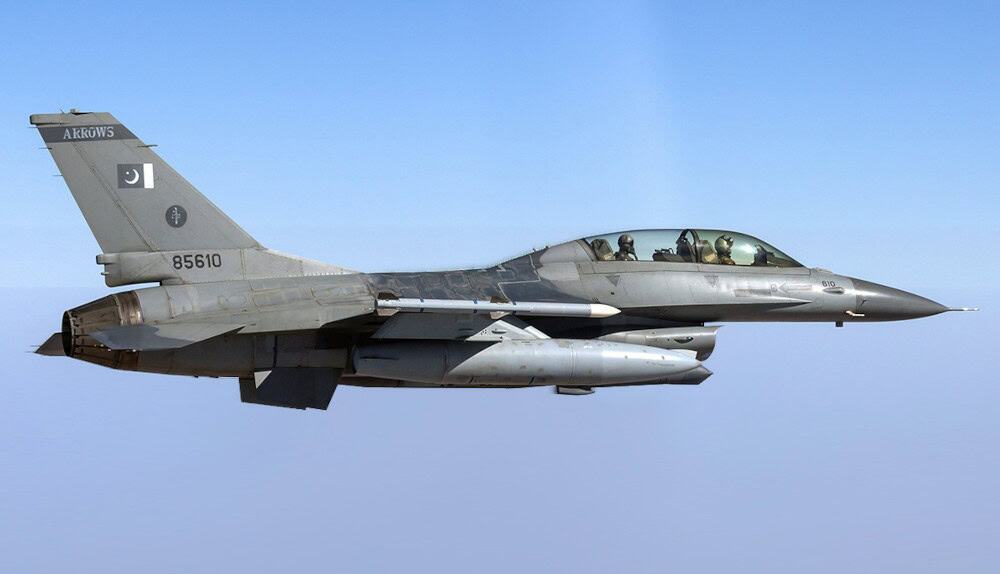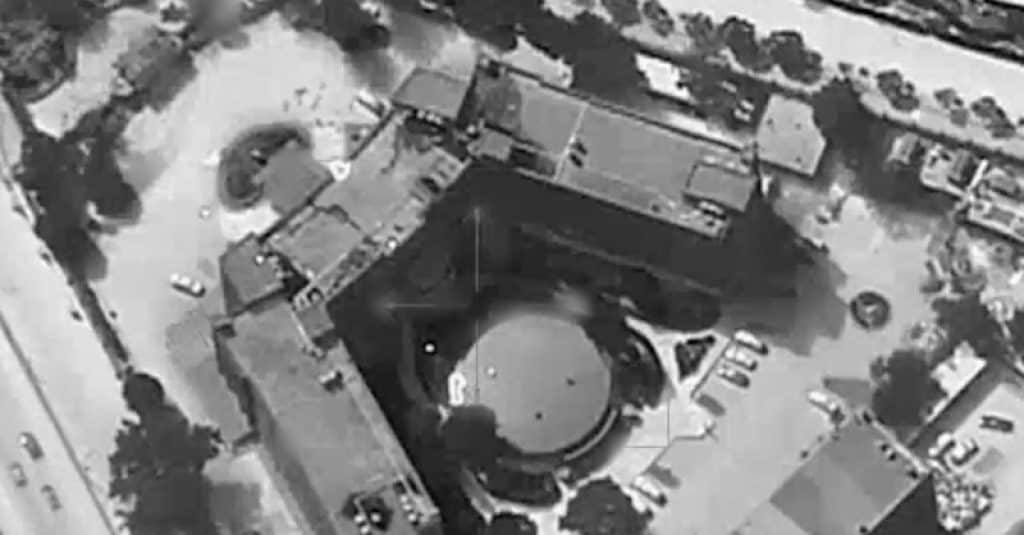
The Israel Defense Forces (IDF) conducted strikes near the Syrian Presidential Palace and targeting the Syrian government’s military headquarters in Damascus, the Israeli military said on July 16. Syrian state media said a “number of people” were injured in the strikes.
The airstrikes took place after several days of increasing clashes in Suwayda Governorate in southern Syria, which is home to the country’s Druze minority. Israeli officials warned the Syrian government repeatedly that the IDF would act to protect the Druze if the battles did not cease.
On July 16, the IDF said that it “struck the Syrian regime’s military headquarters in the area of Damascus in Syria.” Media reports described the building as the headquarters of the Syrian Ministry of Defense. Videos of the strike on the Ministry of Defense show large explosions just after noon in central Damascus. The Israeli military asserted in a statement that the “military headquarters in Damascus is the location from which Syrian regime commanders direct combat operations and deploy regime forces to the As-Suwayda area.” The IDF also said it hit a “military target” near the Presidential Palace.
“The IDF continues to monitor developments and the regime’s actions against Druze civilians in southern Syria. In accordance with directives from the political echelon, the IDF is conducting strikes in the area and remains prepared for various scenarios,” the Israeli military noted.
Israeli politicians across the political spectrum have expressed solidarity with the Druze. Israel has a sizable Druze minority that lives in villages and towns in northern Israel. Druze men serve in the IDF and are conscripted similarly to Jewish Israelis.
The strikes in Damascus come in the context of increased Israeli involvement in Syria. Over the last six months, Israeli officials have said that Jerusalem will act to protect the Druze in Syria after the fall of the Bashar al Assad regime. In May, the IDF targeted an area near the Presidential Palace after attacks on the Druze took place. Israel’s Prime Minister and Minister of Defense have sought to keep southern Syria demilitarized in the wake of the fall of the Assad regime. The IDF has also carried out recent raids against Iranian-backed cells and former Assad regime military assets in southern Syria.
The recent round of Israeli strikes in Syria began on July 14, a day after clashes began between Druze and Bedouin tribesmen near Suwayda. The IDF started with strikes on tanks being used by Syrian government forces, which the Israeli military said had been seen moving toward the Suwayda area. “The presence of these assets in southern Syria may pose a threat to the State of Israel,” the Israeli military stated.
On July 15, as clashes continued in Suwayda, the Israeli military said, “Following the directive of the political echelon, a short while ago, the IDF began targeting military vehicles belonging to Syrian regime forces in the area of As Suwayda in southern Syria.” Several vehicles were hit, including armored personnel carriers and a vehicle that had a multiple rocket launch system, the IDF said.
“We have a commitment to preserve the south-western region of Syria as a demilitarized area on Israel’s border,” Israeli Prime Minister Benjamin Netanyahu said during a speech to Israeli soldiers, also noting that Israel had an obligation to the Druze. “I hope we won’t need further operations, and that very much depends on what is understood and done, and what is not done, in Damascus,” Netanyahu added in a statement distributed by the Government Press Office in Israel.
July 15 also saw some Druze Israelis cross into Syria from an opening in a border fence near the northern Golan Druze town of Majdal Shams, which is located across from the Druze village of Khader in Syria. Some Druze in the Golan have family connections to their co-religionists in Syria, in large part because the Golan was controlled by Syria until 1967. The IDF stated that it began facilitating the return of civilians who had crossed on July 15. Images from the evening showed Druze civilians returning to Israel.
On July 16, the IDF deployed additional forces to the Golan border area to reinforce the 210th Division, which is responsible for defending the border. IDF Chief of the General Staff Eyal Zamir said that the Israeli military would increase strikes in Syria to stop the attacks on the Druze. “The IDF is committed to the deep alliance with our Druze brothers and is therefore striking targets across Syria in order to protect them in the Suwayda region, Jabal al-Druze, and wherever necessary,” the Israeli military added.
Also on July 16, chaotic crossings unfolded on the Israeli border between Majdal Shams and Khader. The Israeli military said that “suspects” were attempting to infiltrate Israel from Khader along with “civilians.” “Simultaneously, several Israeli civilians crossed the border fence into Syrian territory in the area of Majdal Shams. IDF troops are currently operating to safely return the civilians who crossed the border,” the Israeli military noted. Videos show people trying to rush across the border.
Israel’s Defense Minister’s office said on July 16 that Defense Minister Israel Katz is expected to visit Washington on July 17. His office said he would continue to monitor developments in Syria. Katz also posted a video showing airstrikes in Damascus, noting that “painful blows” had begun for the Syrian government.