On November 9, Syrian Foreign Minister Asaad Hassan al Shaibani denied that Syria had deployed troops to Yemen or planned to do so, following reports that Damascus was sending forces to help Saudi Arabia fight the Iran-backed Houthis. Shaibani instead pointed to a military agreement with Riyadh focused on rebuilding Syria’s armed forces, which the government has been working to reconstitute since the fall of the Assad regime. Syria’s defense ministry signed the agreement on November 4.
On November 6, Reuters reported that “Syria is aiding Riyadh with military advice and training as Saudi Arabia comes under attack by Yemen’s Houthis, and has sent a limited number of military personnel to the kingdom, two Syrian military sources and a senior US official said.” It noted that “scores of military personnel had gone from Syria to Saudi Arabia in recent weeks.” However, a Syrian diplomat told Reuters that “any suggestion of military deployments at this stage is premature.” Syria also said that its role in Saudi Arabia was focused on training and playing an “advisory” role.
The AFP reported on November 7 that hundreds of Syrian troops had been deployed to Saudi Arabia and Yemen. In Yemen, the report said they were supporting the government that is fighting the Iran-backed Houthis. A source with Yemen’s Presidential Leadership Council told AFP that as many as 3,000 Syrians could be deployed. The Associated Press added on November 8 that 600 Syrians were expected to be deployed.
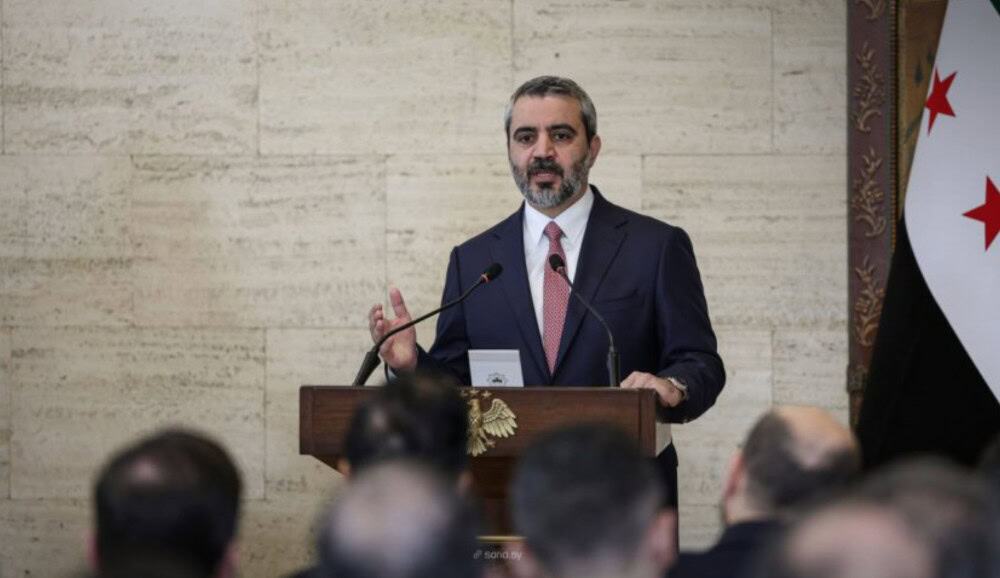
Shaibani was responding to these reports when he clarified that Syria had no troops in Yemen and no plans to send forces there. He made the comments at a press conference with Jordanian Foreign Minister Ayman Safadi, who was visiting Syria on November 9. “Our military agreement with Saudi Arabia focuses on rebuilding Syria’s armed forces. There is no agreement with Yemen to deploy Syrian troops there,” Syria’s foreign minister said. “Any military plan to deploy Syrian forces abroad would be announced publicly, not carried out in secret,” he added.
Syria has condemned Houthi attacks on Saudi Arabia, and the kingdom has been supportive of Syria’s new government. Saudi-Houthi tensions increased after the Houthis seized areas in Yemen near the Bab al Mandeb Strait in September. Although Yemeni government forces recaptured some of the territory in October, the Houthis have carried out deadly attacks on Saudi Arabia over the last few months.
“We condemn threats by the Houthi militia against Saudi Arabia and reaffirm our support for the Kingdom in addressing these challenges,” Shaibani said.
Syria is continuing to try to shore up its relations with various Arab and regional states. For instance, Shaibani has suggested Syria could join the new Mecca Pact, a mutual defense agreement signed by Saudi Arabia, Turkey, and Pakistan in August. Syria also hosted Jordanian Foreign Minister Ayman Safadi on November 9.
“We take pride in the progress in the historic fraternal relations between Jordan and Syria, and we will continue working to expand cooperation in various economic, defense, and security fields for the benefit of both countries and their brotherly peoples,” Safadi noted. He also expressed condolences for the deaths of Syrian civilians in October 26 Jordanian airstrikes. The strikes led to a rare rebuke from Syria directed at the Kingdom of Jordan. Jordan said it was targeting the Islamic State.
Syria is also focused on improving ties with Iraq. “Syria and Iraq are stepping up security cooperation along their shared border, with officials and analysts saying closer coordination against terrorism and smuggling could pave the way for expanded trade, energy and transport links between the two countries,” the Syrian Arab News Agency (SANA) reported on November 8. “In an interview with Iraq’s Dijlah television channel, President al-Sharaa described security coordination between Damascus and Baghdad as strong, saying the border was stable and that communication remained open to address concerns,” SANA added.