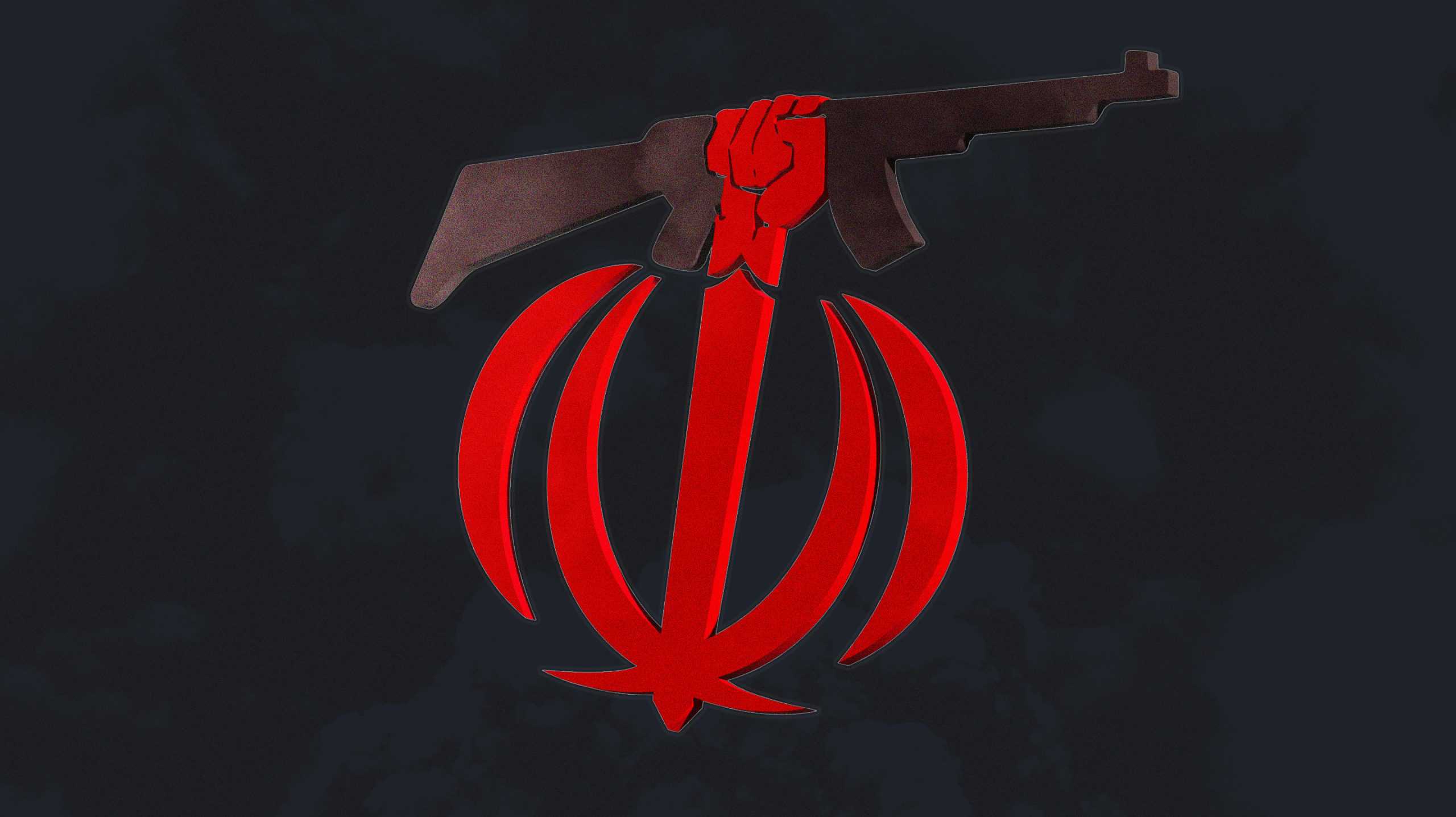
Islamic Republic authorities announced on November 19 that an AI-enabled platform would launch nationwide on November 23 to map neighborhood resources, identify influential local figures, and coordinate social services through mosques and the Basij, a paramilitary force involved in internal security and social mobilization under the Islamic Revolutionary Guard Corps (IRGC).
The platform, called Dastyar-e Mahalli (Local Assistant), is presented as an initiative to transfer some administrative and social functions to neighborhoods under religious figures and the armed apparatus, laying the groundwork for a more extensive neighborhood intelligence network to monitor residents and develop a hyperlocal information network
The expansion comes as Tehran grows concerned that mounting economic pressure and deteriorating living conditions could reignite nationwide protests. Scattered demonstrations across Iran have increased since the April ceasefire, averaging roughly 80 per month and reaching as high as 130 in September. On November 17, more than 1,000 people took to the streets in the city of Abdanan following a deadly road accident involving oil industry workers. Protesters chanted “Death to the dictator” and “Long live the King.” The latter slogan, a reference to exiled opposition leader Reza Pahlavi, was also heard nationwide during the January 2026 uprising.
The regime seeks to blur the line between civilian and military life largely through the Basij, its ideological volunteer paramilitary force that embeds itself throughout schools, universities, factories, government offices, professional associations, and mosques. Although formally under the IRGC, the Basij has a distinct mission centered on ideological mobilization, social control, and domestic security rather than conventional military operations.
Hossein Taeb, the Basij’s current chief, previously commanded the force during the 2009 protests and headed the IRGC’s Intelligence Organization until 2022. A longtime ally of the new Iranian Supreme Leader Mojtaba Khamenei dating back to their service in the Iran-Iraq War, Taeb was reappointed to lead the Basij in August. Khamenei’s appointment decree instructed him to strengthen the force’s “popular intelligence network,” expand its use of technology, and improve coordination with other regime institutions.
A day before announcing the platform, Taeb called for strengthening “neighborhood-based intelligence coverage” and organizing a “popular intelligence network” to monitor suspicious activities and identify suspected anti-regime elements. He stressed that “the most important issue is identifying the enemy network before it has the opportunity to act,” calling for the rapid deployment of Basij resistance cells and security units to suspected threats.
Iran’s trend toward militarizing regime loyalists
In March, Brigadier General Mohammad Zahraei, head of the Basij Construction Organization, said asymmetric warfare required extending wartime support to neighborhoods and mosques. He added that the Basij had established 22,000 neighborhood transformation councils in preparation for “mosaic defense,” a decentralized model that organizes cities and districts into defensive units.
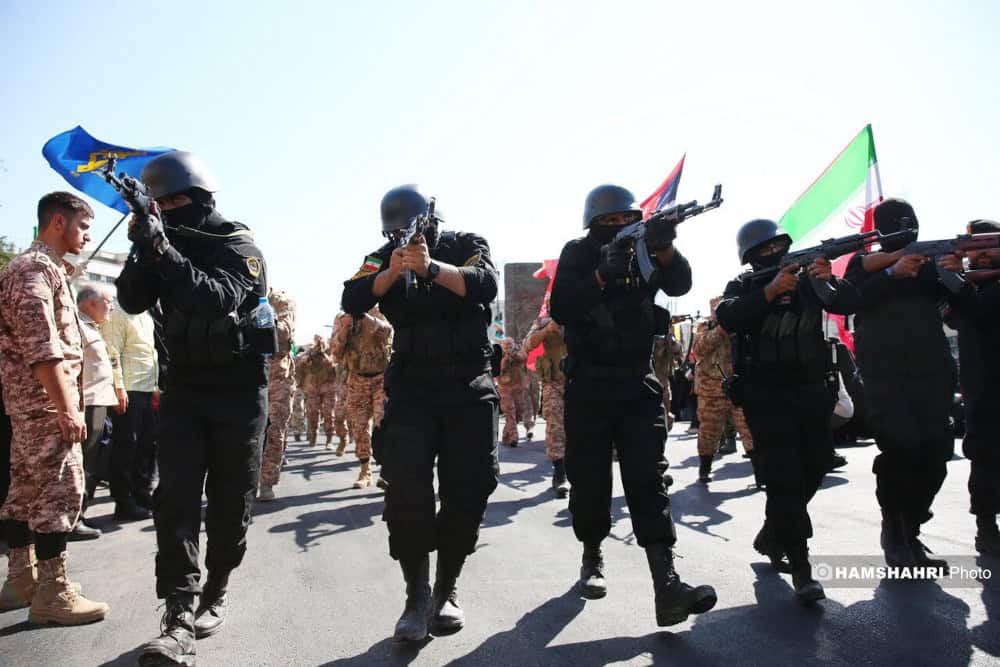
After the April ceasefire, the regime increasingly brought military hardware into major cities through parades featuring armored vehicles, rocket launchers, and ballistic missiles. By May, authorities had set up public instruction stands and nightly classes in Tehran and other cities teaching residents how to handle ammunition, assemble and disassemble AK-47s, and operate other light weapons. In one city in southern Hormozgan Province alone, the Basij said that more than 600 people received weapons training in a single week, with courses spread across 100 mosques and Basij bases.
The IRGC’s Tehran repression command opened its “Defenders of the Homeland for Iran” campaign to children as young as 12, assigning volunteers to intelligence and operational patrols, checkpoints, and logistical support operations. Another state call urged “faithful youth” to join popular defense, jihadist support, and security efforts. Nationwide, minors have staffed checkpoints, worn military gear, and handled rifles and ammunition at state-sponsored gatherings. In early September, Iran opened its first police high school to groom teenage boys for the security forces through firearms, tactical training, and regular coursework.