Since November 7, the Houthis in Yemen have reportedly launched daily attacks against Saudi Arabia, targeting military installations, airports, and energy infrastructure. The group said the attacks were in response to Saudi airstrikes in support of Yemen’s internationally recognized government. Fighting has continued on multiple fronts across southern, central, and northern Yemen. Separately, Middle East Eye reported in early November that the Houthis had conducted cross-border raids into Saudi Arabia in recent months, targeting Saudi border posts and seizing small arms from border security forces.
Saudi Arabia, through the Saudi-led Coalition to Support Legitimacy in Yemen, continues to support the Yemeni armed forces and the internationally recognized government. The coalition has conducted airstrikes on Houthi weapons manufacturing facilities, missile-launchplatforms, gas and oil facilities, and various targets in support of Yemeni ground troops. Riyadh continues to seek international support against the Houthis, including calling for the European Union to list the group as a terrorist organization. The Arab Parliament, the legislative and consultative body of the Arab League, has also launched a plan to isolate the Houthis, which could include designation. On November 8, the Associated Press reported that Syria would send 600 troops to the kingdom’s southern border with Yemen.
On November 5, The Wall Street Journal reported that the Houthis wanted $51 billion from Saudi Arabia to end the conflict. The Yemeni terrorist group has been preparing the groundwork for such a claim for nearly a year. In March 2026, Abdulmalik al Houthi, the group’s leader, outlined $57 billion in damages and lost income during the over a decade of civil war. In February, the Houthis claimed that unpaid public sector salaries were over $13 billion. Paying these salaries was a key component of a UN-backed peace roadmap developed in 2023, though negotiations subsequently stalled.
On November 14, the Saudi-led coalition announced the interception of a drone in Riyadh and the kingdom’s south.
On November 13, Yahya Saree, the Houthis’ military spokesman, claimed a drone attack on Riyadh’s King Khalid International Airport and an attack on a pumping station along the East-West pipeline, the critical pipeline that moves Saudi oil from the eastern fields across the country for export on the Red Sea at Yanbu, in Riyadh with two drones. He also claimed a ballistic missile attack on Saudi forces in the southern Jizan province that borders northern Yemen, claiming dozens were killed or injured.
On November 12, Saree claimed a drone attack on a pumping station on the East-West pipeline and another attack on oil facilities at Yanbu. He also denied Saudi claims of intercepting two missiles over the holy city of Mecca. “With every successful operation by our forces against [Saudi Arabia’s] oil facilities and its failure in interception operations, it resorts to fabricating lies and slanders in the name of holy sites,” Saree said. The Houthi spokesman also claimed a drone attack against a military cargo plane at an airport in southern Saudi Arabia, a missile attack on Khamis Mushait Air Base, and a drone attack on Aramco in Riyadh. The coalition said that it intercepted two drones in Riyadh and two in the Eastern province.
On November 11, Saree claimed that the group attacked an East-West pipeline pumping station in Yanbu with a drone. That day, Saudi Arabia said that it intercepted a drone over Mecca, in addition to three cruise missiles targeting Riyadh, a drone targeting the kingdom’s south, and two ballistic missiles targeting the west. Saree denied that a drone was intercepted over the region. He also claimed that the group was successful in targeting Riyadh’s King Khalid International Airport with three cruise missiles. The coalition separately announced that it intercepted a drone in the east.
On November 9, the Ministry of Energy reported a fire after an attack on the kingdom’s East-West pipeline in Medina province. The statement said the fire was extinguished without injuries, deaths, or disruption to the pipeline’s operations. In addition, the coalition said that it intercepted a ballistic missile targeting the south, a cruise missile and a ballistic missile launched at Riyadh, and a drone targeting the east of the kingdom. The next day, Saree claimed attacks on Riyadh’s international airport, pumping stations on the East-West pipeline in Riyadh province, the Aramco facility at Abqaiq, which is the world’s largest crude oil stabilization and processing plant, and Riyadh’s financial district.
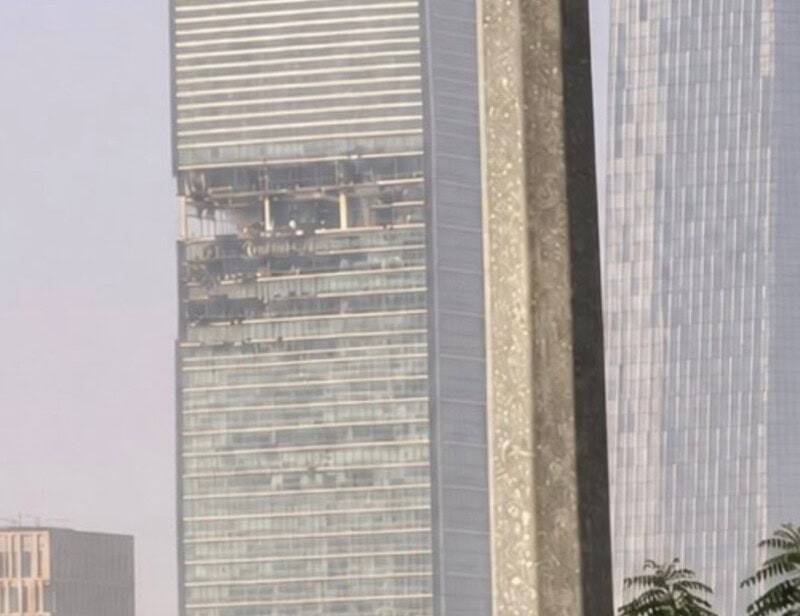
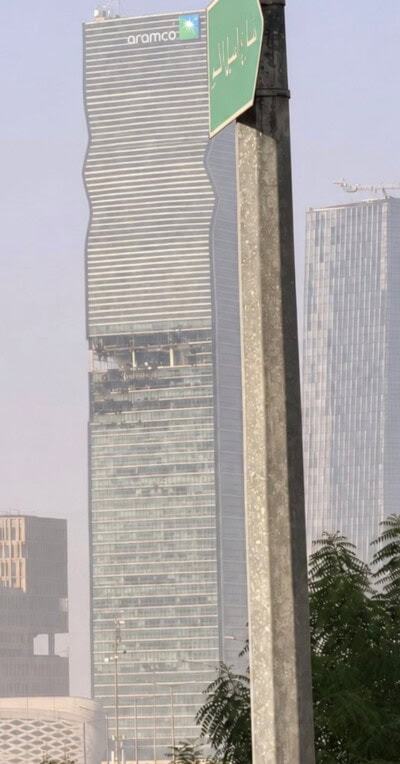
On November 8, a Houthi attack damaged an Aramco building in Riyadh’s financial district. Saudi Arabia’s Ministry of Energy attributed the damage to “falling shrapnel,” and said no injuries or deaths were reported. Images showed the windows blown out on several floors. In addition, the coalition said that it intercepted two ballistic missiles launched toward Riyadh, two cruise missiles launched at Riyadh and the southern region, and a drone targeting the south.
On November 7, Saree claimed attacks against an Aramco facility in Riyadh, Riyadh’s international airport, three additional energy targets across the kingdom, including a pumping station on the East-West pipeline in Riyadh province, and a National Guard camp in Najran, southern Saudi Arabia.
The Houthis said these attacks were in response to Saudi airstrikes on a market in Taiz on November 6 and the Bani Hushaysh district of Sanaa on November 7. Houthi officials claimed that the attack on Bani Hushaysh killed at least 40 and injured over 40 more, mostly women and children. The Houthis also claimed that at least 30 people were killed in the strike in Taiz.