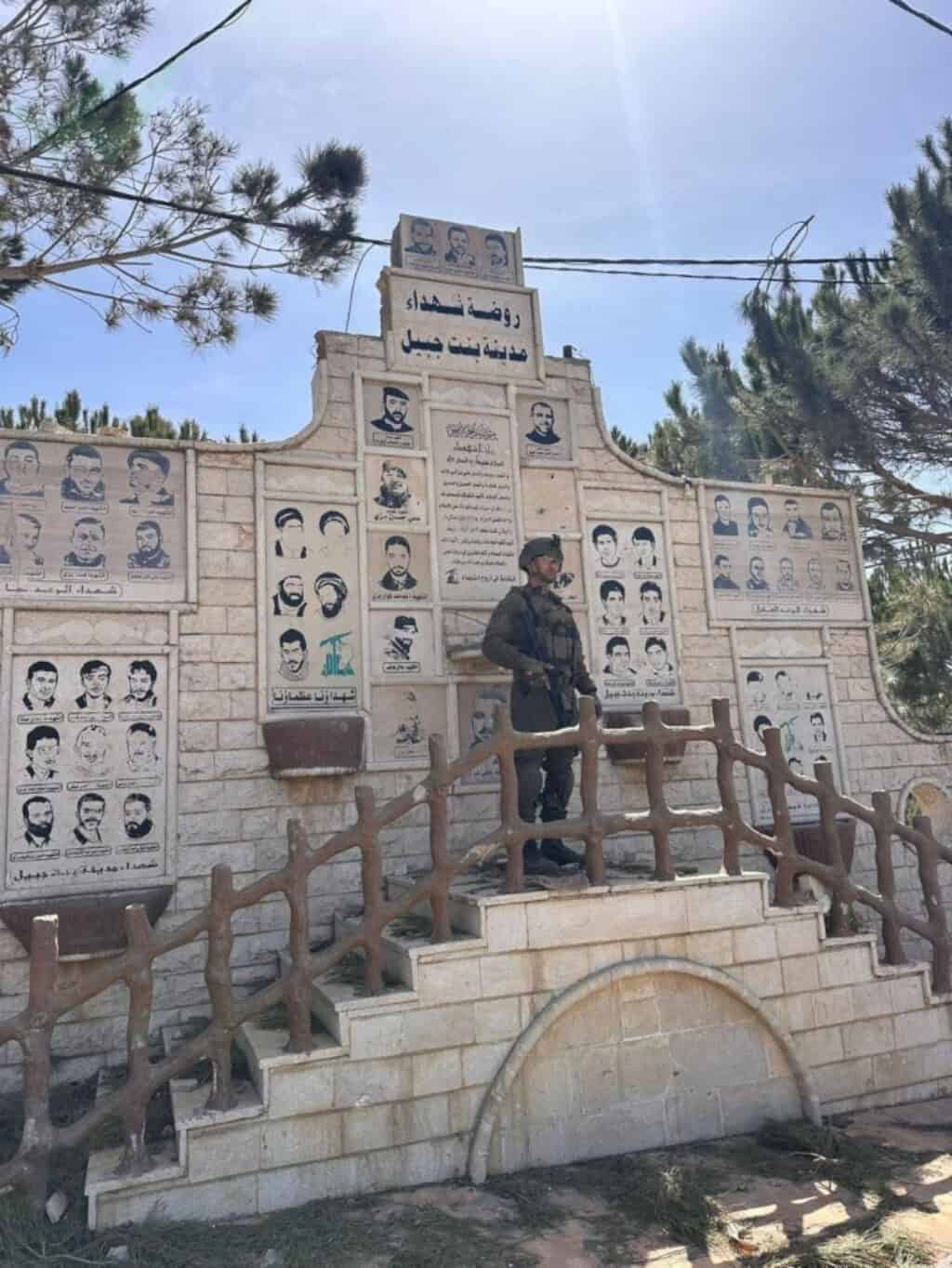
At midnight local time on April 17, a second ceasefire in as many years went into effect between Israel and Lebanon. Brokered, or to some degree imposed, by the United States, this cessation of hostilities is expected to last 10 days and has not been memorialized in a formal agreement. It comes at an inopportune time for Israel’s fight against Hezbollah, which was on the cusp of losing the critical southern Lebanese town of Bint Jbeil. Hezbollah will likely exploit the reprieve to regroup and reinforce its positions inside Bint Jbeil.
The origins of the Lebanon ceasefire
On March 9, one week after Hezbollah restarted the conflict with Israel, Lebanese President Joseph Aoun called for direct negotiations with Israel, a move that was misrepresented as a call for peace talks. Aoun was, per his official statement, actually seeking a “truce” that would accomplish several aims:
- End Israel’s ground, aerial, and naval operations in Lebanon.
- Obtain international support for the Lebanese Armed Forces (LAF).
- Allow Lebanese security forces to take over “tension zones” and “[seize] Hezbollah’s weapons, storage [sites], and depots according to available intelligence.”
- Enable concurrent bilateral negotiations between Israel and Lebanon to achieve the above goals.
Aoun, with Prime Minister Nawaf Salam’s backing, was effectively calling for granting Lebanon a second chance to accomplish what it had shown itself unwilling or unable to do over the prior 15 months.
Israel reacted to Aoun’s call for a truce with disinterest, describing the Lebanese initiative as “too late” and stressing its own “focus on eliminating Hezbollah.” The Israeli position continued to harden into a desire to begin a process that would lead to Hezbollah’s demise, with the Israeli military planning to occupy parts of south Lebanon for varying but indefinite periods.
The United States was also uninterested in a truce. Ambassador Tom Barrack—previously Washington’s main interlocutor with Beirut—rejected the Lebanese offer. According to Axios, “Barrack’s response was blunt: ‘Stop with the bullsh*t’ on disarming Hezbollah, or there’s nothing to discuss.” After that, the Americans effectively ignored the ongoing fighting in Lebanon.
Lebanese stasis
Little subsequently changed in Lebanon. Hezbollah continued fighting in open defiance of Beirut’s unprecedented March 2 decision to proscribe the group’s military activity, and even tacitly threatened to violently force Beirut to rescind the order. The Lebanese state failed to undertake any significant or concrete action to curtail Hezbollah’s activities in response, while the LAF, tasked by Beirut to proceed with Hezbollah’s disarmament, flatly, if politely, refused to comply.
On March 4, the LAF said that it had detained 26 illegally armed Lebanese nationals and one Palestinian over the previous two days. However, subsequent reporting revealed that, days later, Lebanon’s Military Tribunal had released several Hezbollah members among the detained group after they paid $21, a fee variously reported as bail or a fine.
There is also no evidence that Lebanon followed through on its March 5 decision to arrest and deport Iranian Islamic Revolutionary Guard Corps (IRGC) personnel present in its territory. While dozens of IRGC and other Iranian personnel did depart Lebanon in the coming days, reporting suggests that the moves were due to fear of being targeted by Israel. Beirut even failed to successfully expel Iranian ambassador-designate Mohammad Reza Shibani, due to a combination of Iranian intransigence and domestic opposition by Shiite political forces, led by Hezbollah and the Amal Movement. As late as March 30, Israel’s Ministry of Foreign Affairs continued to periodically mock Beirut’s failure to enforce its decrees on X.
Israel’s April 9 about-face
Essentially, Lebanon remained too fearful of Hezbollah to decisively act against it, a hesitance stemming from the group’s remaining military strength and its ability to leverage continued support among Lebanese Shiites to potentially ignite a civil war. On April 11, Prime Minister Salam’s fear that ongoing sectarian tensions from the war could deepen led him to cancel his visit to the United States. Beirut was signaling that it believed the factors that had traditionally deterred it from disarming or restraining Hezbollah remained intact.
Nevertheless, on April 9, Israeli Prime Minister Benjamin Netanyahu signaled a seemingly abrupt shift in Israel’s position. “In light of Lebanon’s repeated calls to open direct negotiations with Israel, I have instructed the Cabinet to open direct negotiations with Lebanon as soon as possible,” Netanyahu said in a statement. He insisted that “the negotiations will focus on disarming Hezbollah and establishing peaceful relations between Israel and Lebanon.”
The immediate Lebanese reaction was one of apparent bewilderment. Reports suggested Lebanon had not received an American invitation to any proposed negotiations, and Deputy Prime Minister Tarek Mitri said that Beirut had first learned of the impending talks from Netanyahu’s statement. Furthermore, while Israeli officials insisted that the war would proceed during bilateral talks, Mitri stated that Lebanon refused to negotiate under fire.
Netanyahu’s statement also referenced a decision by Salam earlier that day to demilitarize Beirut. However, as of April 16, that decision has only been partially implemented. Furthermore, the demilitarization applied only to the “Beirut Governorate,” not to greater Beirut in the loose metropolitan sense. This scope technically excludes the city’s southern suburbs, which function as Hezbollah’s nerve center and are part of the Mount Lebanon Governorate’s Baabda District. In fact, an April 10 Lebanese Broadcasting Corporation International report said, “In a balancing act, the government avoided extending the measures to Beirut’s southern suburbs to prevent potential tensions, while focusing enforcement within the capital itself.” Heavy celebratory gunfire and even rocket-propelled grenades were reported in Dahiyeh after the April 17 ceasefire’s onset.
Not without my Hezbollah: Iran seeks to save its central proxy
Up to that point, Israeli disinterest in Lebanon’s offer stemmed from Beirut’s rather conclusive demonstration of its unwillingness, over 15 months of the previous ceasefire, to engage in the confrontation or use the means necessary to disarm an intransigent Hezbollah. Jerusalem therefore resisted returning to the conditions that had allowed Hezbollah to regenerate, including south of the Litani River.
American impatience with Lebanon’s foot-dragging had already boiled over by mid-2025. Meanwhile, Washington could allow the Israeli war effort in Lebanon, which was accomplishing an American interest by degrading Hezbollah, to proceed without worrying about having to militarily intervene or a direct cost to the United States.
Iran had an opposing priority. Hezbollah is arguably Tehran’s most critical asset and has served as the spearhead of its regional expansionism since at least the 2003 US invasion of Iraq, through more recent fights in Syria. Hezbollah’s loss, or its permanent degradation, would constitute a significant, if not irreversible, setback for Iran—especially since its other proxies lack the reach, veterancy, and experience to step into Hezbollah’s shoes.
The cessation of hostilities between the US and Iran that went into effect on April 7, along with Washington’s desire for that to become a permanent ceasefire agreement, presented Tehran with an opportunity to save Hezbollah. Tehran sought to create an otherwise absent, directly negative impact on the United States from Israel’s continued degradation of Hezbollah. In a display of brinkmanship demonstrating the group’s importance, the Iranians linked their own ceasefire with the United States to a concurrent one in Lebanon.
The United States initially balked, saying Lebanon had not been part of its negotiations. On April 8, the Israeli military predictably redirected the resources now freed from quieting the Iranian front toward an escalation with Hezbollah, launching its deadliest wave of attacks in Lebanon to date. In response, on April 8, the IRGC-linked Tasnim News Agency began reporting that Iran was seriously weighing withdrawal from ceasefire negotiations with the United States, and that Iranian forces were “selecting targets to retaliate for the aggression against Lebanon.”
This threat may have been an Iranian bluff, but the United States didn’t call it. Instead, that same day, Washington began shifting its tone on Lebanon and called on the Israelis to restrain their attacks, followed by calling on Jerusalem to engage Beirut in direct negotiations. Reporting between April 9 and April 14 made it clear that the United States demanded this change in Israel’s position because Washington needed quiet in Lebanon to facilitate talks with Iran.
Preventing the fall of Bint Jbeil
On April 15, the Hezbollah-linked Al Mayadeen satellite news channel reported that an unnamed “senior Iranian political official” claimed that Iran was applying pressure for a Lebanon ceasefire to go into effect that night and last for a week. Other reports suggested Iran was demanding a Lebanon ceasefire as a precondition for another round of negotiations with the US, and some Lebanese outlets claimed that Saudi Arabia was backing the Iranian effort. US-Iran talks were, predictably, rocky. However, dialogue persisted, US Vice President JD Vance remained cautiously optimistic, and another round of talks in Islamabad seemed likely.
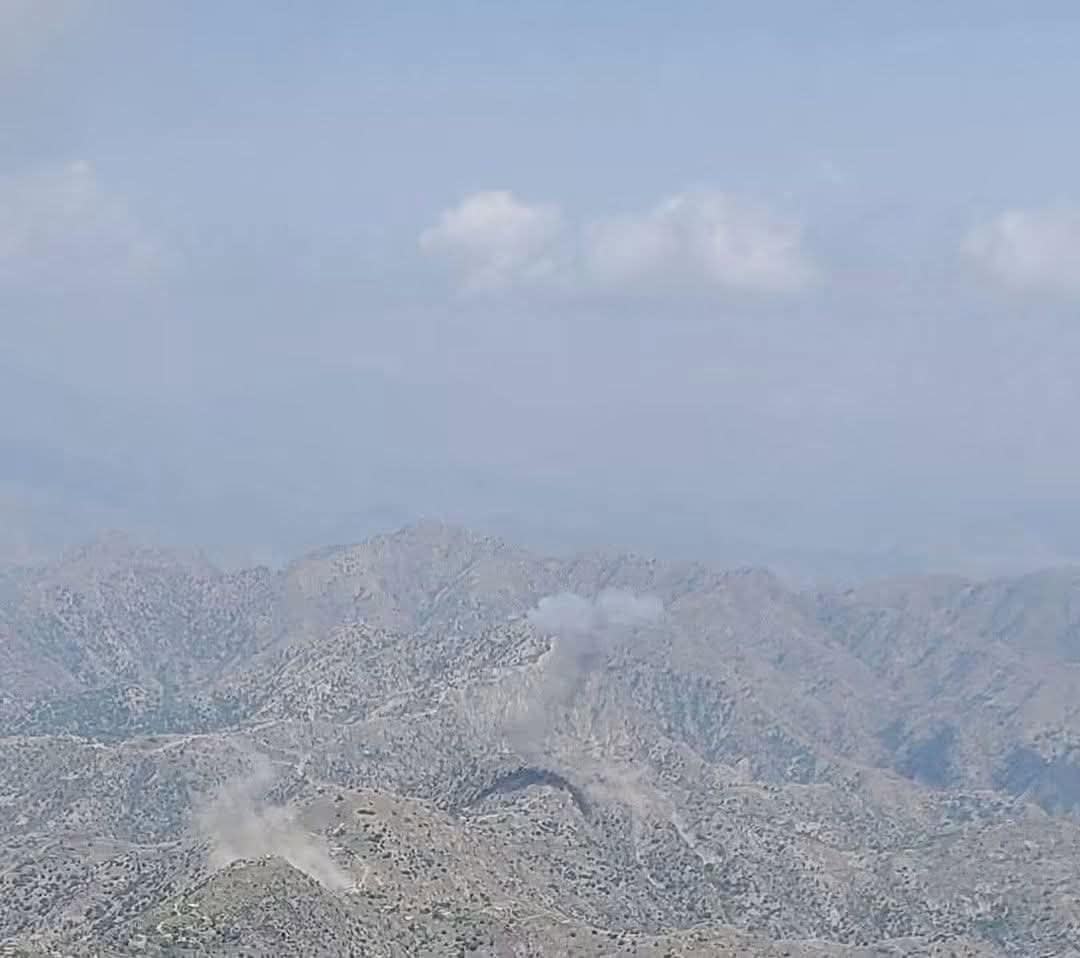
Meanwhile, on the Lebanese front, Hezbollah was in terrible shape, even if not yet broken by the Israeli war effort. Critically, in the days leading up to April 15, the Israel Defense Forces (IDF) had neared taking control over Bint Jbeil, a town in southern Lebanon dubbed the “Capital of the Resistance.” An April 13 report suggested that full Israeli control was expected within days.
Bint Jbeil’s loss would have been a considerable and perhaps irreversible setback for Hezbollah. The town was where deceased Secretary-General Hassan Nasrallah had famously described Israel as “weaker than a spider’s web” on May 26, 2000, one day after Israel’s withdrawal from south Lebanon, and therefore carried significant weight in Hezbollah’s “resistance mythology.” In the Israeli military’s recent push into Bint Jbeil, it had reportedly captured and destroyed the location of Nasrallah’s speech. Coupled with images of Israeli soldiers at key locations in Bint Jbeil and footage of Hezbollah fighters surrendering or being captured in the town, taking the historic site was bound to have a corrosive effect on the group’s morale.
Bint Jbeil also carries significant military importance. The Hezbollah stronghold sits within the central Lebanese frontier belt comprising the towns of Aitaroun, Ainata, and Maroun Al Ras, and near the Israeli frontier. IDF control would facilitate Israel’s domination of nearby approaches and hills, disrupt Hezbollah’s launch and ambush networks, and push Hezbollah away from northern Israel.
If a ceasefire had taken effect after the Israelis had completed their control of Bint Jbeil, the IDF would have been able to reinforce its position in the town, denying Hezbollah both the ability to retake it and a significant “image of victory.”
The group had already been struggling over the past year to point to such an image during the September 17 to November 27, 2024, round of fighting with Israel. The only narrative it attempted to portray was that the “resistance” had foiled Israel’s plan for a deep ground incursion into Lebanese territory. In an April 10 missive and April 13 speech, Secretary-General Naim Qassem had once again used this as a metric of Hezbollah’s success. Israel’s seizure of Bint Jbeil would have left Hezbollah unable to convincingly spin reality to its advantage—a key element in the group’s ability to retain supporters and ensure its survival.
Conversely, a reprieve of any duration—the longer the better—would allow Hezbollah to improve its position in Bint Jbeil. Though the Israelis had encircled the town, Hezbollah still predominated in a belt of nearby locales and could still draw in reinforcements. This situation could deny Israel the ability to fully take the area if fighting resumes, thus preserving Hezbollah’s ability to claim victory. Alternatively, if fighting did not resume, Hezbollah could claim that it held off the Israeli advance again.
The IDF advance in south Lebanon (Google Maps annotated by David Daoud and Ron Nuriely Kimel):
From the perspective of Hezbollah and Iran, a Lebanon ceasefire could not await the outcome of US-Iran talks, because Hezbollah could no longer hold off the Israelis. Only the United States could stop the Israeli advance, which is why Iran again raised this issue as a condition of continuing negotiations with the US.
For the United States, which wants the talks to continue and have a positive outcome, negotiations were complicated enough without having to deal with Lebanon. Therefore, on April 15, Washington asked—according to some reports, even heavily pressured—Israel to consider halting its war effort in Lebanon to facilitate US talks with Iran. Reporting that day suggested that Israel had not yet decided but would convene its security cabinet to discuss the matter. However, in a noticeable shift in Jerusalem’s position, unnamed Israeli officials said that the IDF would not halt operations “so long as Hezbollah is firing”—a significant retreat from a prior insistence on Hezbollah’s disarmament. Meanwhile, the IDF began preparing for a government order to halt operations.
Trilateral talks in Washington lead to a ceasefire
On April 14, in an attempt to seize the reins of Lebanon’s fate from Tehran, Washington hosted a direct meeting between the Israeli and Lebanese ambassadors to the United States. Israel sought a pathway to Hezbollah’s dismantlement during discussions, while Lebanon wanted a return to the status quo ante bellum. The US raised the matter of a Lebanon ceasefire during the meeting. Over the next day, President Trump continued contacts with both President Aoun and Prime Minister Netanyahu until Trump announced that a 10-day ceasefire would go into effect by midnight. Reports indicated that Israeli ministers were shocked to learn of the decision, which Netanyahu told them he had undertaken unilaterally at Trump’s request.
The April 16 agreement said that the cessation of hostilities was meant to “enable good-faith negotiations toward a permanent security and peace agreement between Israel and Lebanon,” acceding to a key Lebanese demand not to negotiate amidst a war. The deal also did not explicitly obligate Lebanon to disarm Hezbollah or dismantle the group’s infrastructure—only to “take meaningful steps to prevent” Hezbollah from attacking Israel, and “effectively demonstrate [Lebanon’s] ability to assert its sovereignty.”
More significantly, the new agreement appeared to place tighter constraints on Israeli freedom of action in Lebanon than the previous ceasefire agreement reached on November 27, 2024. The April 16 deal limited Israel’s freedom of action to “necessary measures in self-defense, at any time, against planned, imminent, or ongoing attacks [emphasis own].” President Trump confirmed this the next day in a Truth Social post, saying Israel is “PROHIBITED” from “bombing Lebanon any longer […] by the U.S.A.”
The previous ceasefire agreement, in contrast, only precluded Israel from “carry[ing] out any offensive military operations against Lebanese targets,” but imposed no other constraints on Israel exercising its “inherent right of self-defense.” This right included undertaking measures against serious violations of the ceasefire agreement, notably Hezbollah’s regeneration efforts and Lebanon’s failure to curtail them.