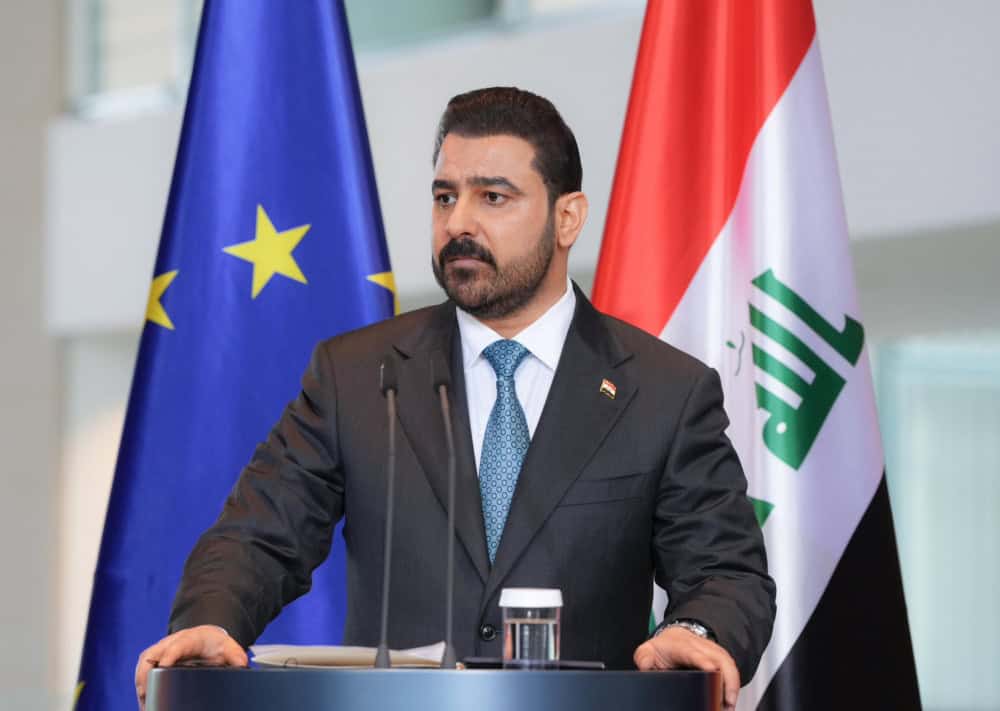
On January 28, former Iraqi Prime Minister Nouri al-Maliki wrote on X that he rejected “blatant American interference in Iraq’s internal affairs” after US President Donald Trump wrote on Truth Social that Maliki should not be chosen as Iraq’s next prime minister. Maliki’s comments came a day after Trump warned that if Maliki were appointed to the position, the US would cease to help Iraq.
The controversy over Maliki’s possible return to office has arisen two and a half months after Iraq held elections in November 2025. The country was expected to move toward appointing a new president and prime minister in the last days of January or early February 2026. Maliki served as the prime minister of Iraq from 2006 to 2014, when he stepped down in the wake of the Iraqi Army’s numerous defeats against the Islamic State. He has led the Dawa Party and the State of Law Coalition in elections in Iraq and is a leading contender to become prime minister again in 2026.
Maliki has been portrayed as close to Iran in past reports by the London-based The New Arab and The Guardian. The State of Law Coalition received 29 seats in Iraq’s 329-seat parliament after last November’s vote.
Iraq’s search for a new prime minister comes as Iraq has reinforced its security forces on the border with Syria amid concerns that fighting between the Syrian Transitional Government and the Syrian Democratic Forces could affect Iraq. Members of the Popular Mobilization Forces (PMF), an Iraqi paramilitary group mainly comprised of militias with close ties to Iran, have also deployed to the Iraqi border with Syria. In addition, the militias are preparing for a possible conflict between the US, Iran, and Israel. Kataib Hezbollah, one pro-Iranian militia that is part of the PMF, issued a statement on January 25 calling on supporters to “prepare for a comprehensive war in support of the Islamic Republic of Iran.”
The dispute over Maliki’s possible appointment comes as the US has called for reducing the role of Iranian-backed militias in Iraq. In a post on X on January 27, US Envoy Mark Savaya said the US was working “on the ground in Iraq to support the formation of a new government and to prevent Iranian backed militias from rising to positions of power.” US Secretary of State Marco Rubio spoke with Iraq’s current prime minister, Mohammed Shia al Sudani, on January 25.
“The Secretary and Prime Minister also discussed Iraq’s ongoing deliberations to form a government, emphasizing their shared commitment to ensuring that Iraq can fully realize its potential as a force for stability, prosperity, and security in the Middle East,” a readout of the call posted by the US State Department noted, adding, “The Secretary emphasized that a government controlled by Iran cannot successfully put Iraq’s own interests first, keep Iraq out of regional conflicts, or advance the mutually beneficial partnership between the United States and Iraq.”
On January 27, US Congressman Joe Wilson also commented on the importance of checking Iran’s role in Iraq. “Under President Donald J Trump, the position of the United States is clear and unequivocal. Iranian influence in Iraq will no longer be tolerated. The era in which outside actors imposed prime ministers on Iraq is over,” Wilson wrote on X.
After Trump’s condemnation of Maliki, it remains to be seen if Iraqi political parties will still back him for prime minister. Prior to Trump’s comments, The Arab Weekly had noted that Maliki would have to “balance” Iranian-backed militias and the US. While Maliki has rejected Trump’s comments, he will have to keep the support of Shiite parties in Iraq.
Meanwhile, more Iranian-backed militias in Iraq have joined Kataib Hezbollah’s call to support Iran in any conflict with the US. The Badr Organization said it would support Iran, according to a January 26 article at 964Media. Turkey’s state-run Anadolu Agency also reported in its Arabic section on the Badr statement, as well as a statement by Harakat Hezbollah al Nujaba that stressed Nujaba’s readiness to respond to any possible attack on Iran. Kataib Hezbollah and Harakat Hezbollah al Nujaba are both designated terrorist groups by the US. Badr has not been designated.