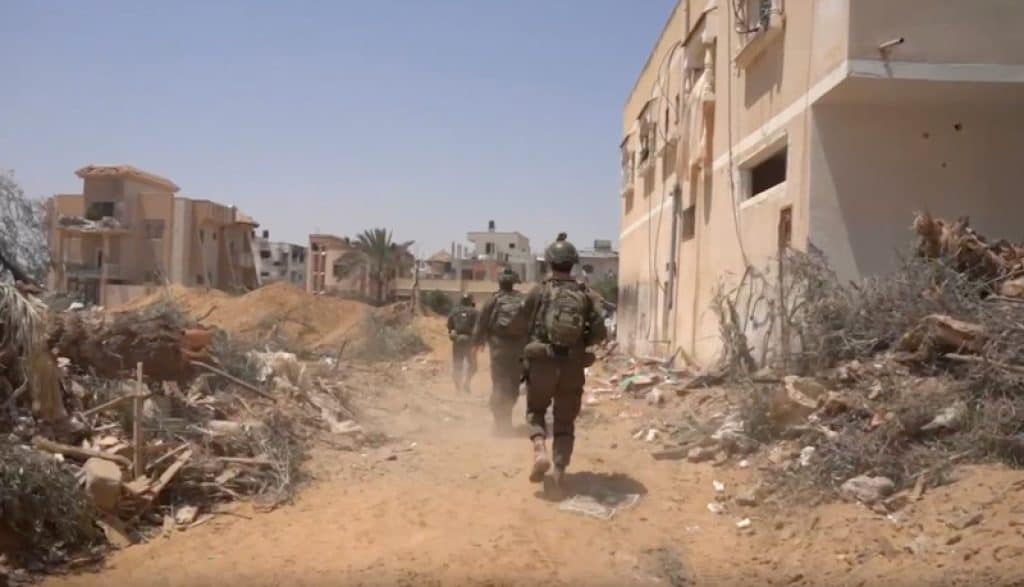
On July 20, the Israel Defense Forces (IDF) called on Gazans in the southwestern neighborhoods of the town of Deir al Balah to evacuate. The IDF’s Arabic language spokesperson noted that the IDF would destroy “terrorist infrastructure” in the sector and expand military activity “in an area it has not operated in before.”
Israeli media has interpreted this development as a prelude to expanded ground operations in the area. Deir al Balah is one of four towns that make up the “central camps” in Gaza, a region south of Gaza City that the IDF has never controlled during the 21-month war.
Hamas has held hostages in the central camps in the past, and there is concern, including from the families of those still held captive, that an expanded operation there could threaten the 50 hostages remaining in Gaza. In June 2024, the IDF rescued four Israeli hostages from Nuseirat, another town in the central camps. The area is known as “the central camps” because the four localities—Deir al Balah, Nuseirat, Bureij, and Maghazi—are the names of four refugee camps established in central Gaza after 1948.
The Israeli military’s focus on Deir al Balah comes a week and a half after it expanded operations into Beit Hanoun in northern Gaza. On July 16, IDF Chief of Staff Eyal Zamir visited the territory and said, “We already have operational control of 75% of the Gaza Strip.”
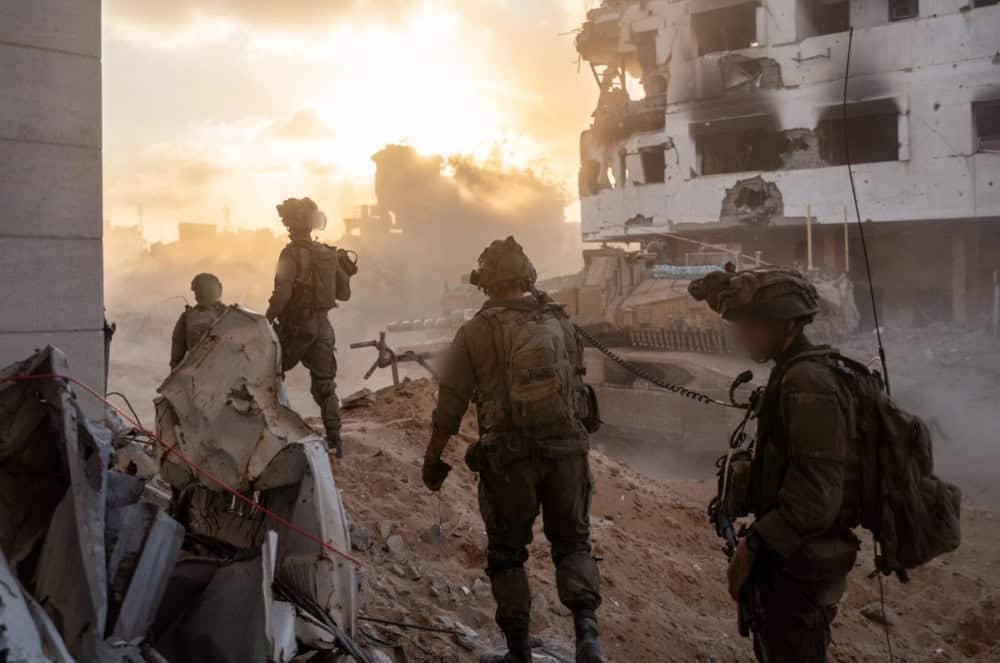
Israeli forces continue to clear and secure areas throughout the territory. In southern Gaza, the 188th Armored Brigade and the Golani Infantry Brigade, operating under the 36th Division, carved out a new corridor between eastern and western Khan Younis. The IDF refers to it as the “Magen Oz Corridor.” It is unclear whether the IDF intends to remain in this new area. The objective of Operation Gideon’s Chariots, which began in May, has been for the Israeli military to hold more parts of Gaza than in the past, when it would clear sectors and leave. On July 16, the IDF said the new corridor stretches 15 kilometers and is aimed at “applying pressure on Hamas.”
The Israeli military may end up re-deploying as part of a ceasefire deal that has been in discussion throughout July. “If there is a deal to release the hostages—it will be made possible first and foremost thanks to your combat. If an agreement is reached, we will pause and reposition along lines defined by the political echelon. If no deal is reached, my directive to Southern Command is to intensify and expand combat operations as much as possible,” Lieutenant General Zamir said on July 16. He noted that Israel has eliminated 1,300 terrorists over the last several weeks while also suffering casualties, including three IDF soldiers killed on July 14.
In other areas of Gaza, the Israeli military continues to conduct precision strikes on Hamas and other groups. For instance, the IDF said that it eliminated the deputy commander of Hamas’s Jabaliya Battalion on July 10. This battalion has been driven from northern Gaza’s Jabaliya neighborhood by the IDF several times over the course of war, only for it to return and operate there once again. The Israeli Nahal Brigade also expanded operations into the Daraj Tuffah neighborhood near Gaza City. On July 19, the IDF said it had eliminated the commander of Hamas’s Daraj Tuffah Battalion.
The Times of Israel reported on July 21 that the Israeli military may draw down some reservist troops from Gaza amid rising fatigue, as the forces have been fighting for three months in the renewed campaign.
On July 17, a shell struck the Holy Family Catholic Church in Gaza City. “I express my profound sadness regarding last Thursday’s attack by the Israeli army on the Catholic Parish of the Holy Family in Gaza City, which as you know killed three Christians and gravely wounded others,” Pope Leo XIV said. The IDF said on July 18 that “an initial inquiry into reports regarding injured individuals in the Holy Family Church in Gaza City, suggests that fragments from a shell fired during operational activity in the area hit the church mistakenly.” Israeli Prime Minister Benjamin Netanyahu expressed “regret for the tragic incident in which stray ammunition accidentally struck the Holy Family Church in Gaza.”
The Gaza Humanitarian Foundation continues to distribute around two million meals a day to civilians via several distribution sites. Hamas-run health ministry officials continue to claim that Gazans have been killed near the humanitarian sites due to live fire from the IDF or others. The IDF has disputed these claims, arguing that live fire has only been used near people when necessary, not directed to harm them.