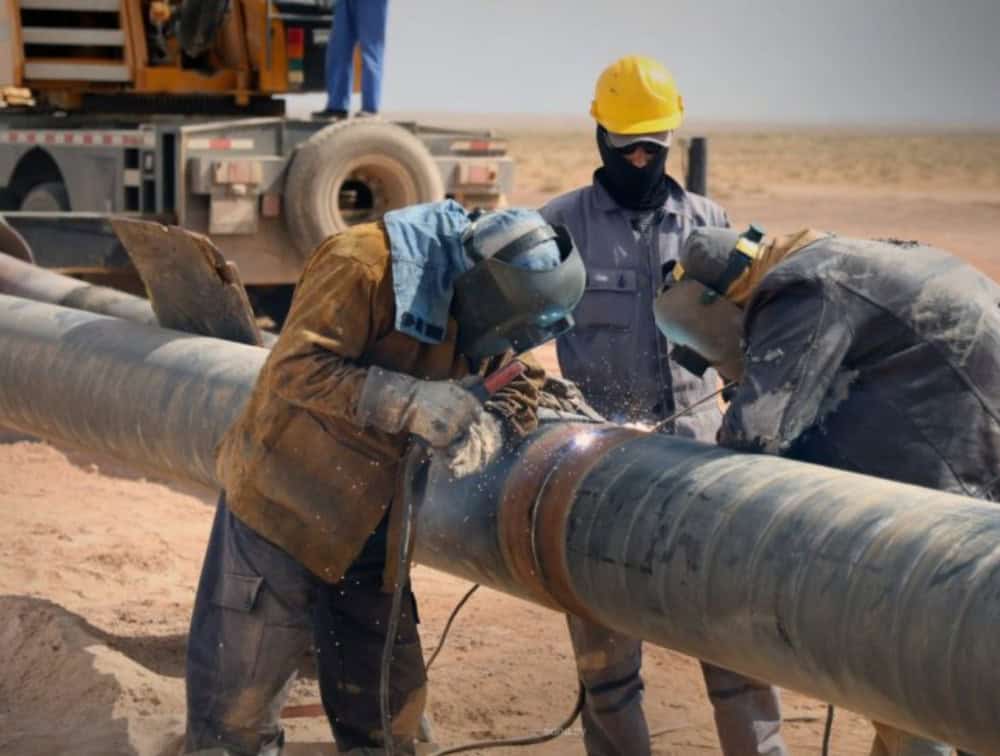
On October 2, the Syrian Petroleum Company said it restored a gas pipeline near Deir Ezzor after the line had been sabotaged. “The company said on Telegram that crews replaced an 18-meter section of the 16-inch-diameter pipeline before restoring service and resuming gas transmission,” the Syrian Arab News Agency (SANA) reported. The restoration of the line comes as Syria faces security threats from the Islamic State, as well as threats to its energy grid in the form of sabotage and accidents.
The restoration of the Jbessa gas pipeline came three days after an explosion at a different gas line near the Tishreen Thermal Power Plant near Damascus. The Jbessa line near al Shoula in Deir Ezzor Governorate was damaged on September 28 by an explosive device. On October 1, Syria also began repairing the line near Damascus.
“Technical teams have started repressurizing the Arab Gas Pipeline between Adra and Deir Ali, paving the way for the Deir Ali plant to return to service in stages, the [Ministry of Energy] said. The pipeline and surrounding area will remain under technical monitoring during the restart,” SANA added.
Syria’s Energy Minister Mohammad al Bashir told state media that Civil Defense teams worked to bring the damage under control. They were also investigating what caused the explosion. “Authorities have not yet established whether the incident resulted from a technical malfunction, a deliberate attack or sabotage, al-Bashir said,” SANA noted.
The shutdown of plants near Damascus caused a reduction in electricity generation. Syrian authorities appeared to work quickly to address both incidents and restore service. The work comes amid a number of reports in Syria about energy and other crises. For instance, North Press Agency in eastern Syria said on October 1 that Daraa in southern Syria faced a water crisis. On September 27, the outlet noted there were electricity shortages in Qamishli in eastern Syria, and it published two articles between September 28 and 30 on high fuel prices in the country.
While Syria grapples with energy challenges at home, it is improving its trade networks with Iraq, including enabling gasoline shipments to Iraq. “The first batch of 57 trucks began moving Thursday through the al-Tanf border crossing, Ahmed Qubbaji, the company’s deputy chief executive for transportation and storage, told SANA. The arrangement is intended to help secure supplies for Iraq amid disruption to shipping through the Strait of Hormuz,” SANA reported on September 27. This is one of several Syria-Iraq energy trade initiatives over the past several months. The countries are also working to restore a pipeline running from the Syrian port of Baniyas to Kirkuk in Iraq. Iraq is also exporting oil from Basra through Syria due to the Iran conflict.
Syria has also busted several Islamic State cells in the last two weeks. On September 28, North Press reported that Syria’s Internal Security Forces said they had dismantled an Islamic State cell that had been involved in activity in Raqqa, Aleppo, Idlib, and Homs. Authorities arrested four leaders of the cell, along with other members. In another incident, the Internal Security Forces clashed with alleged Islamic State members in Al Sanamayn, south of Damascus, in mid-September. This comes as Syria also thwarted a Hezbollah plot in southern Syria near the border with Jordan and Israel.