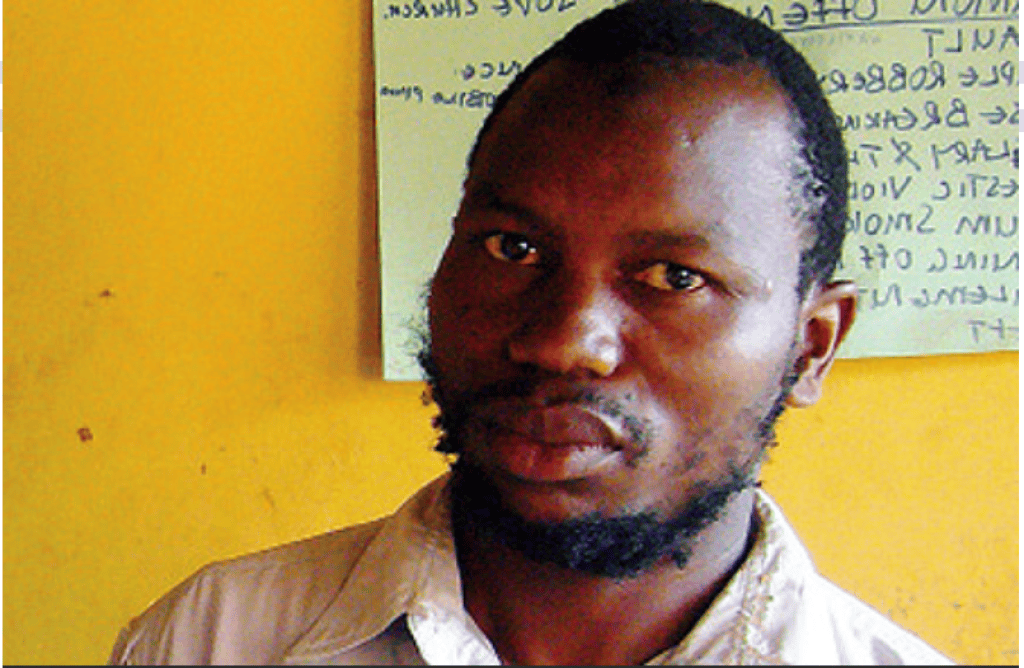
On August 3, Jamal Kiyemba, a Ugandan who previously resided in the United Kingdom, was convicted and sentenced to six years in prison in Kampala for his support of the Allied Democratic Forces (ADF), which is officially known as the Islamic State’s Central Africa Province (ISCAP). According to Justice Susan Okalany, who presided over his case, Kiyemba “solicited support” to attract individuals into ISCAP.
Twenty-four years ago, Kiyemba was arrested in Peshawar, Pakistan, under suspicion of attempting to join Al Qaeda in Afghanistan to fight alongside its forces against the United States. He then spent the next four years in detention at Guantanamo Bay, Cuba, before being released back to Uganda.
Kiyemba was most recently arrested in early 2022 under suspicion of “being a member of the ADF,” as well as recruiting individuals in Kampala into the group to fight in the Democratic Republic of the Congo. Kiyemba had been in prison on remand until Uganda’s International Crimes Division of the High Court convicted him last week.
Jamal Kiyemba’s story presents an interesting case study in the global jihad. From reportedly being radicalized into joining Al Qaeda while living in London to being held in Guantanamo Bay to then acting as a recruiter and propagandist for the Islamic State’s local outfit in Uganda, Kiyemba has had a long history spanning the global jihadi movement.
Arrested in Pakistan and held at Guantanamo Bay
In November 2004, analysts working for the Joint Task Force-Guantanamo (JTF-GTMO) stated that Kiyemba “is an admitted jihadist who attempted to travel to Afghanistan following the 9/11 attacks.” The report on him additionally quoted the Ugandan as telling the analysts, “I had no problem engaging the US in combat for purposes of jihad.”
This statement matches sentiments that Kiyemba has shared publicly since his release from Guantanamo. For instance, in 2006, after being released back to Uganda, Kiyemba told Uganda’s New Vision about his decision to travel to Pakistan and Afghanistan. “I was ready to assist my brothers there [Afghanistan] in any possible way, financially or by holding a gun, to defend them,” he told the news outlet. He went on to explain that he dropped out of university in the United Kingdom, where he was living at the time, to join “an Islamic cause against Western imperialists in Afghanistan.”
The JTF-GTMO report notes that while in the United Kingdom, Kiyemba “had acquired support … from tiered organizations including Jama’at Tablighi (JT) and Lashkar-e-Taiba (LET).” Kiyemba moved to the United Kingdom in 1998 to live with his mother, which is where he converted to Islam a year later while studying for a degree in pharmacy.
The Tablighi Jamaat is a Muslim organization dedicated to the proselytizing of Islam, and, at that time, was used as cover by Al Qaeda, while Lashkar-e-Taiba is a Pakistani jihadist group founded by Hafiz Saeed, Osama bin Laden, and Abdullah Azzam. In the late 1990s and early 2000s, LeT was deeply involved in facilitating the transport, training, and logistics of recruits in support of Al Qaeda.
Using these networks in the United Kingdom, JTF-GTMO alleged that Kiyemba “obtained a false student identification card in England using the false name Jamal Abdullah, and the country of origin as Kenya” to help facilitate his travel to Pakistan. JTF-GTMO also stated that in 2002, Kiyemba “received military training in the use of the AK-47 while in Peshawar,” which is the capital of Pakistan’s Khyber Pakhtunkhwa and was a known training hub for militants in Afghanistan at the time.
Kiyemba then attempted to travel to Afghanistan from Peshawar alongside Mohammad Lameen Sidi Mohammad, a Nigerien from Saudi Arabia, and Mustafa Ibrahim Mustafa Al Hassan and Amir Yakoub Mohammed Al Amir Mahmoud, both Sudanese nationals. Pakistani authorities detained the group before they reached the border. The two Sudanese nationals were alleged jihadist veterans at the time of the arrest, while Kiyemba and Mohammad Sidi Mohammad were relative newcomers to the cause.
The group was then transferred to US custody, where they remained in a holding facility in Afghanistan before being transferred to Guantanamo Bay, Cuba. Kiyemba later claimed that he was tortured by US personnel while being held at Guantanamo between 2002 and 2006. The British government eventually awarded him compensation of 1 million pounds for this reported mistreatment, though it is unclear if Kiyemba ever actually received this money.
The Ugandan also told the media shortly after his release that he “only confessed to escape torture” and that he was only in Pakistan to “study Arabic.” However, a few months later, Kiyemba contradicted this story of falsely confessing under duress in his aforementioned interview with New Vision, in which he openly stated his intentions to join Al Qaeda and the Taliban.
Release and subsequent arrests
In early 2006, Kiyemba was released from Guantanamo without formal charges and following his petition for habeas corpus to the then-George W. Bush administration. After the United Kingdom officially barred him from entering its territory, Kiyemba was sent back to his native Uganda.
Since then, Kiyemba has been in and out of prison in Uganda, largely for affiliation with the Allied Democratic Forces, which became part of the Islamic State after pledging bayah (allegiance) to then-leader Abu Bakr al Baghdadi in 2017. In 2019, the group officially became the Islamic State’s Central Africa Province.
Following his return to Uganda, Kiyemba eventually became a local Muslim leader in Kampala. For instance, by the early 2010s, Kiyemba became the imam of a local mosque, Masjid Taqwa, found in Zaana, a southwestern suburb located along the Kampala-Entebbe road. During his tenure as the imam, he was associated with patterns of radicalization and mobilization into the then-Allied Democratic Forces, as noted by one former member of the mosque spoken to by the authors.
For example, this individual, who himself was later recruited into assisting the jihadist group by Kiyemba, noted that he attended many lectures by Kiyemba and became one of his most ardent students. During this time, Kiyemba reportedly spoke encouragingly about joining the jihad, particularly about the ADF, and about the need to defend Islam.
This same individual interviewed by the authors also noted that it was around the same time that some people began disappearing from Kiyemba’s mosque, presumably having gone to the DRC to join the ADF. The first case documented by Kiyemba’s former student occurred in2013, when a woman from the mosque alerted the local police that her husband had taken their children with him to Congo.
In the same year, Kiyemba and another known ADF supporter in Kampala, Sheikh Abdul Rashid Mbaziira, reportedly aided in the recruitment of at least one other person into the ADF, according to Ugandan sources.
These first disappearances subsequently led to the arrest and detention of Kiyemba and his allies later in 2013 at Katwe Police station in Kampala, from where he was taken to Luzira maximum prison, according to information provided to the authors by Ugandan sources.
Kiyemba was again arrested in 2015 as part of the investigation into the murder of Joan Kagezi, a Ugandan prosecutor responsible for litigating the case against individuals accused of assisting in the 2010 double suicide bombings in Kampala, which were executed by Somalia’s Shabaab, which had a secret bayah to Al Qaeda at the time. However, it is unclear what role, if any, Kiyemba actually had in that murder, and he was subsequently released.
Kiyemba was most recently arrested in January 2022. According to a statement issued by the Uganda High Court, he was arrested at the Old Taxi Park in downtown Kampala following a report from a concerned citizen who allegedly overheard him proclaiming, “Long live the ADF.” Kiyemba was subsequently arrested and remanded to Luzira maximum security prison in contravention of section 7 of the Uganda Anti-Terrorism Act.
In his submission to the court, Kiyemba stated that his actions, undertaken while reportedly traveling to Uganda’s eastern Bugiri District to meet a former prison mate, were meant to draw the government’s attention to his case and to the ADF/ISCAP. He has also alleged mental instability during and after the incident but was ultimately found fit to stand trial, and the court dismissed claims of insanity while also recognizing his condition of bipolar disorder.
Nile Post, another Ugandan media outlet, further alleges that in a pretrial hearing for his case, Kiyemba confirmed his support for ISCAP and admitted to recruitment activities to local authorities. The same report claims that his most recent recruit for ISCAP was his own son.
Other individuals, mostly young men whom Kiyemba had previously taught or mentored to embrace violent jihad, also became direct collaborators of the ADF and later ISCAP when the group officially joined the Islamic State, according to information provided by former ADF/ISCAP detainees and Ugandan sources.
Notably, it is unclear if Kiyemba ever officially joined the ADF or its later incarnation of ISCAP. While he was found guilty of “soliciting support” for ISCAP, his mobilization activities of encouraging people into the group appear to be the result of ideological affinity rather than his direct membership, as also attested to by the Uganda High Court.
In addition, while the High Court dismissed charges of Kiyemba “rendering support to a terrorist organization,” this was due to “the legal provision relied upon by the prosecution [being] inapplicable because it relates to support rendered to natural persons rather than organizations,” according to a Uganda Radio Network report.
Nevertheless, Kiyemba’s ideological influence and teachings spurred several individuals to support ADF and later ISCAP activities within Uganda, including aiding in recruiting and movement of supplies. In addition, other recruits became directly involved in the ADF and ISCAP operations in the DRC, according to information provided to the authors by Ugandan sources.
Over time, some of those inspired by Kiyemba have been arrested by security agencies for their alleged involvement with the jihadist group, whereas others are believed still at large.