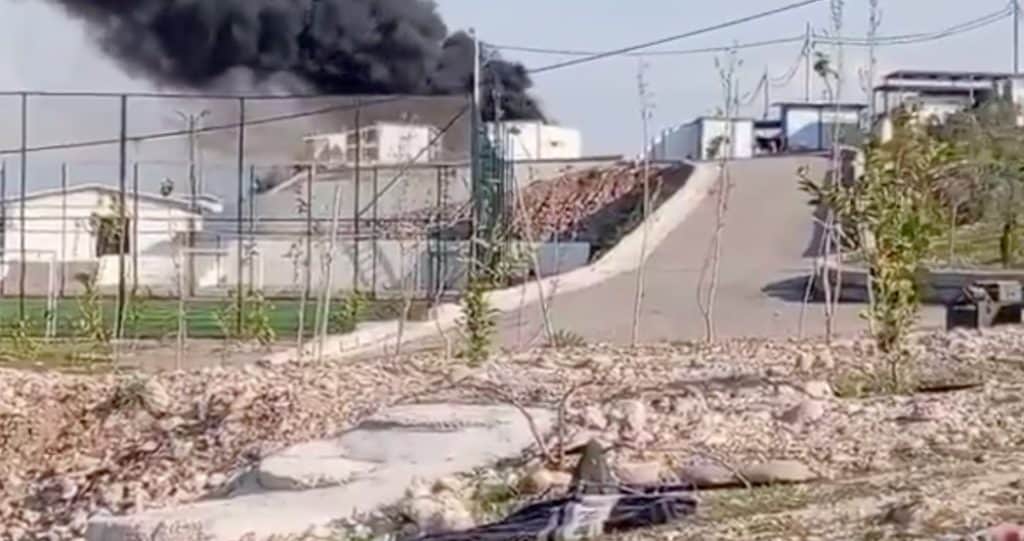
Iran and Iranian-backed militias in Iraq increased attacks on the Kurdistan Region of Northern Iraq on March 6 and 7. “Drone and missile attacks targeting sites in the Kurdistan Region’s Erbil and Sulaimani provinces late Saturday and early Sunday killed two people and wounded others, authorities said,” the Rudaw Media Network noted on March 8. The deadly attacks represented an escalation by Iran and militias in Iraq in their targeting of the region.
The Kurdistan Region of Iraq (KRI) has been targeted by an estimated 196 drone and missile attacks since February 28, when the US and Israel began strikes on Iran. Masoud Barzani, the president of the Kurdistan Democratic Party (KDP) and the former president of the KRI, condemned the recent attacks on March 8. “Everyone must understand that restraint has its limits,” Barzani said in a statement posted on X.
Drone and missile attacks on the KRI began soon after the US and Israel commenced striking Iran. They have included attacks on a hotel in Erbil and threats against US forces in the region.
On March 6, an Iranian official threatened to expand attacks on the KRI. “The Iranian Supreme Leader’s representative on Iran’s Defense Council, Ali Akbar Ahmadian, said on Friday that Iran has so far focused only on US and Israeli bases in the region, as well as opposition political parties operating within the Kurdistan Region,” Rudaw reported. The Iranian official went on to say that if Kurdish Iranian groups based in the KRI continued “plotting,” then Iran could target more facilities in the region on a “massive scale.”
Kurdish Iranian opposition groups operate in the KRI because many Kurds from Iran have fled to northern Iraq over the past decades, and these groups were able to operate relatively freely in the region. Over the years, Iran has demanded that the Kurdistan Regional Government (KRG) curtail the activities of the opposition groups and move them away from the border.
The Iranian attacks on Iraqi Kurdistan also come in the wake of reports that the US has been supporting Kurdish Iranian opposition groups. Axios reported that US President Donald Trump, who spoke with Kurdish leaders from the Kurdistan Regional Government in Iraq on March 1, appeared to indicate on March 7 that he was against Kurdish groups going into Iran. Five Kurdish Iranian opposition groups formed a coalition on February 22, deciding to coordinate their activities against the Iranian regime. On March 3, a sixth group joined the coalition, effectively unifying all but one of the major Kurdish-Iranian opposition groups.
On Saturday, the Iranian Islamic Revolutionary Guard Corps (IRGC) said that it had struck three Kurdish Iranian opposition groups that operate in the KRI. The attacks came after previous rounds of attacks over the past few days. On March 6, the Kurdistan Freedom Party said that four of its fighters were injured in a missile and drone attack on one of its bases. Earlier in the week, one of the group’s members was killed in an attack. Two camps where members of the Democratic Party of Iranian Kurdistan live near Koya were targeted on March 6, according to Hengaw, a Kurdish human rights organization. The Kurdish Iranian group Khabat was also targeted on March 5, according to the social media account Kurdistan Watch, which monitors developments in the Kurdistan region.
On March 7, the attacks expanded to areas in and around the city of Sulaimani. Drones targeted a site of the local KRI Peshmerga and struck a camp of the Kurdish Iranian group Komala near the village of Zargwezala (Zirguez). One person was reported killed in the attack on March 7. It was not clear if the attacks had been carried out by Iran or Iranian-backed militias in Iraq.
The perception in the KRI is that the attacks are increasing. “Iraqi militias continue to rain rockets and drones on civilian and energy infrastructure in the Kurdistan Region,” Aziz Ahmad, Deputy Chief of Staff to Kurdistan Regional Government Prime Minister Masrour Barzani, wrote on March 6. A member of the regional parliament said there had been six attacks over a 40-minute span in Erbil, the capital of the region, on March 7. Footage posted on X showed people firing wildly into the air to try to stop the drones.
A Kurdish member of the security team at Erbil International Airport was killed in attacks on March 7. There are differing estimates for the total number of attacks targeting the Kurdish Iranian opposition groups, with numbers ranging from 14 to 46 different attacks since February 22. Thus far, the only group not reported targeted yet by Iran or its militias is the Kurdistan Free Life Party (PJAK), an Iranian Kurdish group that is linked to the Kurdistan Workers’ Party (PKK).