The process of forming Iraq’s next government is at a standstill after US President Donald Trump rejected the nomination of former Iraqi Prime Minister Nouri al Maliki to return to Baghdad’s top office on January 27. One reported solution to the impasse is to extend the current government, led by Prime Minister Mohammad Shia al Sudani, for one year under a caretaker status that limits the government’s powers, according to Shafaq News.
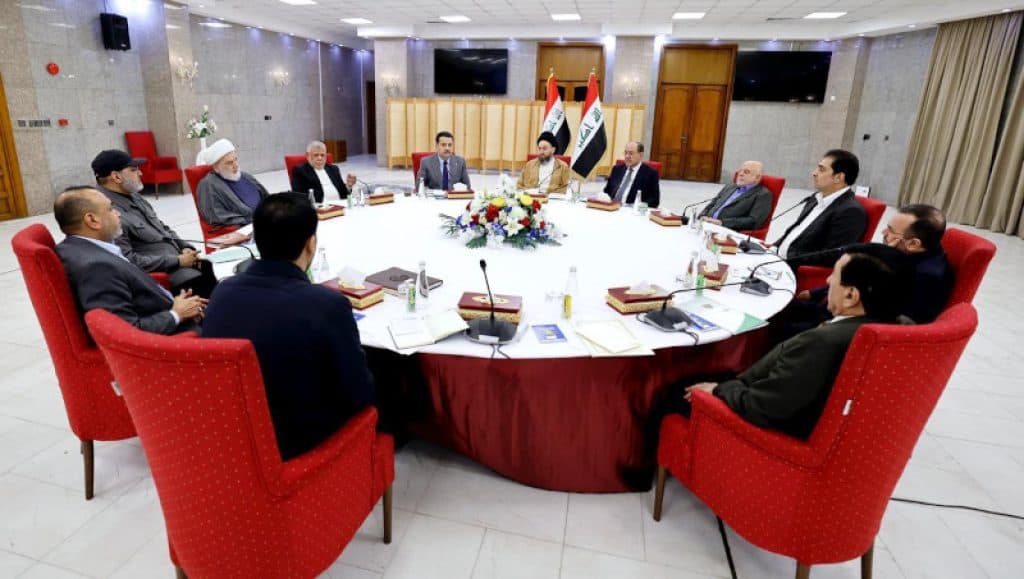
The Coordination Framework, a coalition of Iraqi Shiite parties that led the country’s previous government, declared itself the largest bloc in parliament following Iraq’s November 11 elections, and thus is moving to form the next government. To that end, the Framework, which includes many parties backed by Iran, selected Maliki as its candidate on January 24. Maliki held the office from 2006 to 2014, when he was pushed to step down amidst the resurgence of the Islamic State in Iraq. Despite his resignation, Maliki has remained an influential Shiite leader in the interim years.
However, the perceptions that he has stoked sectarian tensions in Iraq and is a close partner of Tehran and the Islamic Republic’s proxies in Iraq have led to concerns in Washington over his potential return. Trump’s subsequent rejection of Maliki’s candidacy has influenced the formation of the Iraqi government, as the US wields extensive leverage in Iraq, particularly because the country’s oil revenues are deposited at the New York Federal Reserve Bank.
The controversy over Maliki’s nomination is not the only factor in the delay in Iraq’s government formation, however. The country is in the middle of a standard multi-step process. Members of the Council of Representatives, Iraq’s national legislative body, have taken their seats and selected a speaker following the ratification of election results in December. The next step in the government’s formation is to elect the president of Iraq, typically a Kurd. This action is constitutionally mandated to occur within 30 days of the first parliamentary session, which occurred on December 29 and requires a two-thirds majority. However, Kurdish parties have not reached an agreement on a preferred candidate, which has contributed to the delay in voting. Since the Kurdish parties have not put forward a single candidate, the Coordination Framework announced on February 4 that its members were free to vote for any candidate, rather than being required to support a pre-selected figure, as is typical.
After Iraq’s president is elected, the constitution instructs the officeholder to indicate a prime minister designate within 15 days. The selected candidate, who is traditionally a Shiite and is put forward by the largest bloc in parliament, then has 30 days to select a cabinet, which must be approved by the Council of Representatives to form the government officially.
The State of Law Coalition, led by Maliki, warned on January 11 that the parliament could be dissolved for failing to adhere to constitutionally mandated timelines if it does not hold the presidential vote. However, not all Shiite parties are eager to move forward, as some have reservations about continuing with Maliki’s nomination.
Qais Khazali, a Coordination Framework leader and the head of the Iran-backed terror group and Shiite militia Asaib Ahl al Haq, has differed politically from Maliki and is reportedly opposed to his nomination. Khazali visited Tehran around February 9 to discuss the prime minister’s candidacy with Iranian leaders. Sources told Shafaq News that Khazali is concerned that Maliki’s nomination is divisive even within the Shiite Coordination Framework, but Tehran continues to support Maliki’s selection.
The temporary solution proposed by the Coordination Framework would maintain the current government in an effort to buy time for a lasting solution to the ongoing government formation crisis. This plan may include expanding the government’s authority, which is currently limited by its status as a “caretaker” government.
The Coordination Framework leads the current government, so the influential decision-makers would likely remain the same regardless of whether a new government is put in place. However, once the new government is selected and new positions are apportioned, the balance of power within the Framework will change.