Despite a US-mediated ceasefire, clashes continued between Syrian government forces and the Kurdish-led Syrian Democratic Forces (SDF) in northeastern Syria.
On January 29, Syrian military drones carried out seven strikes targeting SDF positions in the countryside of the Al Qahtaniyah subdistrict of Al Hasakah Governorate. On January 27 and 28, the fighting involved rocket and artillery fire, as well as drone strikes, in the Jabal Abdel Aziz area and on the outskirts of the town of Tal Tamr in the western and northern countryside of Al Hasakah Governorate. The violence erupted days after Syrian government forces redeployed to the northeastern countryside of the province near the town of Al Jawadiyah.
The SDF announced that Hussein Jawad Izz Eddin, one of its fighters known by the nom de guerre Hogir Derik, had been killed on January 21 in Hasakah Governorate in an apparent suicide attack. “When the enemy vehicles reached decisive range, he did not hesitate. He rushed toward the armored vehicle and chose to become the final barrier, detonating himself and the explosives he was carrying,” the SDF said in its statement.
The Syrian government has separately accused the SDF of leaving booby-trapped vehicles in the streets of Aleppo and conducting two suicide attacks in which SDF fighters detonated themselves near Syrian government forces in the city. These claims have not been verified by the SDF’s death announcements.
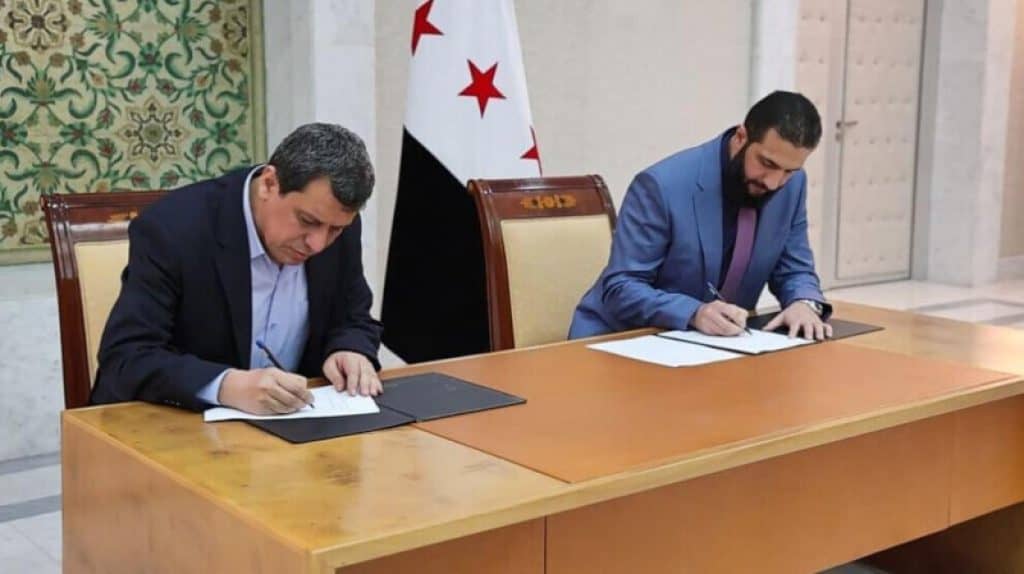
Despite the continued fighting, both sides have sought to revive diplomatic momentum. On January 27, SDF commander Mazloum Abdi and Ilham Ahmed, co-chair of the Foreign Affairs Department of the Kurdish-led civil administration in northeast Syria, met with Syrian government officials in Damascus.
According to reports, the discussions were positive, particularly on the proposed integration of the SDF into the Syrian military and the future governance of Kurdish-majority areas in northeastern Syria. These issues were outlined in an agreement signed on January 18, which provided for the integration of the SDF into the Syrian Army and the deployment of Syrian government forces into Kurdish-majority areas such as Qamishli and Kobani (Ayn al Arab). However, tensions on the ground continue to rise, especially as Syrian government forces continue to press into Kurdish-majority areas in scattered fighting.
Damascus is rushing reinforcements toward frontlines bordering Kurdish-majority areas, while the SDF is entrenching itself to defend what remains of its territory. If the conflict in northeastern Syria escalates, three major threats may emerge.
First, there is a growing risk that Islamic State prisoners held in northeast Syria could escape amid the chaos and violence, despite US Central Command (CENTCOM) announcing the transfer of up to 7,000 detainees from Syria to Iraq on January 21. Second, violence against Kurdish-majority areas may intensify, given the Syrian government’s documented record of treating minority populations. Third, the conflict could widen regionally, with Kurdish fighters from Iraq and Turkey potentially moving in to reinforce SDF defensive lines.
There are already indications that some regional Kurds have been involved in active combat in Syria. On January 27, Kurdish sources confirmed the death of a fighter from Iraqi Kurdistan who was killed during clashes in Al Hasakah.