For two weeks, drones have increasingly targeted areas in the autonomous Kurdistan Region of northern Iraq, with the most recent attack on July 11. On July 5, the Kurdistan Regional Government (KRG) blamed the Popular Mobilization Forces (PMF), Iraq’s state paramilitary organization largely comprised of Iranian-backed militias, for the attacks. Baghdad rejected the claims and condemned the KRG’s assertions.
The dispute arose after a number of drone attacks across Iraq. The attacks, which no group or country has taken responsibility for, appeared to begin as the 12-day conflict between Iran and Israel ended with a ceasefire. In the past, Iran has targeted Kurdish dissidents in northern Iraq, and Iraq’s Iranian-backed militias have targeted US forces in Erbil.
On June 24, attacks targeted radar installations in at least four Iraqi military facilities across the country. Six nights later, on June 30, three rockets were fired toward Kirkuk. “Two Katyusha rockets fell in the military section of Kirkuk airport,” an Iraqi security source told AFP. Two personnel were wounded. “Another rocket fell on a house in the city of Kirkuk, causing material damage,” Arab News reported while noting that “the military sector of Kirkuk’s airport includes bases for the Iraqi Army, the federal police, and the Hashed Al-Shaabi [Popular Mobilization Forces], a coalition of former pro-Iranian paramilitary forces now integrated into the regular armed forces.”
Iranian-backed groups have used 107mm and 122mm rockets in the past against US forces in Iraq and the Kurdistan region. It was unclear who shot them at the airport or what the intended target was.
According to Kurdish media reports, a drone also targeted the Baiji oil refinery on the same evening as the attack on Kirkuk. Two days later, on July 2, reports emerged of a round of drone attacks on areas in Sulimaniyeh, one of the largest cities in the KRG. One drone appeared to target Unit 70 of the Peshmerga, one of the key units of the KRG’s security forces. Sulimaniyeh and Unit 70 are often considered close to the Kurdistan region’s Patriotic Union of Kurdistan (PUK) party.
Another incident occurred in Erbil on July 3, setting off alarms at the US consulate, according to local videos. It appears another attack took place on July 4, targeting an area of Sulimaniyeh near the headquarters of a regional counter-terrorism base, according to The New Arab. The same day, the drone attacks appeared to escalate, also targeting an area near Erbil, the capital of the KRG.
“These types of attacks are carried out by some groups affiliated with the Popular Mobilization Forces (Hashd al-Shaabi) for provocative purposes,” the KRG’s Ministry of Interior said. It called on Baghdad to take “legal measures against the perpetrators” and “set limits on such destructive actions.” The statement also denied rumors that a drone had targeted an “Israeli” site in the KRG. “There is no Israeli base in Kurdistan, nor has any such operation been carried out,” the ministry said. Iran has claimed to target “Mossad bases” in northern Iraq in the past and launched missiles targeting Erbil in 2024.
After the KRG blamed the PMF for the July attacks on Erbil and Sulimaniyeh, Baghdad responded. “What was issued by the [KRG] Ministry of Interior in the Kurdistan Regional Government of Iraq, accusing an official Iraqi security institution, is rejected, condemned, and not allowed under any pretext, especially as it came without presenting any evidence. We demand that any such evidence, if it exists, be submitted to official government authorities,” Iraqi Armed Forces Spokesperson Brigadier General Sabah al Numan said.
The drone attacks continued over the next several days. On July 10, KRG security forces said they downed a drone that “approached a military installation in al-Sulaymaniyah province in Iraqi Kurdistan, that hosts units of the US-led Global Coalition, officials confirmed.” “There were no casualties or material damage. The drone’s origin and objective remain unknown at this time,” Major General Ahmed Latif, the spokesperson for Unit 70 of the KRG’s Peshmerga, said. On July 11, just after midnight, another drone was downed near Peshmerga forces north of Kirkuk. Al Arabiya posted photos of parts of the drone.
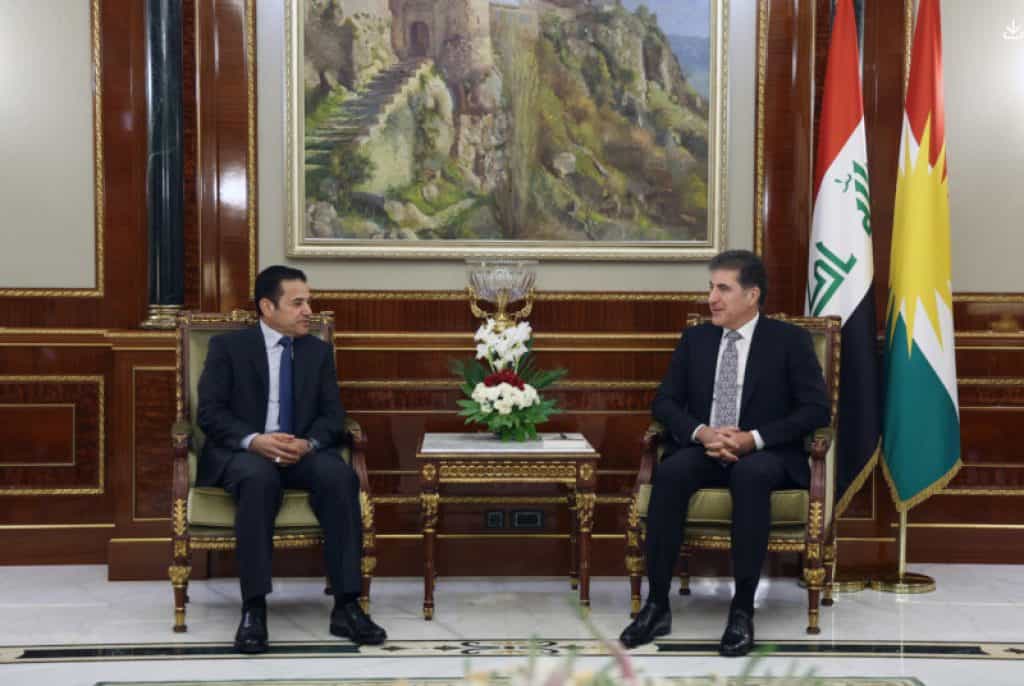
The drone attacks have occurred as Baghdad and Erbil continue to discuss several contentious issues, including a dispute over salaries and energy deals. On July 9, Kurdistan Region President Nechirvan Barzani and Iraqi National Security Advisor Qasim al Araji “affirmed the implementation of the joint security agreement between Iraq and Iran during a meeting in Erbil on Wednesday,” Shafaq News reported, an agreement that was supposed to focus on border security issues.
Iran has often accused the Kurdistan region of hosting dissident Iranian Kurdish groups. In the wake of the 12-day war with Israel, Iran has been cracking down on dissidents, especially targeting Kurdish groups.