|
|
|
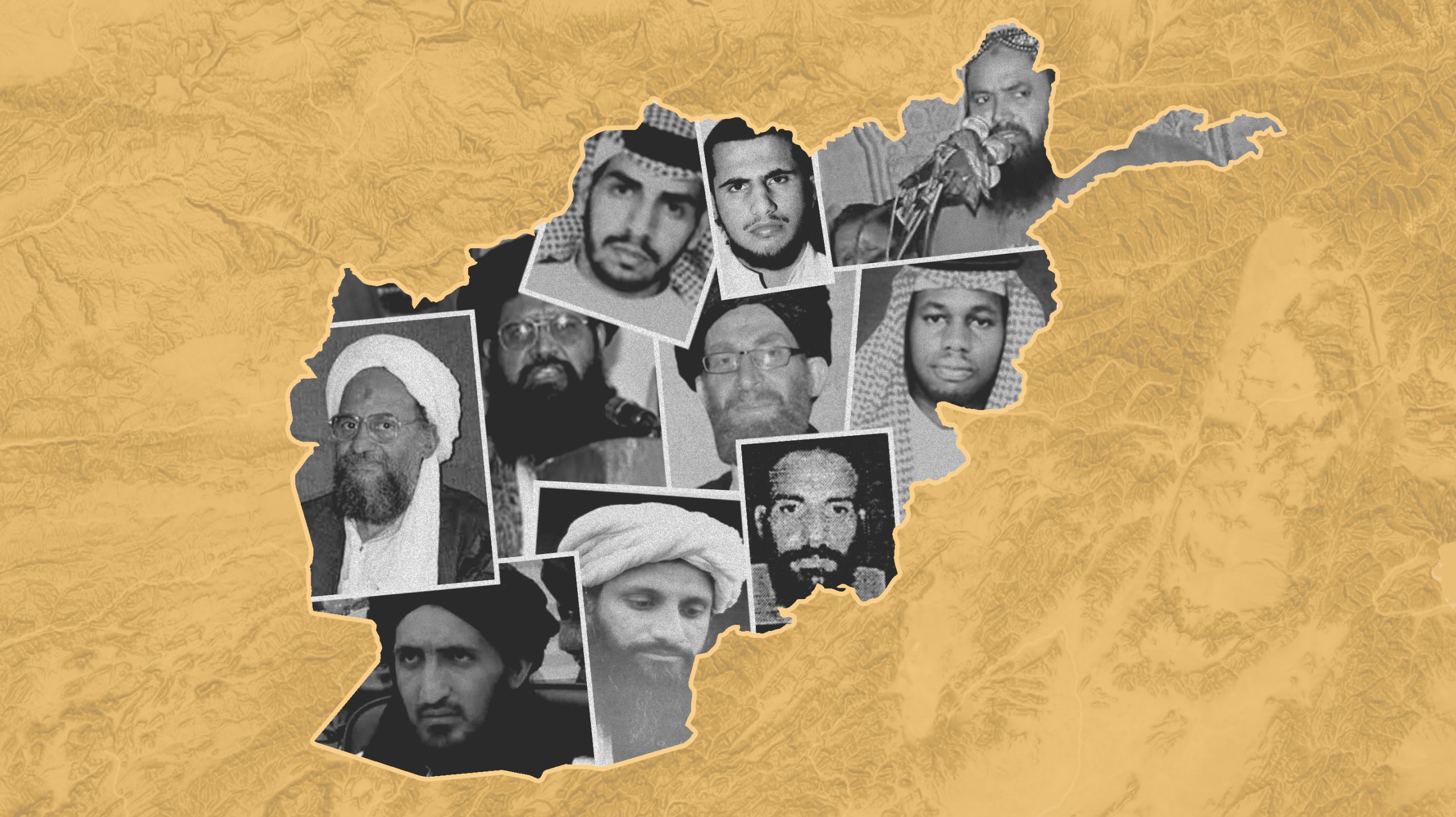
Click to view slide show of the Haqqani Network. Pictured is a composite image of Siraj Haqqani. |
Coalition and Afghan special operations forces today announced the capture of the Haqqani Network’s commander for Afghanistan during a raid in Paktia province on Sept. 27.
Haji Mali Khan, who is described by the International Security Assistance Force as “one of the highest ranking members of the Haqqani Network and a revered elder of the Haqqani clan,” was captured during a raid in the Musa Khel district of Khost province. Security forces also captured his deputy, his bodyguard, and “multiple additional insurgents.” Khan was “heavily armed” but he “submitted to the security force without incident or resistance,” ISAF stated.
Khan “worked directly under Siraj Haqqani,” the operational commander of the al Qaeda-linked Haqqani Network. Khan is Siraj’s maternal uncle. Siraj’s father, Jalaluddin Haqqani, the patriarch of the family, “consistently placed Mali Khan in positions of high importance,” ISAF said.
One of Khan’s duties included acting as an “an emissary between the late Baitullah Mehsud and senior leaders within the Haqqani leadership.” Baitullah led the Movement of the Taliban in Pakistan before he was killed in a US Predator airstrike in August 2009.
As the top commander in Afghanistan, Khan “managed bases and had oversight of operations in both Afghanistan and Pakistan,” ISAF stated. In the past year, Khan established bases for Haqqani Network fighters in the Mangal tribal areas of Paktia. He also facilitated the movement of forces from Pakistan to Afghanistan, financed terrorist operations, and served as a logistics coordinator for forces in the field.
Khan was captured three months after Ismail Jan, one of his deputies, was killed in an airstrike in Gardez district in Paktia. Jan was directly linked to the June 28 suicide assault on the Intercontinental Hotel in Kabul that killed 12 people. He commanded fighters in the Khost-Gardez Pass, a strategic area that links the provinces of Khost and Paktia. According to the ISAF statement announcing his death, Jan “moved into Afghanistan from Pakistan in late 2010.”
The Taliban denied reports that Khan was captured, and claimed it was a propaganda stunt by ISAF designed to “weaken” the group.
“I have just spoken with Haji Mali Khan, he is fine and is somewhere else and hasn’t been detained,” Taliban spokesman Zabihullah Mujahid told Reuters. “This is a baseless news and it has been released in order to weaken Mujahideen’s morale.”
ISAF said that Khan’s capture is “a significant milestone in the disruption of the Haqqani Network.” As the top commander of Haqqani forces in Afghanistan, he has the potential to provide a wealth of information on the terror group’s operations in both Afghanistan and Pakistan, as well as the location of the group’s top leaders.
ISAF also said that the Haqqani Network “and its safe havens remain a top priority for Afghan and coalition forces.” Coalition and Afghan troops have killed 20 Haqqani Network facilitators and and captured “nearly 300 insurgent leaders and 1,300 suspected Haqqani insurgents.”
Background on the Haqqani Network
The Haqqani Network operates primarily in the Afghan provinces of Khost, Paktia, and Paktika, and also has an extensive presence in Kabul, Logar, Wardak, Ghazni, Zabul, Kandahar, and Kunduz.
The terror group has close links with al Qaeda and the Taliban, and its relationship with Pakistan’s Inter-Services Intelligence agency (ISI) has allowed the network to survive and thrive in its fortress stronghold of North Waziristan, a tribal agency in Pakistan. The Haqqani Network has also extended its presence into the tribal agency of Kurram.
In North Waziristan, the Haqqanis control large swaths of the tribal area and run a parallel administration with courts, recruiting centers, tax offices, and security forces. In addition, the Haqqanis have established multiple training camps and safe houses used by al Qaeda leaders and operatives, as well as by Taliban foot soldiers preparing to fight in Afghanistan.
The Haqqani Network has been implicated in some of the biggest terror attacks in the Afghan capital city of Kabul, including the January 2008 suicide assault on the Serena hotel, the February 2009 assault on Afghan ministries, and the July 2008 and October 2009 suicide attacks against the Indian embassy.
The terror group collaborated with elements of Pakistan’s military and intelligence service in at least one of these attacks. In the past, American intelligence agencies confronted the Pakistani government with evidence, including communications intercepts, which proved the ISI’s direct involvement in the 2008 Indian embassy bombing. [See LWJ report Pakistan’s Jihad and Threat Matrix report Pakistan backs Afghan Taliban for additional information on the ISI’s complicity in attacks in Afghanistan and the region.]
Most recently, the US and the Afghan government have linked the Haqqani Network and Pakistan’s intelligence service to the June 2010 assault on the Intercontinental Hotel in Kabul in June 2011 and the attack on the US Embassy and ISAF headquarters in September. Last week, Admiral Michael Mullen, the former Chairman of the Joint Chiefs of Staff, accused the Haqqani Network of being one of several “[e]xtremist organizations serving as proxies of the government of Pakistan.”
Over the past few years, six of the Haqqani Network’s top leaders have been added to the US’ list of specially designated global terrorists. Siraj Haqqani, who also is a member of al Qaeda’s executive council, was added in March 2008. Nasiruddin Haqqani, a key financier and “emissary” for the Haqqani Network, was placed on the US’ terrorist list in July 2010. Khalil al Rahman Haqqani, a key fundraiser, financier, and operational commander for the Haqqani Network who also aids al Qaeda, was added to the US’ list of terrorists in February 2011. Badruddin Haqqani, an operational commander who also aids al Qaeda, was designated as a terrorist on May 11, 2011. Mullah Sangeen Zadran, a top military commander in eastern Afghanistan, was added to the list in August 2011. And on September 29, the US added Abdul Aziz Abbasin, a key commander in the Haqqani Network who is currently the Taliban’s shadow governor for Orgun district in Paktika province. All six commanders have close ties to al Qaeda.
Jalaluddin Haqqani, the father of Siraj, Nasiruddin, and Badruddin, and the brother of Khalil and Khan, has not been added to the US’ list of terrorists, despite his close links to both the Taliban and al Qaeda. In an interview with Al Somood, the Taliban’s official magazine, Jalaluddin admitted that he served on the Taliban’s executive council, which is known as the Quetta Shura.