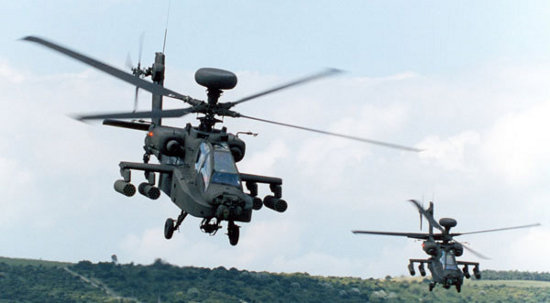
Pakistani troops and Coalition helicopters exchanged fire along the Afghan-Pakistani border earlier this morning, resulting in two Pakistani troops wounded. The Pakistani military has “lodged a strong protest” and insists on a high-level meeting.
Initial reports from both sides are in conflict. The clash took place at the Admi Kot Post in the Datta Khel area in North Waziristan, according to the Pakistani military. Pakistan claimed that the Coalition helicopters based in Afghanistan crossed the border, but an unnamed Western military official said the helicopters opened fire from Afghanistan after taking fire from the Pakistani side of the border.
“Two NATO Helicopters violated Pakistan air space today at Admi Kot Post, North Waziristan Agency in the in the early hours of the morning,” the Pakistani military said, in an official statement released at the Inter-Services Public Relations website.
“The troops at the post fired upon the helicopters and, as a result of exchange of fire, two of our soldiers received injuries,” the Pakistani statement continued. “Pakistan Army has lodged a strong protest and demanded a flag meeting.”
Officially, the International Security Assistance Force, the NATO command in Afghanistan, said that the incident is being investigated.
“ISAF is aware of the incident and is assessing it to determine what happened. This effort will be pursued in a cooperative manner using the border coordination center partnership,” Lieutenant Commander Colette, an ISAF spokeswoman, told The Long War Journal.
An anonymous Western military official told Reuters that the helicopters were responding to attacks on a US combat outpost and had opened fire into Pakistan after taking fire twice.
“Our initial reports indicate that two ISAF helicopters were in the area in support of FOB (forward operating base) Tillman, as the FOB had been receiving intermittent direct and indirect fire from across the Pakistani border,” the official told Reuters. “Upon arrival the helicopter received fire from across the border but did not immediately return fire. Upon receiving fire from across the border a second time, the helicopter returned fire.”
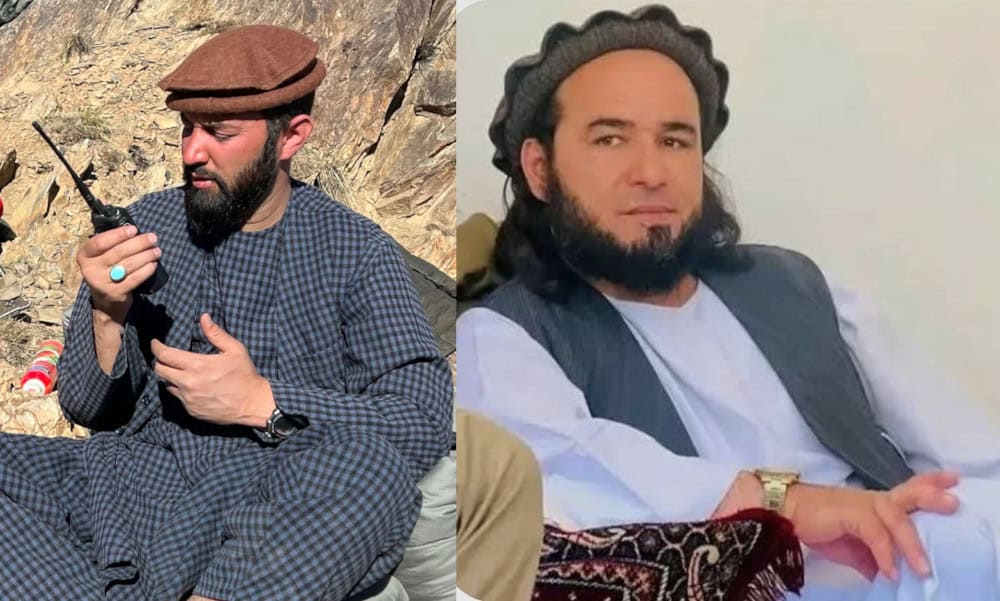
The Datta Khel area in North Waziristan is a known haven for al Qaeda, which has also run a command and control center there. Just yesterday, unmanned US Predators carried out an airstrike in Datta Khel, killing 10 “militants” including four “foreigners,” a term used to describe al Qaeda operatives. Datta Khel is administered by Hafiz Gul Bahadar, a Taliban leader who is liked by the Pakistani establishment as he does not attack the state but does strike at ISAF and Afghan forces across the border.
The exchange of fire along the border takes place as US-Pakistan relations are at an all-time low. The Pakistani military and government are furious over the covert US raid that killed al Qaeda emir Osama bin Laden at his home in Abbottabad, far from the tribal agencies. Pakistan has also been up in arms over the US Predator strikes that target Taliban and al Qaeda leaders and operatives in North and South Waziristan, as well as the incident with Raymond Davis, a CIA contractor who killed two Pakistanis in Lahore.
NATO and Pakistani troops have clashed several times over the past several years. A series of three similar incidents in the early fall of 2010 led to the closure of NATO’s supply line through the Khyber Pass by the Pakistani government. At the end of September, US helicopters struck Haqqani Network forces as they carried out attacks in Afghanistan’s Khost province and then fled to their safe havens in Pakistan’s tribal agencies of Kurram and North Waziristan. In one strike, two Pakistani Frontier Corps soldiers were killed.
In protest, the Pakistani government closed the Khyber Pass, one of the two key crossing routes for NATO supplies, for 10 days. During that time, more than 200 NATO fuel tankers and supply trucks and containers were savaged in major attacks against convoys and rest stops in Baluchistan and Khyber-Paktunkwha provinces, as well as just outside the cities of Islamabad and Rawalpindi.
The border crossing was reopened on Oct. 9 after top US generals and officials apologized for the cross-border strikes.
The major attacks on NATO convoys stopped immediately after Pakistan reopened the Khyber Pass. At the time, US officials told The Long War Journal that they believed the Pakistani military either facilitated or turned a blind eye to Taliban attacks on NATO’s convoys, to punish the US for carrying out cross-border raids. The officials also said the Pakistani military wanted to deflect building Western pressure on Pakistan to carry out military operations in the Taliban and al Qaeda havens in North Waziristan. [See LWJ report, Taliban torch 35 more NATO tankers in Pakistan, for more information.]