|
|
|
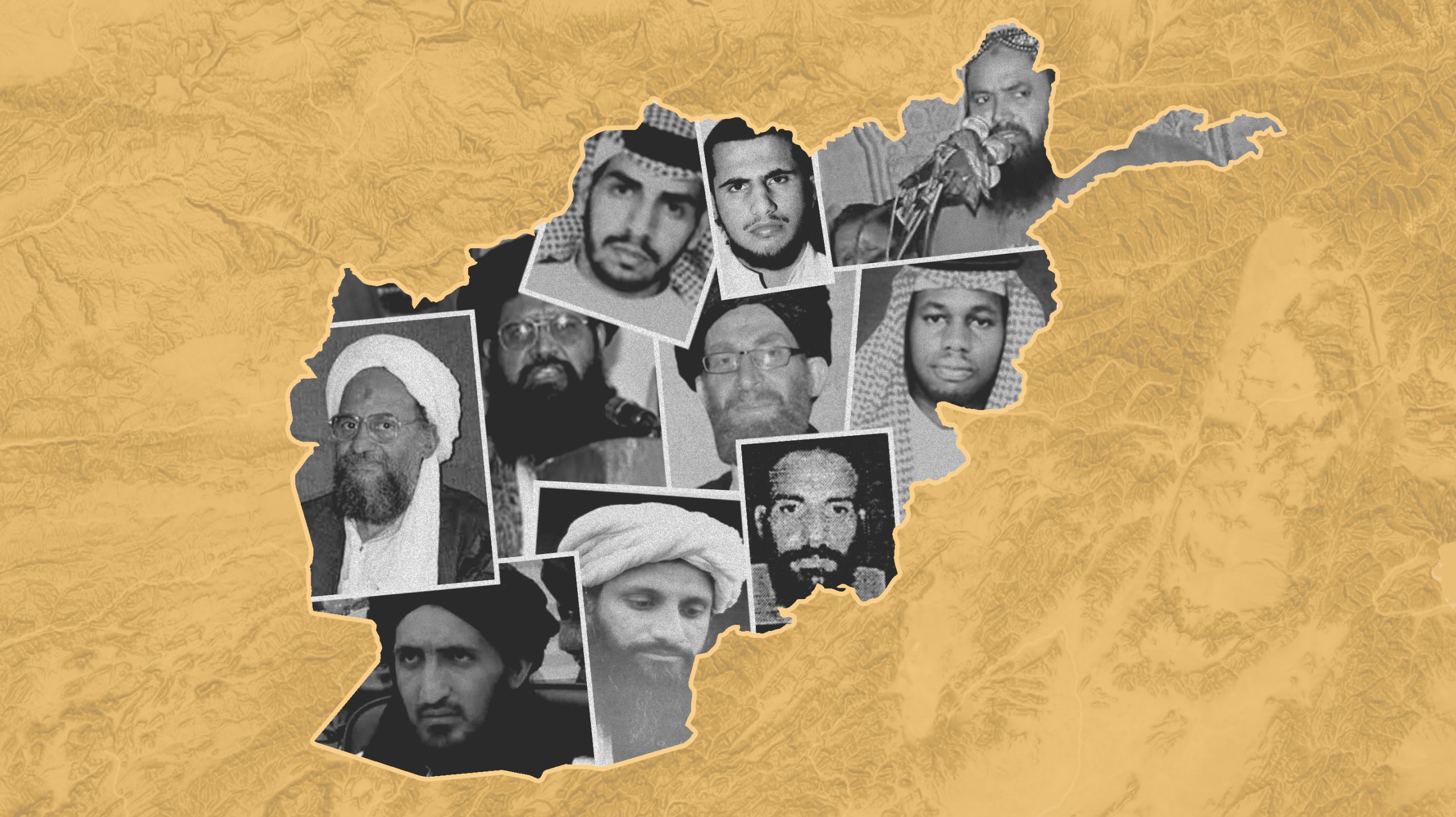
Map of Afghanistan’s provinces. Click map to view larger image. |
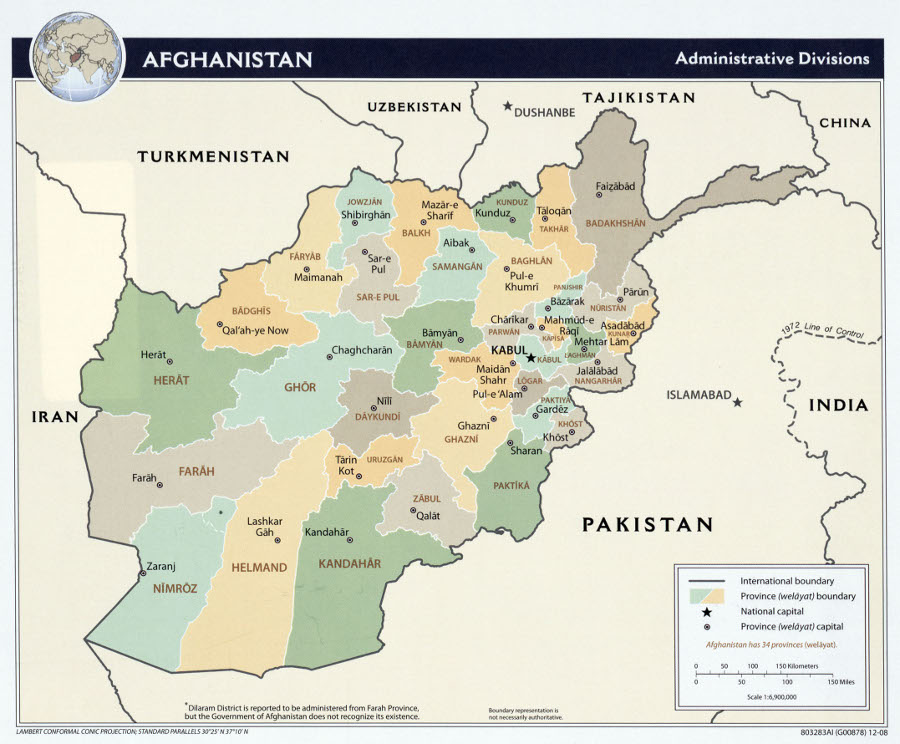
US soldiers beat back a massed attack by the Haqqani Network in the eastern Afghan province of Khost yesterday, killing 27 enemy fighters.
The Haqqani Network fighters gathered near Combat Outpost Spera and prepared to open fire on the base “with small arms and rocket propelled grenade fire,” Combined Joint Task Force – 101 stated in a press release. But the Haqqani Network fighters were observed as they moved into position to attack.
“Both remotely piloted aircraft and strategically placed surveillance cameras identified the insurgent forces preparing to open fire with a mixture of small arms and rocket propelled grenades,” CJTF-101 stated. Helicopters from an Attack Weapons Team from Task Force Viper, 1st Battalion, 3rd Combat Aviation Brigade, were dispatched and routed the Haqqani Network fighters.
ISAF stated that between 25 to 30 “insurgents” were killed, while CJTF-101 put the number at 27. No US or Afghan troops were reported to have been killed or wounded in the fighting.
The Haqqani Network has carried out four major attacks against heavily defended US outposts in eastern Afghanistan since the end of August.
On Aug. 28, Haqqani Network fighters launched coordinated attacks against Forward Operating Bases Salerno and Chapman in Khost province. US and Afghan troops routed the Haqqani Network fighters, killing more than 35, including a commander, during and after the attacks. Several of the fighters were wearing US Army uniforms, and 13 were armed with suicide vests. US forces killed and captured several commanders and fighters during raids in the aftermath of the attacks.
And on Sept. 2, the Haqqani Network attempted to storm Combat Outpost Margah in the Bermel district of Paktika province. US troops repelled the attack with mortar and small-arms fire, then called in helicopter gunships to finish off the attackers; 20 were reported killed.
The Taliban and the Haqqani Network have launched attacks at several major installations across the country this year. In May, a small team attempted to breach security at Kandahar Airfield after launching a rocket attack on the base; another small team conducted a suicide assault at the main gate at Bagram Airbase in Parwan province. In June, the Taliban launched an assault against Jalalabad Airfield in Nangarhar province. The Taliban carried out a suicide assault against the Afghan National Civil Order Police headquarters in Kandahar City in July; three US soldiers were killed in the attack, which included a suicide car bomber and a follow-on assault team. And in early August, the Taliban again conducted a complex attack at Kandahar Airfield. All of the attacks were successfully repelled by Coalition and Afghan forces.
Haqqani Network a main target of Coalition and Afghan forces
Over the past few months, Coalition and Afghan forces have been conducting multiple special operations raids on a near-daily basis targeting the Haqqani Network and al Qaeda operatives and camps in Khost, Paktia, and Paktika. Within the past 24 hours, ISAF and Afghan forces have captured a Haqqani commander, several IED facilitators, and three fighters, as well as a Taliban cell commander, during raids in Khost.
Afghan and Coalition forces have attempted to interdict Haqqani Network bases in the region by launching large-scale operations in enemy strongholds.
In mid-June, Afghan and Coalition forces killed “a large number” of Haqqani Network and foreign fighters during a major clash in the Jani Khel district in Paktia, and another 38 as they crossed the provincial border into Musa Khel in Khost. “Arabs, Uzbeks, Turks, and Chechens” were among those reported killed in the fight in Jani Khel in Paktia.
On Aug. 12, Afghan and Coalition forces killed more than 20 Haqqani Network fighters and detained several more during a raid in the district of Zadran in Paktia. ISAF described the district of Zadran as a “known Haqqani Network safe haven” which is “used to stage attacks into Kabul and the Khost-Gardez pass.”
Al Qaeda maintains a strong presence in eastern Afghanistan, according to an investigation by The Long War Journal. In Khost, the presence of al Qaeda and allied groups’ cells has been detected in the districts of Besmil, Khost, Mandozai, Nader Shahkot, Sabari, Shamul, Spera, and Terayzai; or eight of Khost’s 12 districts.
Al Qaeda operates in conjunction with the Taliban, the Haqqani Network, and the Hizb-i-Islami Gulbuddin network throughout Afghanistan. Frequently, al Qaeda operatives serve as embedded military trainers for Taliban field units and impart tactics and bomb-making skills to these forces. In addition, al Qaeda often supports the Taliban by funding operations and providing weapons and other aid, according to classified military memos released by Wikileaks.
|
|
|
Click to view slide show of the Haqqani Network. Pictured is Nasiruddin Haqqani. |
Background on the Haqqani Network
The Haqqani Network has extensive links with al Qaeda and the Taliban, and its relationship with Pakistan’s Inter-Services Intelligence agency has allowed the network to survive and thrive in its fortress stronghold of North Waziristan. The Haqqanis control large swaths of the tribal area and run a parallel administration with courts, recruiting centers, tax offices, and security forces. They have established multiple training camps and safe houses used by al Qaeda leaders and operatives, as well as by Taliban foot soldiers preparing to fight in Afghanistan.
The Haqqani Network has been implicated in some of the biggest terror attacks in the Afghan capital city of Kabul, including the January 2008 suicide assault on the Serena hotel, the February 2009 assault on Afghan ministries, and the July 2008 and October 2009 suicide attacks against the Indian embassy. American intelligence agencies confronted the Pakistani government with evidence, including communications intercepts, which proved the ISI’s direct involvement in the 2008 Indian embassy bombing. [See LWJ report Pakistan’s Jihad and Threat Matrix report Pakistan backs Afghan Taliban for additional information on the ISI’s complicity in attacks in Afghanistan and the region.]
The Haqqani Network is led by Jalaluddin Haqqani and his son, Sirajuddin. Jalaluddin is thought to be ill and is considered the patriarch of the network. Siraj runs the daily operations and is the group’s military commander.
Siraj is one of the most wanted Taliban and al Qaeda leaders in the Afghan-Pakistan region. The US military has described Siraj as the primary threat to security in eastern Afghanistan. He is the mastermind of the most deadly attacks inside Afghanistan, including suicide assaults in Kabul, and he is the senior military commander in eastern Afghanistan. He is the leader of the Taliban’s Miramshah Regional Military Shura, one of the Afghan Taliban’s four regional commands [see LWJ report, The Afghan Taliban’s top leaders].
Siraj is considered dangerous not only for his ties with the Afghan Taliban, but also because of his connections with al Qaeda’s central leadership, which extend all the way to Osama bin Laden. Siraj is a member of al Qaeda’s Shura Majlis, or top council, US intelligence sources told The Long War Journal. In a tape released in April 2010, Siraj admitted that cooperation between the Taliban and al Qaeda “is at the highest limits.” On March 25, 2009, the US Department of State put out a $5 million bounty for information leading to the capture of Siraj.
The US Treasury recently added Nasiruddin Haqqani, Siraj’s brother, to the list of specially designated global terrorists. Nasiruddin is a key financier and emissary for the Haqqani Network. According to the Treasury, Nasiruddin has traveled to Saudi Arabia and the United Arab Emirates between 2004-2009 to carry out fundraising for the Haqqani Network, al Qaeda, and the Taliban.
Despite Siraj’s ties with al Qaeda, and the Haqqani Network’s use of suicide attacks, some top US military commanders have stated that Jalaluddin Haqqani, his father, and Gulbuddin Hekmatyar, another supporter of al Qaeda, are “absolutely salvageable” and ripe for negotiations.
“The HIG already have members in Karzai’s government, and it could evolve into a political party, even though Hekmatyar may be providing al Qaeda leaders refuge in Kunar,” Major General Michael Flynn, the top military intelligence official in Afghanistan, told The Atlantic in April 2010. “Hekmatyar has reconcilable ambitions. As for the Haqqani network, I can tell you they are tired of fighting, but are not about to give up. They have lucrative business interests to protect: the road traffic from the Afghanistan-Pakistan border to Central Asia.”
Sir Graeme Lamb, a senior adviser to General McChrystal, echoed Flynn’s view on Hekmatyar and Haqqani, and discounted the groups’ close ties to al Qaeda.
“Haqqani and Hekmatyar are pragmatists tied to the probability of outcomes,” Lamb also told The Atlantic. “With all the talk of Islamic ideology, this is the land of the deal.”
A Haqqani Network leader known as Zakim Shah serves as the shadow governor of Khost province. Khost, Paktika, and Paktia provinces are the main strongholds of the Haqqani Network in eastern Afghanistan. The Haqqani Network also has a presence in the provinces of Logar, Wardak, Nangarhar, Ghazni, Zabul, and Kabul.
The Haqqani forces in Paktika province are commanded by Mullah Sangeen Zadran, a senior lieutenant to Sirajuddin Haqqani. A US military intelligence official told The Long War Journal that Sangeen also commands forces outside of Paktika and that he has become one of the most dangerous operational commanders in eastern Afghanistan.
Last summer, Sangeen took credit for the kidnapping of a US soldier who apparently stepped away from his post at a combat outpost in Paktika on June 30, 2009. US forces in eastern Afghanistan launched a massive manhunt for the soldier, but failed to find him. The soldier is believed to be held across the border in Pakistan’s Taliban-controlled tribal agency of North Waziristan.
US and Afghan forces hit the Haqqani Network hard in the summer of 2009 during a series of raids in Khost, Paktika, Paktia, Logar, and Zabul. Major battles were fought in mountainous regions as the joint forces assaulted strongly-defended Haqqani Network “fortresses.” The raids failed to dislodge the Haqqani Network from the provinces.
The Haqqani Network has also been heavily targeted by the CIA in the covert air campaign in Pakistan’s tribal areas. Siraj has been the target of multiple Predator strikes. His brother, Mohammed, who served as a military commander, was killed in a February 2010 strike in North Waziristan. Seven of the 17 Predator strikes in the month of September have taken place in territory administered by the Haqqani Network.