-
Israeli operations in Lebanon against Hezbollah: April 28–May 11, 2025
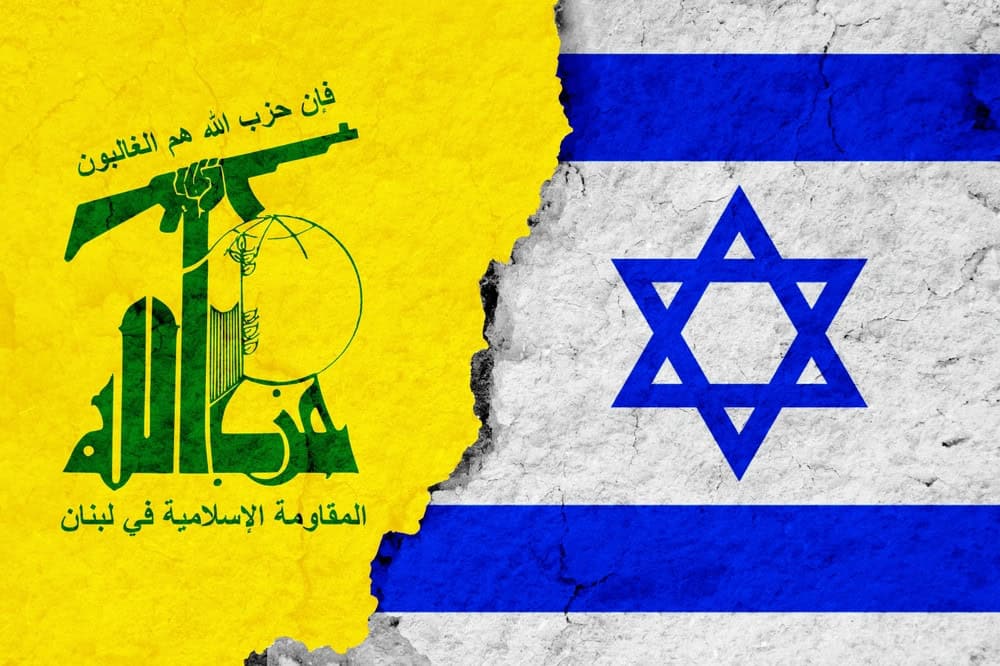
Israel continued operations in Lebanon between April 28 and May 11, 2025. These activities included targeted killings and the destruction of a Hezbollah PGM storage facility in Beirut’s southern suburbs.
-
Analysis: Naim Qassem encourages voting in upcoming Lebanese municipal elections
Hezbollah Secretary-General Naim Qassem called on his group’s followers to vote in strength in the upcoming municipal elections in Lebanon. He also demanded that the Lebanese government end Israel’s operations in the country and rebuild areas damaged in the recent Hezbollah-Israel war.

-
Israeli operations in Lebanon against Hezbollah: April 21–April 27, 2025
Israel continued operations in Lebanon between April 21 and April 27, 2025. These activities included targeted killings and the destruction of a Hezbollah precision-guided munitions storage facility in Beirut’s southern suburbs.
-
Israeli operations in Lebanon against Hezbollah: April 14–April 20, 2025
Israel continued operations in Lebanon between April 14 and April 20, 2025. This week witnessed an uptick in Israeli strikes against Hezbollah, including several assassinations of the group’s operatives and commanders.
-
Israel kills Hezbollah Unit 4400 deputy commander amid allegations of continued smuggling
Israel killed Hezbollah Unit 4400’s new deputy commander, Hussain Ali Nasr. The Israel Defense Forces alleged that Iran and Unit 4400 continue to oversee weapons smuggling to Hezbollah, including through Beirut–Rafic Hariri International Airport.

-
Analysis: Qassem’s speech on Lebanon’s national defense strategy indicates Hezbollah will remain armed
Hezbollah Secretary-General Naim Qassem delivered his first speech thoroughly addressing Hezbollah’s vision for a national defense strategy. He said the group was ready for a dialogue, which remained premature, but would refuse to disarm even after a strategy is set.

-
Israeli operations in Lebanon against Hezbollah: April 7–April 13, 2025
Israel continued operations in Lebanon between April 7 and April 13, 2025, repeating a lower-intensity pattern from the previous week. The Israel Defense Forces targeted 10 areas and killed one mid-level Hezbollah commander and one Hezbollah operative.
-
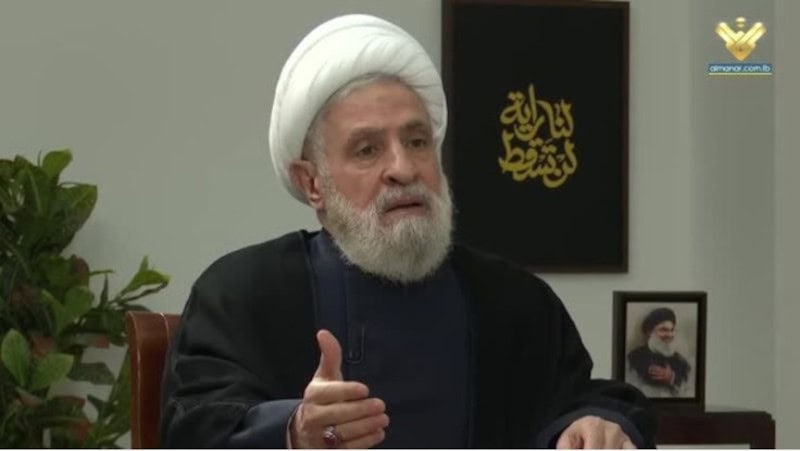
Analysis: Naim Qassem explains Hezbollah’s vision for the future in first long-form interview
Al Manar hosted Naim Qassem for his first lengthy interview as Hezbollah’s secretary-general. Qassem threatened to resume attacking Israel if it didn’t withdraw from south Lebanon and explained Hezbollah’s vision for the future, including the group’s intention to retain its arms and freedom of action from the Lebanese state.
-
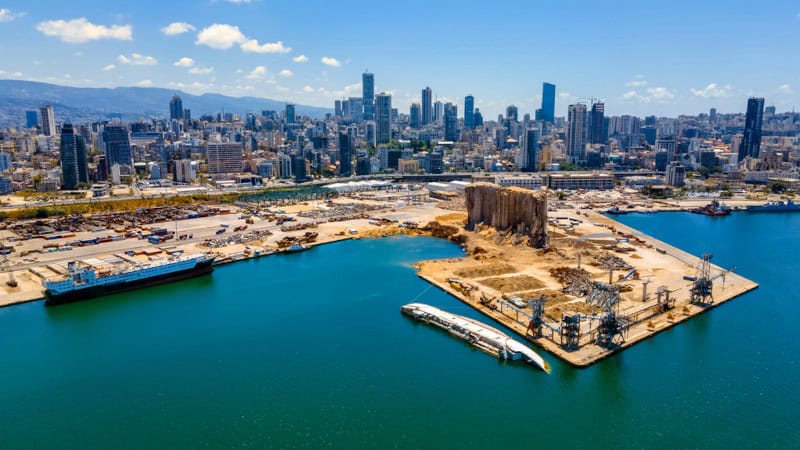
Iran reportedly smuggling weapons to Hezbollah via Beirut port
A “Western security source” told Al Arabiya that Hezbollah is using the Port of Beirut to smuggle weapons into Lebanon from Iran. In early March, Israel assassinated a Hezbollah commander in charge of maritime weapons smuggling, saying his activities had continued after the November 27 Lebanon-Israel ceasefire.
-
Israeli operations in Lebanon against Hezbollah: March 31–April 6
Israel continued operations in Lebanon between March 31 and April 6, 2025, though there was a noticeable drop in number and intensity. However, Israel conducted two targeted killings in Lebanon: one in Beirut’s Dahiyeh neighborhood killed a Hezbollah commander and operative, and another in Sidon killed a Hamas commander and operative.
-
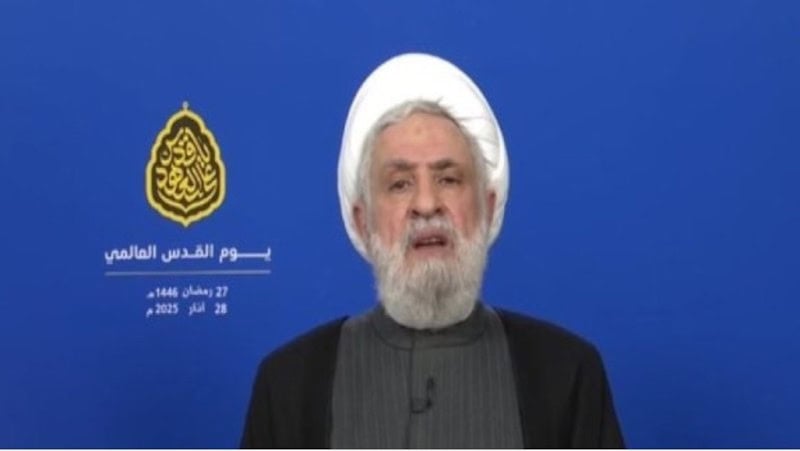
Analysis: Hezbollah Secretary-General Naim Qassem’s Quds Day speeches
Naim Qassem delivered two speeches last week to mark Quds Day that touched on similar themes, including Hezbollah’s alleged victory in the recent war with Israel. Qassem also vowed Hezbollah would not disarm and cryptically threatened to resume attacking Israel if Israeli operations in Lebanon continued.
-
Israeli airstrike in Beirut kills Hezbollah commander, operative
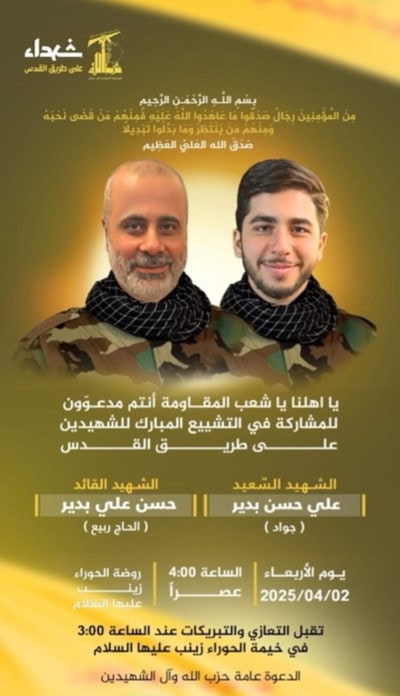
The Israel Defense Forces conducted an airstrike in the Dahiyeh suburb of Beirut, the second in two weeks and since the November 27 ceasefire, that killed Hezbollah commander Hassan Badeer, his son (another Hezbollah member), and two others. Israel said Badeer was helping Hamas plan an imminent attack against Israeli civilians.
-
Israeli operations in Lebanon against Hezbollah: March 24–March 31
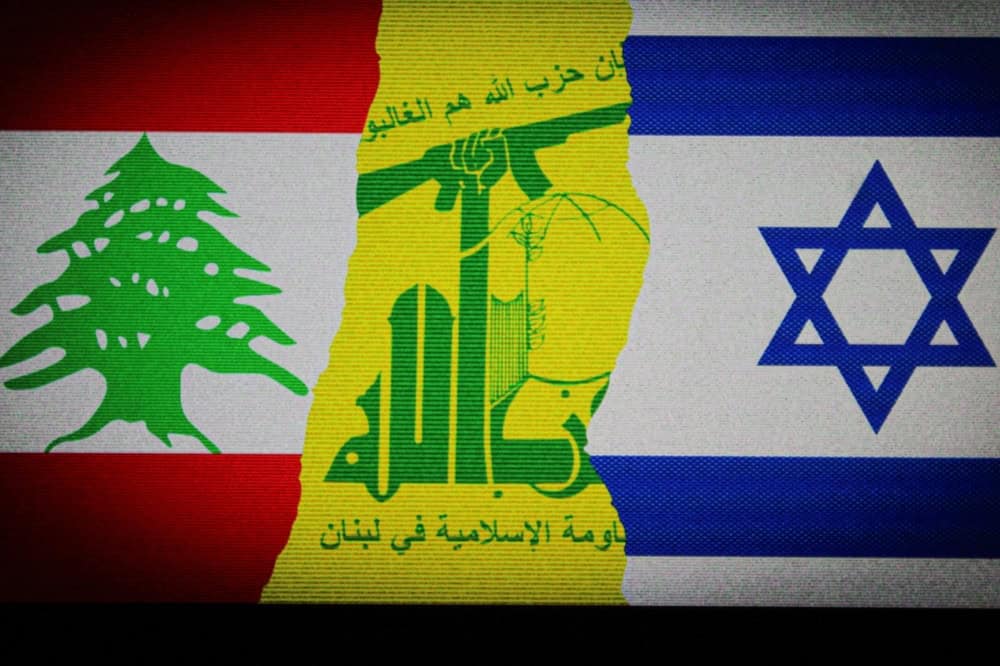
Israeli operations in Lebanon continued on a near-daily basis last week. On Friday, Israel struck in Dahiyeh, Beirut for the first time since the November 27 ceasefire, destroying a Hezbollah drone storage facility. Lebanese officials made equivocal statements on reining in Hezbollah.
-
Israeli operations in Lebanon against Hezbollah: March 18–March 23
Israel conducted a series of operations in Lebanon between March 18 and March 23, targeting Hezbollah personnel and assets. On Saturday, in response to rocket fire from Lebanon, Israel launched its most expansive series of attacks in Lebanon since the November 27 ceasefire went into effect.
-
IDF operations in Lebanon and Hezbollah casualty announcements over the past week
Israel conducted several military operations in Lebanon between March 13 and 17, 2025. The operations targeted Hezbollah activity, operatives, and infrastructure. Hezbollah announced the deaths of five of its fighters last week without directly specifying the cause.
-
Israeli airstrikes target Hezbollah assets and personnel in south Lebanon
Israel conducted two sets of airstrikes in south Lebanon on March 11 that targeted Hezbollah operatives. The first targeted a senior Hezbollah aerial defense operative, whose fate remains unknown. The second set of strikes targeted Hezbollah members in south Lebanon. Hezbollah-affiliated media announced two of the group’s fighters were killed.
-
Analysis: Lebanon’s new government, the absent “resistance” Clause, and Hezbollah’s fate
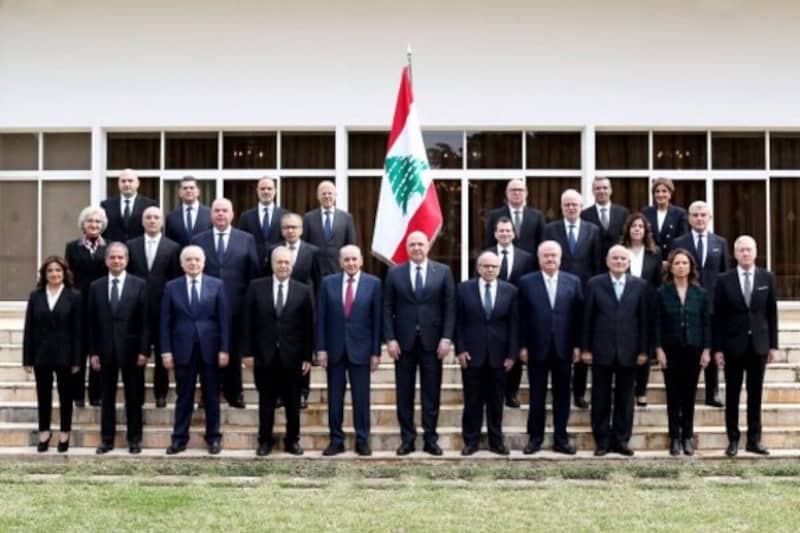
A review of the new Lebanese government’s policy statement reveals some positive changes from the positions of previous governments regarding the official posture on Hezbollah and its arms. Nevertheless, the statement contains subtle but significant loopholes that Hezbollah can exploit to ensure its survival and eventual regeneration.
-
Analysis: A comparison of IDF and LAF activities in Lebanon post-November 27 ceasefire
A comparison of actions by the Israel Defense Forces (IDF) and Lebanese Armed Forces (LAF) in Lebanon after the ceasefire on November 27, 2024, demonstrates that the Lebanese have not taken significant action against Hezbollah.
-
Israel assassinates commander of Hezbollah Radwan Force’s seaborne forces
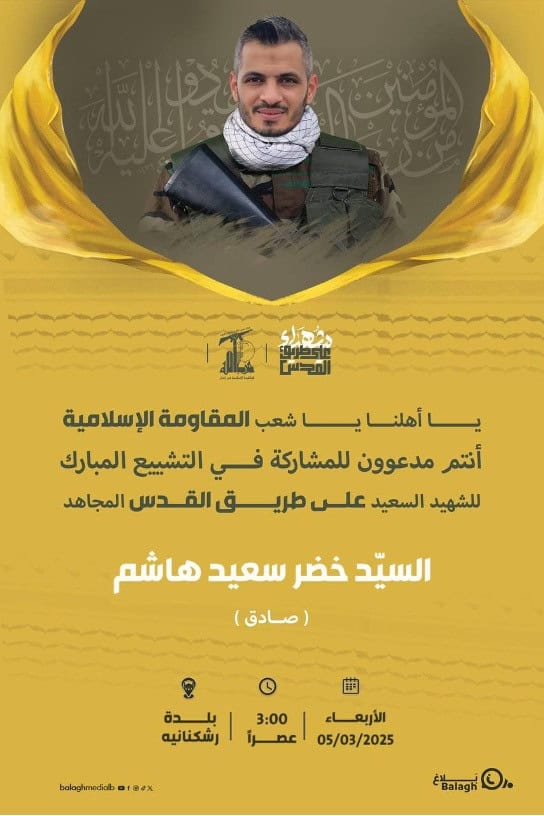
Israel assassinated Khodr Hashem, the commander of Hezbollah’s Radwan Force’s seaborn forces, in south Lebanon. Hashem was involved in armed activities and maritime weapons smuggling to Hezbollah before and after the November 27, 2024, Lebanon-Israel ceasefire agreement, activities which constituted a violation of the deal.
-
Lebanon seizes funds bound for Hezbollah at Beirut airport
Lebanon seized $2.5 million in cash destined for Hezbollah carried by a man arriving from Turkey. This development follows Israeli accusations that Turkey is being used as a conduit for Iranian funds to reach Hezbollah and may be facilitating the transfers.

-
Gaza ceasefire faces new hurdles as Hamas releases bodies of slain hostages, only 3 of 4 identified
On February 20, Hamas released four caskets ostensibly carrying the remains of four Israeli hostages to the Red Cross, but one contained the body of a Palestinian woman. Israel has condemned this as a violation of the ceasefire that began in January. Separately, the IDF redeployed an experienced division that served in Gaza and carried out airstrikes against Hezbollah on the Syria-Lebanon border.

-
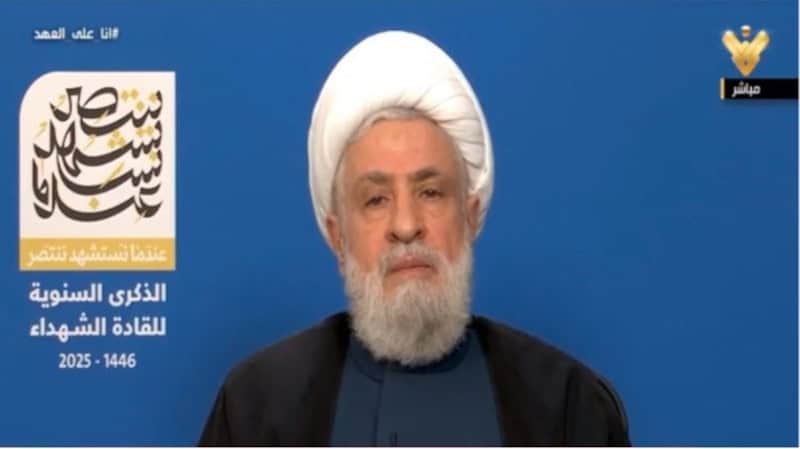
Hezbollah Secretary-General Naim Qassem’s “Martyr Leaders Day” speech
Hezbollah Secretary-General Naim Qassem delivered a speech on February 16 addressing regional and domestic developments, Beirut banning Iranian flights from landing at Hariri International Airport, and Nasrallah’s upcoming funeral. Qassem called for massive participation in the funeral to deter Hezbollah’s domestic political opponents from targeting the group or its weapons.
-
Analysis: Naim Qassem announces the date of Nasrallah’s funeral
Hezbollah Secretary-General Naim Qassem gave a speech to mark the onset of the month of Shaban, in which he announced the date of Hassan Nasrallah’s funeral, sought to counter the group’s domestic detractors, and condemned provocative behaviors by Hezbollah’s supporters.

-
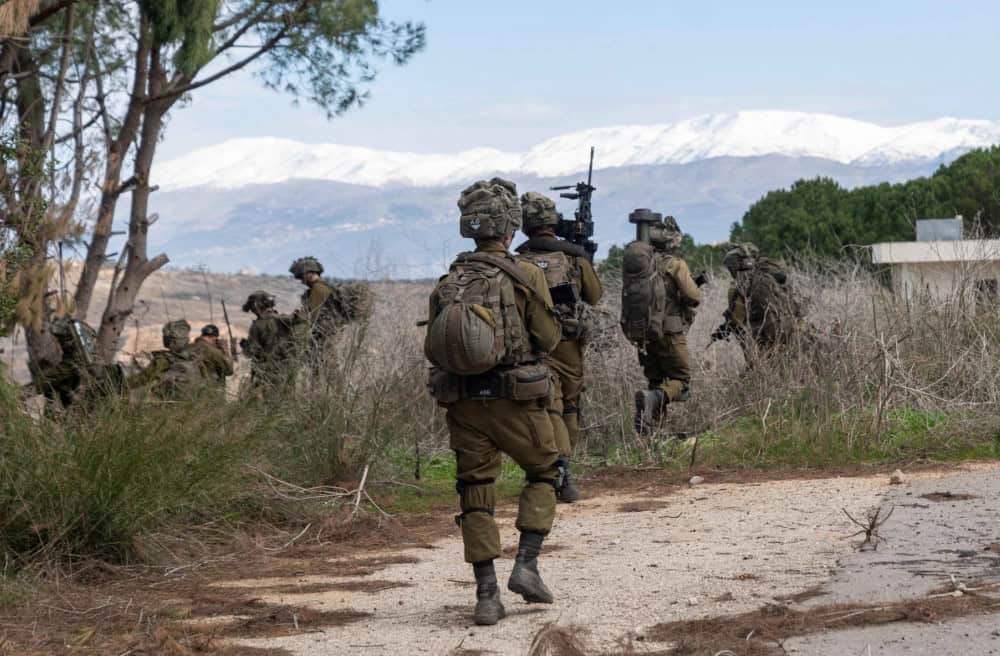
Israel strikes Hezbollah targets in Lebanon as ceasefire continues
Israel faces continued threats in Lebanon despite the recent ceasefire, which approaches the important milestone of its first 60 days. On January 13, the Israel Defense Forces (IDF) carried out strikes on several Hezbollah targets, “including a rocket launcher site, a military site, and routes along the Syria-Lebanon border used to smuggle weapons to Hezbollah.” Israeli troops also continued searching for weapons and dismantling terrorist infrastructure in southern Lebanon.
-
Analysis: Lebanon’s Mahan Air theater was meant to cover ceasefire deal non-performance
Lebanon did not thoroughly inspect a Mahan Air Flight suspected of carrying funds for Hezbollah. It engaged in an act of theater to deny Israel justification to resume fighting the group in light of Beirut’s failure to implement its obligations under the November 27, 2024, ceasefire agreement.

-
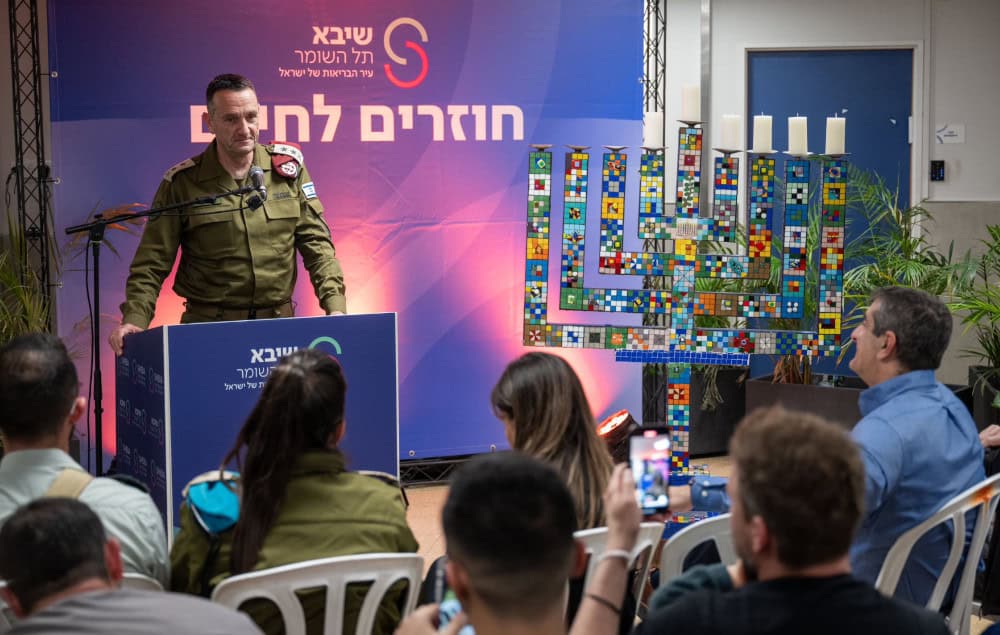
Israel takes stock of military casualties over a year of war
The Israel Defense Forces (IDF) published data on the number of soldiers killed and wounded in 2024 and since the war began on October 7, 2023. A total of 363 IDF soldiers were killed in 2024, most of them during combat operations and in terrorist attacks. Overall, 891 servicemembers have died, most of them in combat, and 5,569 have been wounded since the conflict started last year.
-
Israeli forces in southern Lebanon dismantle more Hezbollah sites
The Israel Defense Forces (IDF) continue to search for and uncover Hezbollah munitions and terrorist infrastructure in southern Lebanon. IDF forces found weapons, explosives, and a tunnel in the fourth week of December. Israel is aiming to fulfill its mission against these threats before troops withdraw from southern Lebanon over the next three weeks in compliance with the Israel-Lebanon ceasefire. Hezbollah has warned that it will respond to Israel if the ceasefire’s terms are violated.

-
Israeli defense minister vows to prevent Hezbollah’s return to the border
Israeli Minister of Defense Israel Katz went to southern Lebanon on December 22 and vowed that Hezbollah would not be permitted to return to the border area. He met with the commanders of the IDF’s 91st Division and 188th Armored Brigade. The 188th has continued to uncover terrorist infrastructure and weapons in southern Lebanon.

-
Analysis: Naim Qassem on Hezbollah’s influence in Lebanon and about-face on Syria
In his first speech after Assad’s downfall, Hezbollah Secretary-General Naim Qassem completely reversed the organization’s position on the Syrian dictator’s removal. Qassem extended an olive branch to groups that, the week prior, he described as takfiri agents of Israel. He also insisted Hezbollah’s position in Lebanon would remain unchanged.

-
IDF prepares to move elite 98th Division from Lebanon to Gaza
The IDF’s 98th Division completed its mission in Lebanon after operating against Hezbollah for two months in October and November. The IDF said the division is preparing for its next mission in the Gaza Strip. Other Israeli units in southern Lebanon continue to uncover Hezbollah tunnels and munitions as the ceasefire continues between Israel and Lebanon.