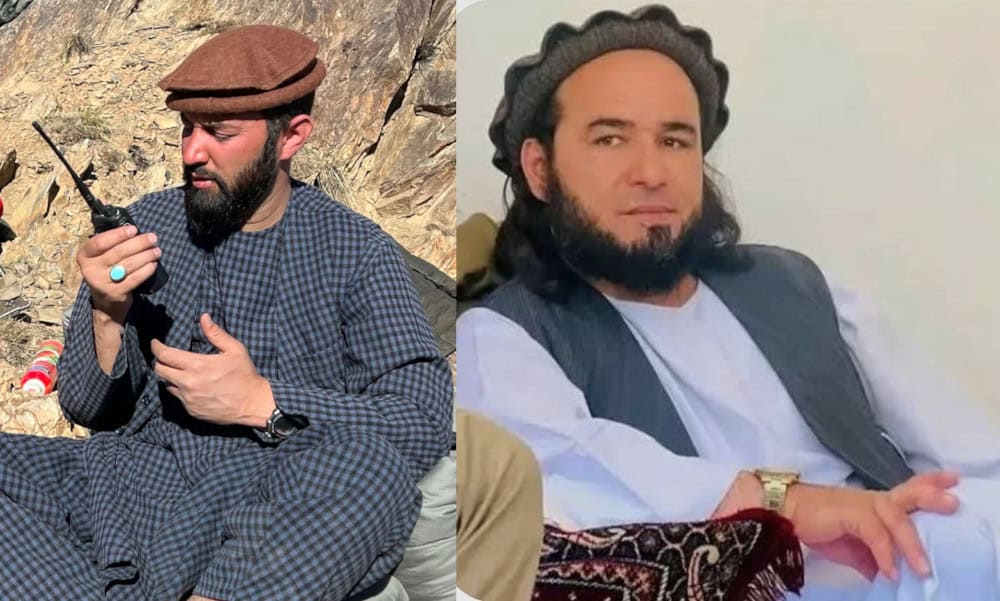
Last week, the Taliban scored a pair of victories that may help solidify the group’s rule in Afghanistan and blunt some of the anti-Taliban resistance’s recent progress on the battlefield.
First, on August 17, Juma Khan Fateh, a dissident mid-level Taliban commander who had previously served as the deputy governor of Zabul province in southern Afghanistan, surrendered to Taliban Chief of Army Staff Qari Fasihuddin Fitrat in the Nusay district center of Badakhshan province in northeastern Afghanistan. His surrender followed nearly a week of fighting between Taliban forces and fighters loyal to Fateh.
Fateh, who had also served as an administrator in Badakhshan’s Darwaz region, had called on local Nusay district residents to fight the Taliban. His entreaty prompted the Taliban to launch an operation against his fighters, resulting in casualties on both sides.
Despite taking up arms against Taliban forces, Fateh did not publicly renounce the Taliban or formally join an organized anti-Taliban resistance group. He maintained that his dispute was with Taliban intelligence officials in Nusay, whom he accused of searching residents’ homes. During negotiations, Fateh reportedly demanded that he and his fighters be allowed to remain in the Darwaz region. In return, he offered to prevent armed opposition groups from operating there.
Following his surrender, Taliban authorities reportedly began disarming Fateh’s fighters. Fateh was transferred to Kabul, where he will stand trial on unspecified charges. A Taliban delegation also traveled to Nusay district to collect complaints from residents concerning his conduct.
Tensions between Fateh and the Taliban had also been simmering for months over access to Badakhshan’s gold mines. The dispute intensified following the Taliban’s decision to halt gold-mining operations in parts of the northeastern province.
Separately, on August 19, Taliban forces ambushed and killed senior National Resistance Front (NRF) commander Hasib Panjshiri and several of his men in northern Salang, an area of Parwan province north of Kabul. The NRF is one of the most well-established and active anti-Taliban resistance groups. Panjshiri, also known as Hasib Qowaye Markaz, had previously served in special units of the National Directorate of Security, the Islamic Republic of Afghanistan’s primary intelligence service, before joining Ahmad Massoud’s NRF following the fall of Kabul.
Panjshiri was reportedly traveling toward Andarab district in Baghlan province with seven other NRF members in two Toyota Hilux vehicles. The group planned to conduct an operation against the Taliban and had reportedly checked the route before departing. Taliban forces, however, learned of their movement and established an ambush in northern Salang.
Panjshiri was one of the NRF’s most prominent commanders. He regularly posted images and videos from inside Afghanistan on social media and appeared in live media interviews. Following his death, prominent anti-Taliban resistance groups, including Yasin Zia’s Afghanistan Freedom Front (AFU) and Sami Sadat’s Afghanistan United Front (AUF), released statements honoring the slain commander. Former Islamic Republic of Afghanistan officials, including National Security Advisor Hamdullah Mohib and presidential spokesman Sediq Sediqqi, also issued statements recognizing Panjshiri’s life and his fight against the Taliban.
Videos that emerged following both clashes appeared to show Taliban fighters desecrating the bodies of Panjshiri and fighters loyal to Juma Khan Fateh. The videos prompted the NRF to call on the United Nations Assistance Mission in Afghanistan to investigate possible violations of international law.
The Taliban’s two recent victories will not end armed opposition to the Taliban. However, both underscore the Taliban’s continued strength in northern Afghanistan, which has become a focus of anti-Taliban resistance. More importantly, the Taliban demonstrated that it can still concentrate forces against internal challengers and exploit weaknesses in the resistance’s operational security.