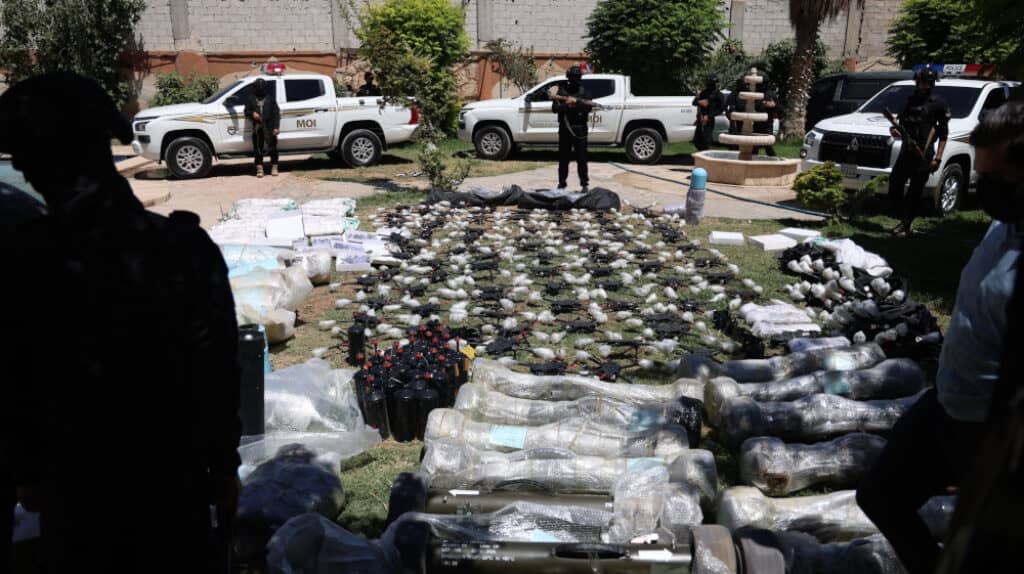
On July 16, Syria’s Ministry of Interior announced that it had foiled an “attempt to smuggle a large shipment of sophisticated weapons across the Syrian-Iraqi border.” The ministry said that evidence gathered during the operation confirmed that the shipment was intended to transit Syrian territory to Lebanon for the benefit of the “terrorist Hezbollah militia.” The operation reportedly took place on July 7.
Reuters reported that Syrian officials said that the weapons had been concealed inside an oil tanker truck bound for the coastal city of Baniyas. The shipment was discovered during a routine inspection at the Al Tanf border crossing between Syria and Iraq, after authorities subjected the vehicle to a thorough search.
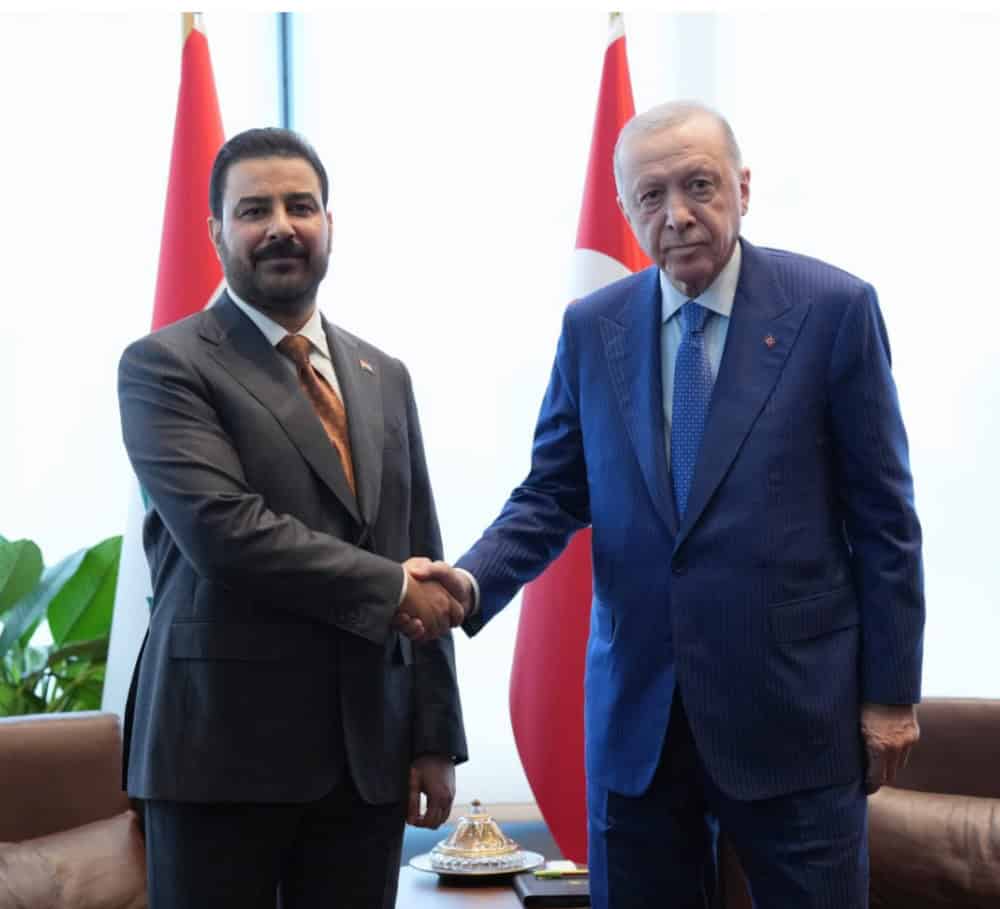
Iraqi Prime Minister Ali al Zaidi ordered the formation of an investigative committee to coordinate with Syrian authorities and examine the circumstances surrounding the thwarted attempt to smuggle weapons from Iraq through Syrian territory. According to an Iraqi official, the oil tanker’s driver said that “employees at the al-Waleed border crossing [on the Iraqi side] had colluded in smuggling the weapons.”
Syria has emerged as a transit route for Iraqi oil shipments since the outbreak of the war with Iran in February and the closure of the Strait of Hormuz. Iraqi officials have also indicated that they intend to use the port of Baniyas on Syria’s Mediterranean coast as a hub for Iraqi oil exports. Once the loading facilities are ready, crude oil could begin moving from Iraq through Syria at approximately 50,000 barrels per day, two Iraqi Oil Ministry officials told Reuters in June.
The increase in oil shipments through Syria has created new opportunities for Hezbollah’s allies in Iran and Iraq to conceal weapons bound for the Lebanese terrorist group. Unlike previous interdictions, the tanker contained a wide range of sophisticated weapons and components, including first-person-view drones, fiber-optic spools, drone warheads, anti-tank missiles—including the Iranian-produced Almas system—and components used in cruise missiles. Hezbollah has employed several of these weapons extensively in its recent conflict with Israel.
The latest interdiction comes as US President Donald Trump has repeatedly signaled an interest in giving Syria a role in disarming Hezbollah, including floating the possibility of a Syrian incursion into Lebanon against the Iran-backed group. Although Damascus has rejected that option, Syrian officials have reportedly committed to preventing Hezbollah from rearming and rebuilding its capabilities through Syrian territory.
Since the fall of Syrian dictator Bashar al Assad, who was Hezbollah’s longtime ally and a key facilitator of its weapons buildup, the new Syrian government has made extensive efforts to disrupt the group’s supply routes and prevent its rearmament.
On April 16, one day before the Israel-Hezbollah ceasefire formally took effect, Syrian authorities announced that they had stopped the smuggling of 6,000 explosive detonators intended to be used in improvised explosive devices (IEDs). That operation followed the seizure of five Konkur anti-tank missiles on March 14 and small arms, rocket-propelled grenades, and explosives on March 20. Both interdictions happened along the Lebanon-Syria border. On January 26, nine Konkur anti-tank missiles, 68 RPG warheads, two 107 rockets, and five boxes of BKS machine gun ammunition were seized from a vehicle in the Homs Governorate, and drones were seized from a series of raids around Damascus on February 1.
Last year, on December 10, Syrian security forces confiscated 42 Malyutka anti-tank guided missiles and four Metis anti-tank guided missiles in an operation in the eastern Daraa countryside. On December 3, a raid near Damascus resulted in the seizure of 1,250 mines armed with detonators.