On December 25, US President Donald Trump announced that he ordered US strikes against Islamic State targets in northwestern Nigeria in retaliation for the group’s targeting of Christian communities in the country. The US military’s Africa Command (AFRICOM) added that the strikes occurred in Nigeria’s Sokoto State, which borders the Sahelian country of Niger.
“Tonight, at my direction as Commander in Chief, the United States launched a powerful and deadly strike against ISIS Terrorist Scum in Northwest Nigeria, who have been targeting and viciously killing, primarily, innocent Christians, at levels not seen for many years, and even Centuries!” Trump announced on Truth Social. US officials have not ruled out further strikes.
While jihadists in Nigeria have deliberately killed Christians for their faith, they are not the only targets of Nigeria’s jihadists, who also routinely kill moderate Muslims. Additionally, Nigeria’s military has borne the brunt of jihadist violence in the country since 2009.
Trump’s statement did not specify where the military action took place, though AFRICOM later stated that strikes took place in “Soboto State,” a misspelling of Sokoto State in northwestern Nigeria. AFRICOM did not specify how many strikes took place, nor did it provide any early damage assessment, other than that the operation killed “multiple terrorists.”
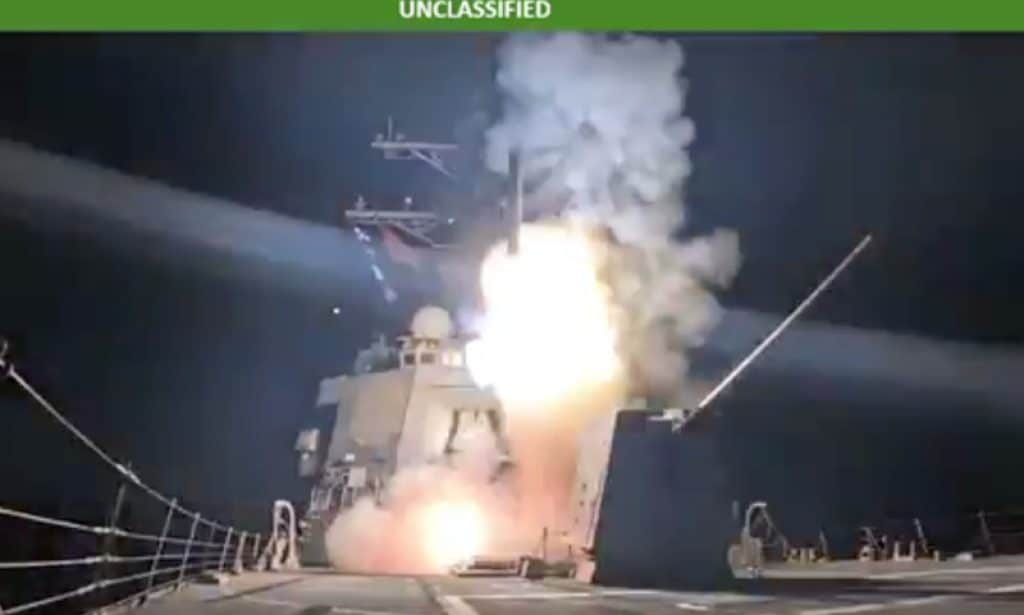
The strikes consisted of Tomahawk cruise missiles fired from a US Navy ship. Nigeria has confirmed the bombings, noting that they were conducted in partnership between the two countries.
Sokoto State borders Niger and has been one of the scenes of jihadist expansion from the Sahel into Nigeria. For instance, Sokoto is where the Islamic State’s Sahel Province (ISSP), which is primarily based in Mali, Burkina Faso, and Niger, has made inroads into Nigeria in recent years. Thus, although unconfirmed, it is likely that yesterday’s operation targeted ISSP.
ISSP is just one jihadist group operating within Nigeria. Nigeria’s largest jihadist group is the Islamic State’s West Africa Province (ISWAP), which is primarily based in northeastern Nigeria, though it is also expanding elsewhere in the country. ISSP and ISWAP are known to communicate and collaborate across various capacities, primarily in logistical, training, and advisory roles.
Boko Haram, which calls itself Jamaat Ahl al Sunnah li Dawah wal Jihad (JAS), also operates in northeastern Nigeria, though it, too, has shown signs of expansion across northern and central Nigeria. JAS remains independent of both the Islamic State and Al Qaeda.
Al Qaeda also maintains a presence inside Nigeria, primarily in the northwest. This includes factions of Jamaat Ansar al Muslimeen fi Bilad al Sudan, or simply Ansaru, and the Group for Support of Islam and Muslims (JNIM), which, like ISSP, is primarily based in Mali, Burkina Faso, and Niger. JNIM has also started to make inroads into Nigeria, with the group claiming its first official attack in the country’s northwest in recent months. It has since claimed other operations in that part of Nigeria.
A vast array of bandit organizations also exists in Nigeria’s northwest, further contributing to the region’s instability. Though not all of the bandits are allied with jihadists, various jihadist groups, including most of the ones mentioned above, maintain ties to some of these criminal factions.
The US’s likely strikes against Islamic State positions belonging to the group’s Sahel Province underscore the highly complex nature of Nigeria’s jihadist landscape and may indicate that the conflict in the Sahel and the various conflicts in Nigeria are merging. Nigeria is simultaneously facing a litany of security challenges that impact millions of its citizens, including but also beyond jihadist violence against Christians.