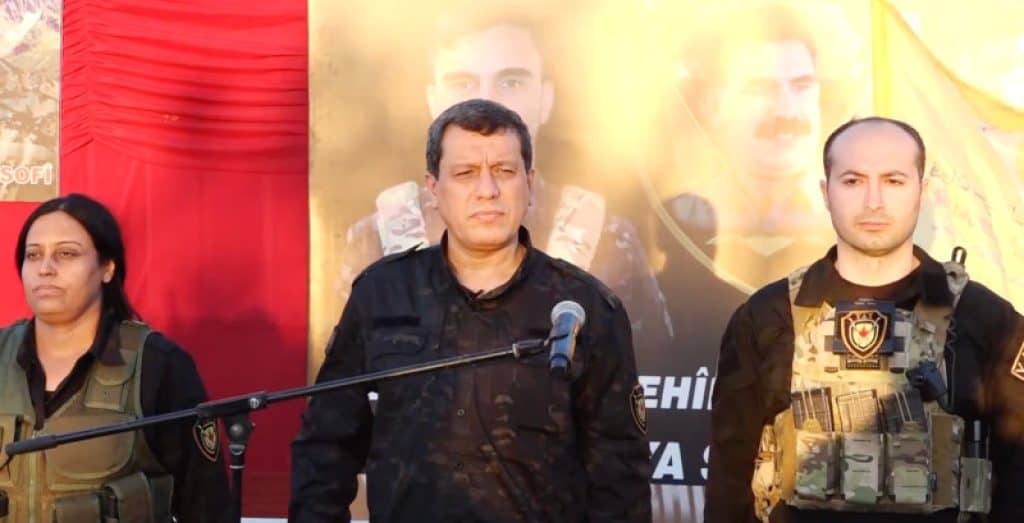
The US-backed Syrian Democratic Forces (SDF) based in eastern Syria are taking steps to integrate into the security forces led by the Syrian transitional government in Damascus. “The Syrian government and the main Kurdish-led force in the country’s northeast have agreed in principle on a plan to merge the US-backed force as a cohesive group into the national army, Syria’s main Kurdish commander said Thursday [October 17],” the Associated Press reported. This report follows comments by SDF Commander-in-Chief Mazloum Abdi and other SDF officials about the integration process.
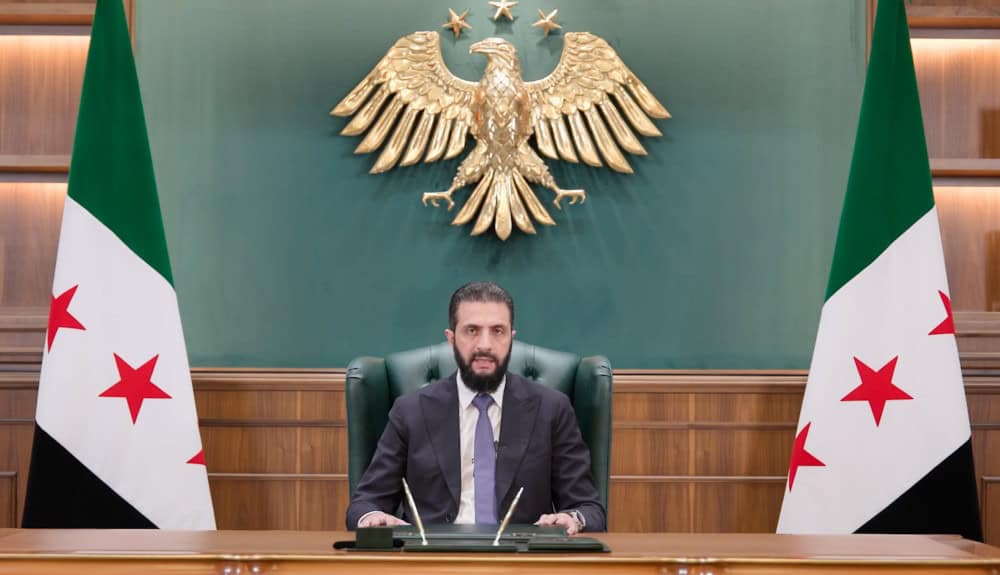
The SDF was founded in 2015 with US backing and was the key force that US Central Command (CENTCOM) worked with in Syria to fight the Islamic State (IS), which was defeated as a major fighting force in the country by 2019. After the former regime of Bashar al Assad collapsed in December 2024, a new transitional government in Damascus has taken power over the last 10 months. In March 2025, SDF commander Abdi flew to Damascus and met with Ahmed al Sharaa, Syria’s transitional president. The two leaders agreed to a road map to integrate the SDF and eastern Syria into the new government. Eastern Syria is governed by the Democratic Autonomous Administration in North and East Syria (DAANES), and the SDF functions as its military arm.
“A major sticking point had been whether the SDF would remain as a cohesive unit in the new army or whether the force would be dissolved and its members individually absorbed into the new military,” the AP noted on October 16. The SDF has around 70,000–100,000 fighters, according to various reports, some of them trained and equipped with the support of the US. These forces include various types of units, from the SDF’s Counter-Terrorism Units to its Internal Security Forces.
Abdi has described the challenges ahead. “We are talking about a large number, tens of thousands of soldiers, as well as thousands of Internal Security Forces. […] These forces cannot join the Syrian army individually, like other small factions. Rather, they will join as large military formations formed according to the rules of the Defense Ministry.” The SDF will form a committee to work with the Syrian Defense Ministry on the integration structure. The SDF continues to prefer a decentralized form of government, the AP report added.
Reports that the SDF and Damascus were moving forward appeared in eastern Syria media outlets on October 11, which suggested that a committee would soon travel to Damascus to discuss integration. This progress took place days after Abdi had met with US CENTCOM head Admiral Brad Cooper and US Envoy Tom Barrack in eastern Syria, and the three men had flown to Damascus on October 7. More concrete discussion on integration emerged on October 13, when a delegation from eastern Syria traveled to Damascus, and Abdi said that a preliminary agreement had been reached between the parties.
“What’s new in our recent talks in Damascus is the shared determination and strong will to accelerate the implementation of the terms,” the SDF commander told the AFP. Abdi said that the goal was to have a mechanism for integrating SDF-led forces into both the Ministries of Defense and Interior. Abdi’s comments to the AFP were also reported in North Press in eastern Syria, which highlighted the importance that the SDF leader placed on decentralization.
“We demand a decentralised system in Syria… we have not agreed on it,” Abdi stated, as the SDF and the government are “still discussing finding a common formula acceptable to all.” Abdi also praised the US and France for “facilitating negotiations with Damascus.”
Social media accounts linked to the SDF and authorities in eastern Syria noted on October 14 that integration will take place “through the formation of several new military units and institutions. A new designation will be adopted to align with the organizational system of the Ministry of Defense.”
Sources in eastern Syria have elaborated on some details of the potential merger. One official said that the SDF would merge into three military divisions in eastern Syria. An SDF commander also told the Kurdish media outlet Rudaw, which is based in the autonomous Kurdistan Region of Iraq, that the SDF would integrate as three military units and several independent brigades. The same commander indicated that integration could come with a name change for the SDF. A second commander of a women’s unit in the SDF said that she believes units will remain with distinct identities in their respective regions. The timeline for the merger appears likely to stretch into 2026.
Turkey, which backs the Syrian transitional government in Damascus, remains concerned about the integration process. “We warn the Syrian Democratic Forces against continuing to pursue the wrong path, and we call on them to support Syria’s unity and cohesion,” Turkish President Recep Tayyip Erdogan said on October 14. A report at Turkey’s Daily Sabah noted on October 13 that “President Recep Tayyip Erdogan urged [the] SDF, which is predominantly led by the US-backed YPG terrorist group, on Wednesday to ‘keep their word’ and ‘complete their integration with Syria.’ YPG is the Syria-affiliate of the PKK, a group listed on terror list by the US, the EU and Turkey.”
Meanwhile Abdi has said, “I believe that if we Syrians agree—as is happening now—Turkey will have no excuse to interfere inside Syria. […] We have noticed some flexibility in the Turkish position regarding the SDF’s accession to the Syrian army.”