The Russian Air Force has begun employing new, longer-range bombs in Ukraine, possibly including a jet-powered version of the UMPK, a kit that turns dumb bombs into satellite-guided glide munitions. These weapons could offer Russia relatively inexpensive options to strike targets against which it might otherwise use a more expensive missile or a less-survivable one-way attack drone.
Ukrainian intelligence on the new weapons
In remarks at an October 20 event, Major General Vadym Skibitskyi, deputy head of Ukraine’s military intelligence directorate, said that Russia had combat-tested “aviation bombs with new guidance modules” in September and October and will now start mass production. These weapons are believed to have a range of 150-200 kilometers and improved resistance to electronic warfare, Skibitskyi stated, noting that a recent test achieved a distance of 193 kilometers. His comments came amid a spate of bomb strikes in or around Ukrainian cities that have usually been untouched by glide bombs due to their distance from the front.
An audience member asked Skibitskyi whether he was referring to the Grom, a series of air-to-surface weapons unveiled a decade ago that has seen limited use in Ukraine. The 9-A-7759 “Grom-1” is a cruise missile based on the Kh-38M missile, whereas the 9-A1-7759 and 9-A2-7759 “Grom-2” are glide bombs that swap out the Grom-1’s motor for a larger payload. Skibitskyi’s answer was not fully clear. However, elsewhere in his remarks, he seemed to indicate that he was referring to an “improvement” on the UMPK.
A new version of the UMPK
The UMPK, short for “Universal Gliding and Correction Module,” is essentially a cruder analog of the American Joint Direct Attack Munition’s extended-range variant, or JDAM-ER. Due to Russia’s failure to destroy most of Ukraine’s air defenses early in the war, venturing near the front line to drop free-fall bombs soon became prohibitively risky. Moscow hurriedly introduced the UMPK in 2023, allowing the Russian Air Force to play a greater role in supporting ground operations.
The Russians initially employed these kits with the FAB-500 M-62, a 500-kilogram-class high-explosive bomb, which the UMPK could carry for around 60-70 kilometers. Russia subsequently adapted the UMPK for various other bombs up to 3 tons in size. In 2024, to extend the UMPK’s range, Russia fielded a modified version with longer wings, most commonly employed with the FAB-500 T heat-resistant bomb in place of the M-62. Unofficial Russian sources have referred to this version as the UMPK-PD (for “povyshennoy dal’nosti,” or “extended range”).
The same day that Skibitskyi’s remarks were published, footage emerged on social media showing Ukrainian sappers neutralizing an unexploded FAB-500 T bomb equipped with a new, more sophisticated system.
With the original UMPK, the pop-out wings and articulable tail fins are part of a single structure clamped onto an intact bomb. With the new kit, by contrast, the bomb’s rear section was removed and replaced by the guidance unit, as is done with the JDAM. Most Russian general-purpose bombs are welded monoliths, which is why the standard UMPK was designed the way it was. But the FAB-500 T’s tail section is bolted on, making it simpler to remove.
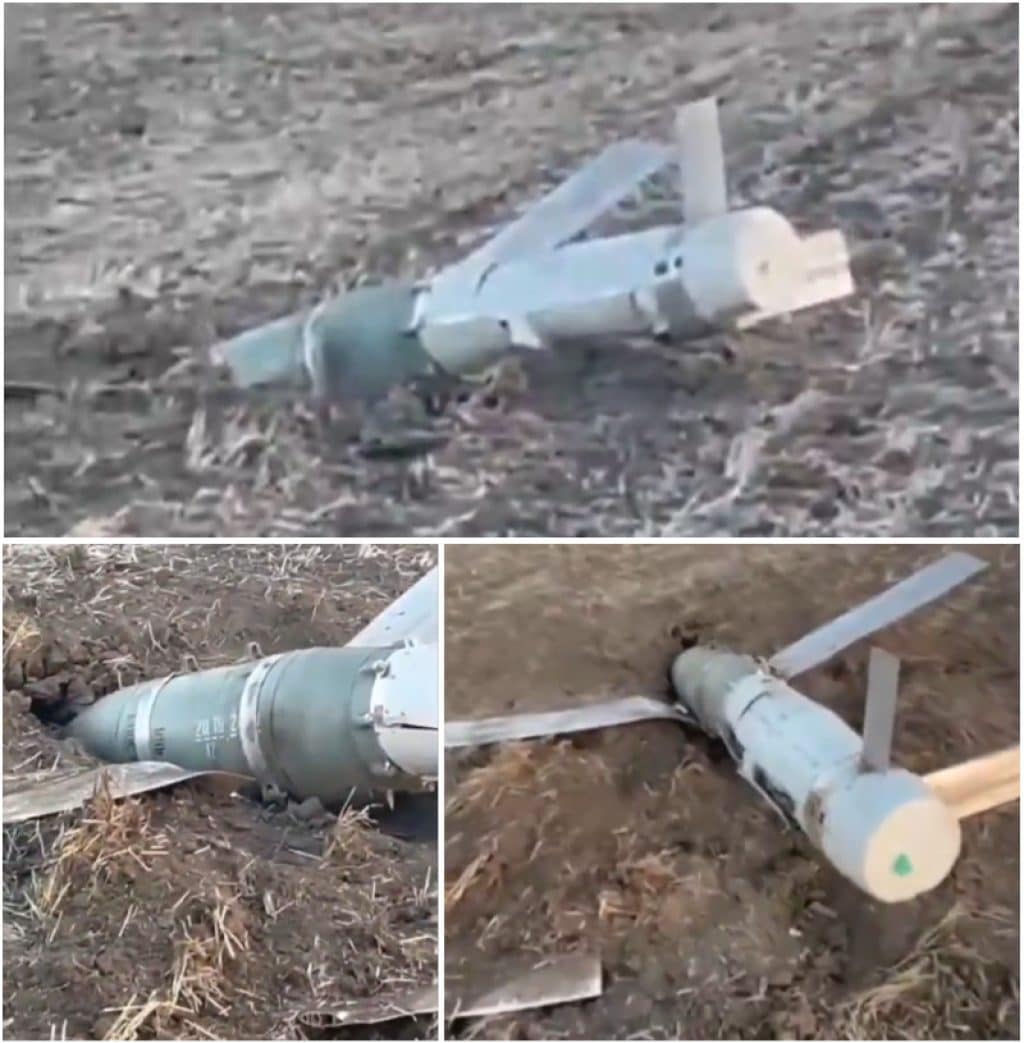
Many unofficial Russian sources described this new kit as a jet-powered UMPK, which some observers have provisionally dubbed the “UMPK-PD model 2025,” “UMPK-R,” or “UMPK-UD.” However, no engine was readily apparent in the video.
The Telegram channel Fighterbomber (which has ties to the Russian Air Force and first revealed the original UMPK’s existence back in 2023) offered an explanation. It claimed Russia had indeed developed a jet-powered version of the UMPK — called by a different, unspecified name — that had been employed in Ukraine in limited numbers and will now be put into mass production. However, the channel stated that the kit shown in the video was a “prototype” that lacked an engine.
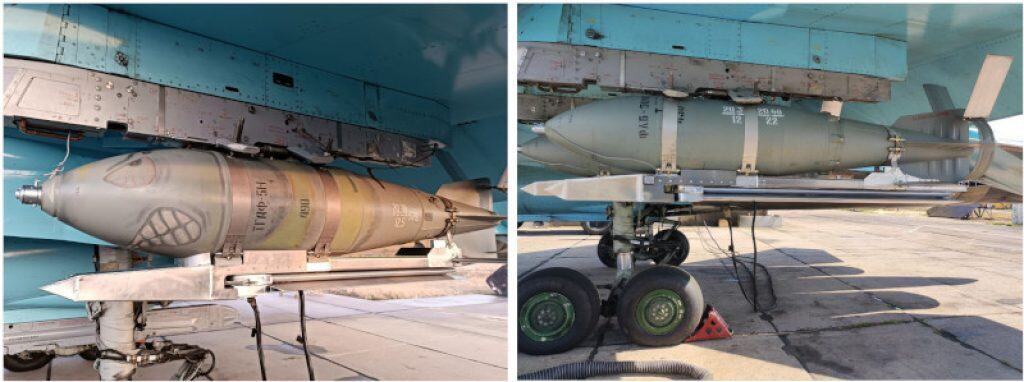
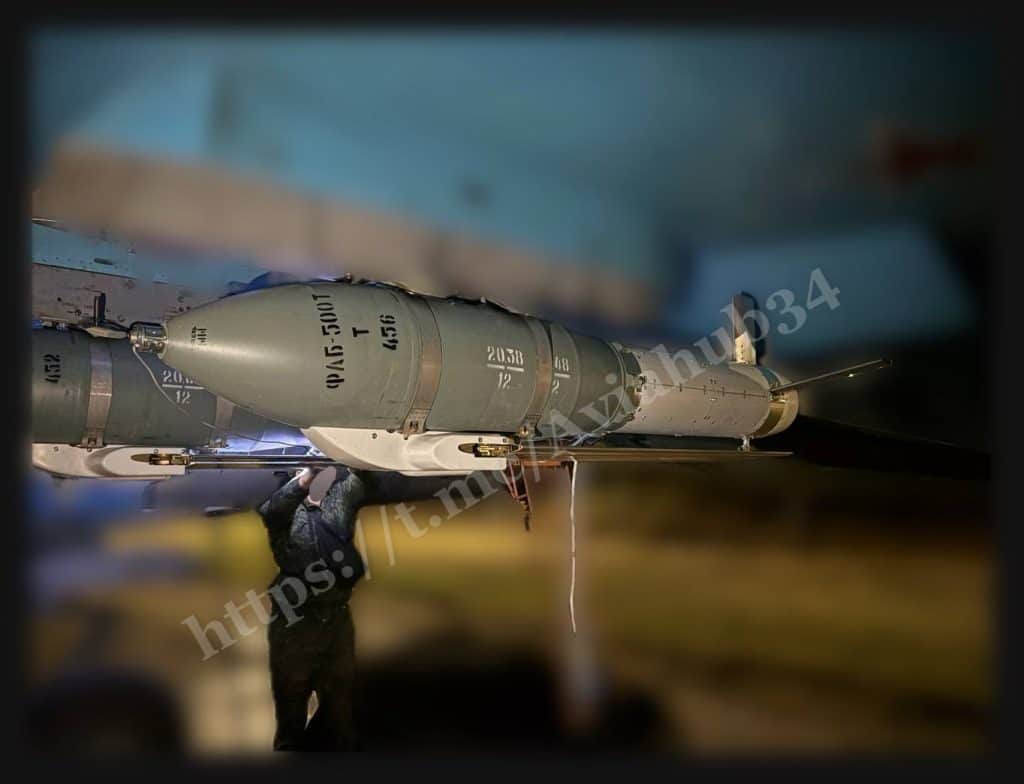
The next day, another Russian Telegram channel, Aviahub, shared a picture of two FAB-500T bombs fitted with the same type of kit — this time fully intact and suspended under the wing of a Russian Su-34 strike fighter. (This channel, allegedly run by a Su-34 pilot, frequently posts exclusive footage apparently provided by Russian Air Force personnel.) Compared to the standard UMPK, the new kit is more aerodynamic, has three rather than four tail fins, and possibly has longer wings.
Once again, no engine or air intake was visible. But Aviahub claimed there is a similar version with an engine, offering a range of “200+ km” versus “100+ km” for the model shown in the photo. This would amount to a poor man’s version of Boeing’s Powered Joint Direct Attack Munition, or PJDAM, said to be capable of carrying a 500-pound bomb more than 300 nautical miles.
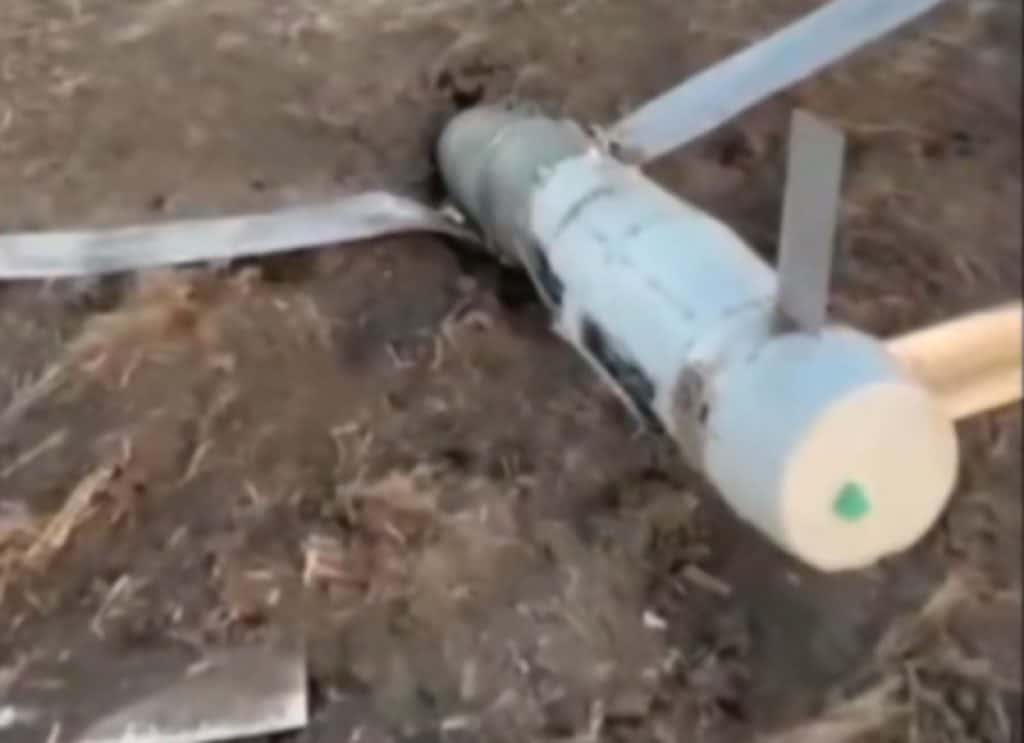
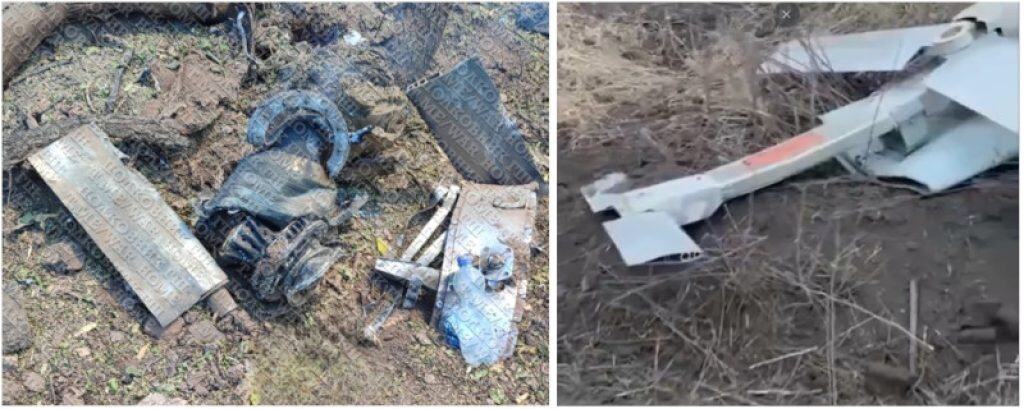
There is some hard evidence to indicate Russia has been developing a jet-powered version of the UMPK. The Ukrainian Telegram channel Polkovnik GSh recently posted a photo reportedly showing the remains of a jet-powered UMPK employed in Ukraine in the late spring or early summer of 2025. (This channel, whose name means “Colonel of the General Staff,” has previously shared exclusive pictures of Russian munitions recovered in Ukraine.) In the photo, one can see what looks like a turbojet engine lying next to pieces of metal resembling the UMPK’s articulable horizontal tail fins.
The UMPB-5R
In recent weeks, information has also emerged about a bomb called the UMPB-5R. The “R” stands for “reaktivnyy,” indicating that it is jet-powered.
In July, Ukrainian authorities revealed that Russia had begun combat testing a new glide bomb called the “UMPB-5,” as FDD’s Long War Journal noted at the time. Its name suggests it may be a derivative of another munition, the UMPB D-30SN, first seen in spring 2024. Whereas the UMPK is an add-on kit, the UMPB D-30SN is a purpose-built glide bomb analogous to the American 250-pound-class GBU-39/B Small Diameter Bomb. Ukrainian officials have since reported sporadic UMPB-5 strikes.
On October 18, the Kharkiv Regional Prosecutor’s Office reported a Russian strike in the city of Lozova with a “guided aerial bomb of a new modification – UMPB-5R (jet type).” The bomb was reportedly released from almost 130 kilometers away. Ihor Klymenko, Ukraine’s minister of internal affairs, later reported another UMPB-5R strike in the Dnipropetrovsk region.
Photos of a UMPB-5R bomb recovered in Ukraine that were shared on social media on October 23 indicate it is powered by a SW800Pro-Y commercial-off-the-shelf (COTS) turbojet engine made by the Chinese company Swiwin. A similar Swiwin model powers Russia’s S8000 Banderol, an inexpensive cruise missile first unveiled in April. Russia also uses a Chinese-made COTS motor in the Geran-3 one-way attack drone, the jet-powered version of the more common, propeller-driven Geran-2.
It is unclear whether the UMPB-5 and UMPB-5R are different munitions. Over the summer, an official from the Kharkiv Regional Prosecutor’s Office described the UMPB-5 as having a larger warhead than the D-30SN and a modified wing system that provides a range of “over 100” kilometers. But he gave no indication that it was jet-powered. The UMPB-5R could be a longer-range version of the UMPB-5.
The possible consequences for Ukraine
Important questions about these new bombs remain unanswered, including their accuracy and exact range. Still, they are another example of how, after vastly underestimating its need for precision-guided weapons prior to the 2022 invasion, the Russian Air Force is working to field a growing variety of cheap standoff munitions.
The Russians will likely use these bombs to attack critical infrastructure, military, and military-industrial targets in cities such as Odesa, Kryvyi Rih, Dnipro, and Poltava. Moscow is unlikely to produce them in as large numbers as the standard UMPK or UMPB, of which Russian jets typically drop 150 or more per day. But as serial production ramps up, Ukrainian troops and civilians may soon have to contend with a new threat.