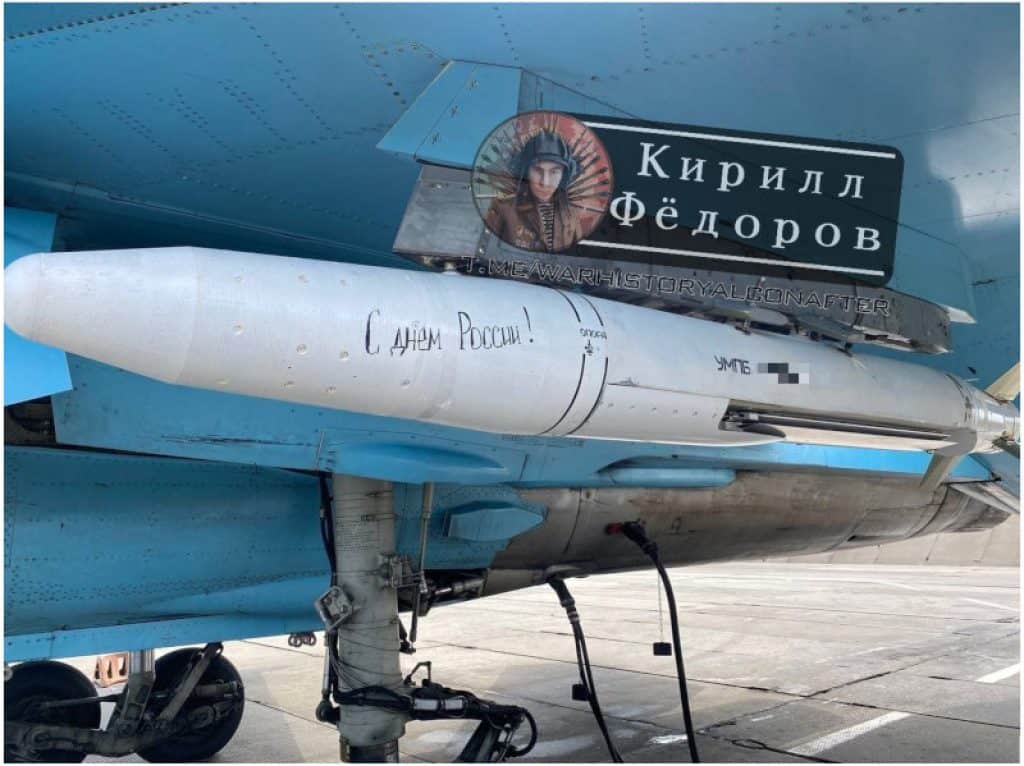
Russia has started employing a new guided glide bomb in Ukraine called the UMPB-5, according to Ukrainian authorities. It appears to be a more powerful derivative of a bomb introduced last year, reflecting the Russian Air Force’s efforts to develop a growing variety of cheap standoff guided munitions.
What we know so far
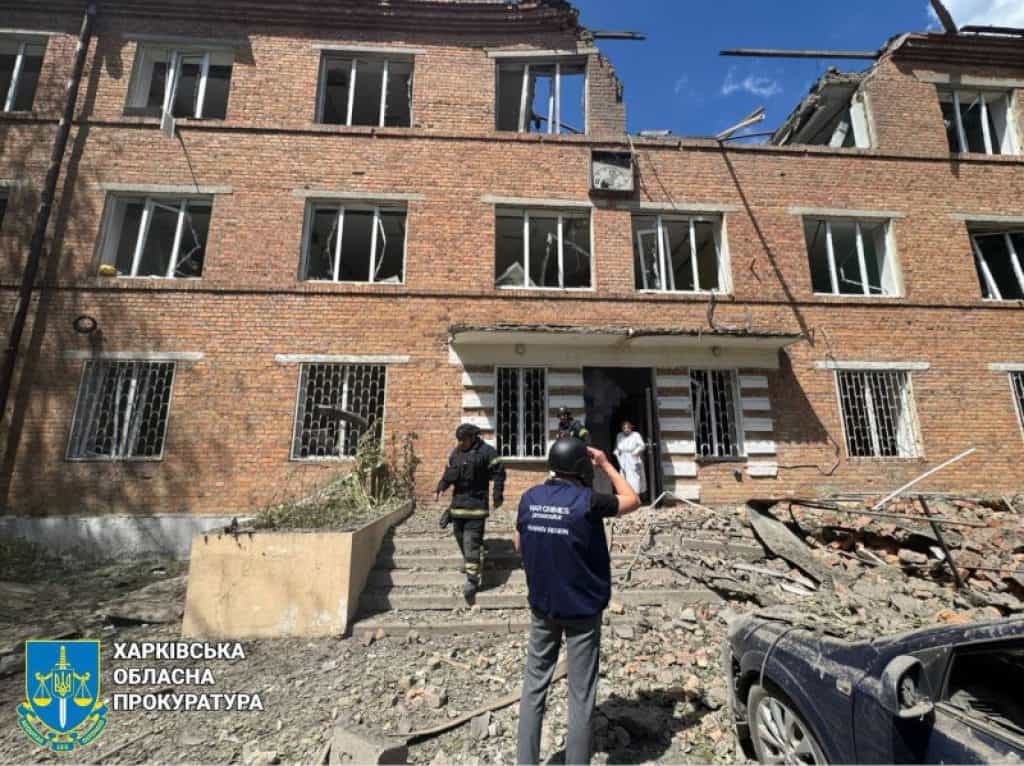
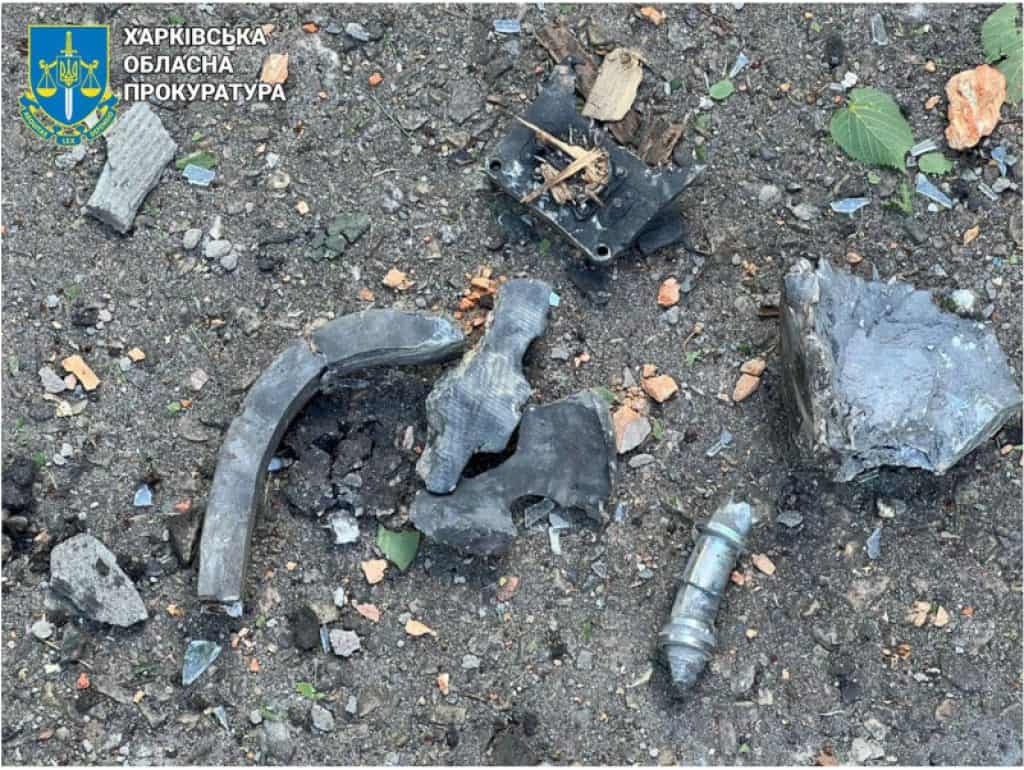
The Kharkiv Regional Prosecutor’s Office reported a strike in Kharkiv city’s Shevchenkivskyi District by two “UMPB-5 guided aerial bombs” on July 24. A Russian Su-34 strike fighter reportedly released the bombs from “about 100 km” away, near the village of Stroitel in Russia’s Belgorod region, located across the border from Kharkiv.
Another UMPB-5 strike reportedly occurred shortly thereafter, this time in the city’s Industrial District. A Su-34 released the bomb near Tomarovka in the Belgorod region, according to the Prosecutor’s Office, which documents such strikes to support war crimes investigations.
“The UMPB-5 is a new munition that the Russians began using about two months ago,” explained Spartak Borysenko, an official from the Prosecutor’s Office. Russia initially employed it in the nearby Sumy region, he said, while July 24 marked the first UMPB-5 strike in Kharkiv (as well as the first time Ukrainian officials had publicly revealed the weapon’s name). The Russians are “still testing” the new bomb, Borysenko stated.
The UMPB-5’s name suggests it is a derivative of the UMPB D-30SN, a guided glide bomb akin to the American GBU-39/B Small Diameter Bomb. UMPB stands for “Universal Interspecific Glide Munition.” First seen in spring 2024, the D-30SN carries a 100-kilogram warhead and has an estimated range of 80–90 kilometers. Despite reports about a potential ground-launched version of the UMPB akin to the American Ground-Launched Small Diameter Bomb, there is no hard evidence to date that it exists.
According to Borysenko, the UMPB-5 features a larger warhead than the D-30SN version, weighing “250 kilograms” and encased in “thicker metal.” The new munition also appears to have a longer range thanks to modified wings and guidance systems, he said, noting that some of the bombs on July 24 had been released from “over 100” kilometers away.
Russian glide-bomb development
Before its full-scale invasion of Ukraine in 2022, Moscow vastly underestimated the quantity of glide bombs and other guided munitions it would need, as the then-commander of the Russian Air Force acknowledged last year. While the Russians did possess glide bombs of various types before the war, those munitions are relatively expensive and have seen sparing use in Ukraine.
Russia’s failure to destroy most of Ukraine’s air defenses during the invasion’s initial phase impelled Moscow to hurriedly develop cheap glide bombs with a degree of standoff range. These munitions have allowed the Russian Air Force to play a greater role in the war. Russia dropped an average of more than 160 of these bombs per day in July 2025, according to President Volodymyr Zelenskyy—an eight-fold increase compared to spring 2023.
The workhorse is the UMPK, or “Universal Gliding and Correction Module,” first seen in January 2023. Whereas the UMPB D-30SN is a purpose-built glide bomb, the UMPK is a kit designed to fit on dumb bombs—basically a cruder analog of the American JDAM-ER.
Russia initially employed the UMPK with the FAB-500 M-62, a 500-kilogram-class high-explosive bomb, but subsequently adapted it for various other bombs from 250 kilograms to three tons in size. When used with the FAB-500 M-62, the standard UMPK kit has a maximum range of 60-70 kilometers. The range varies depending on the type of bomb used and the aircraft’s flight profile.
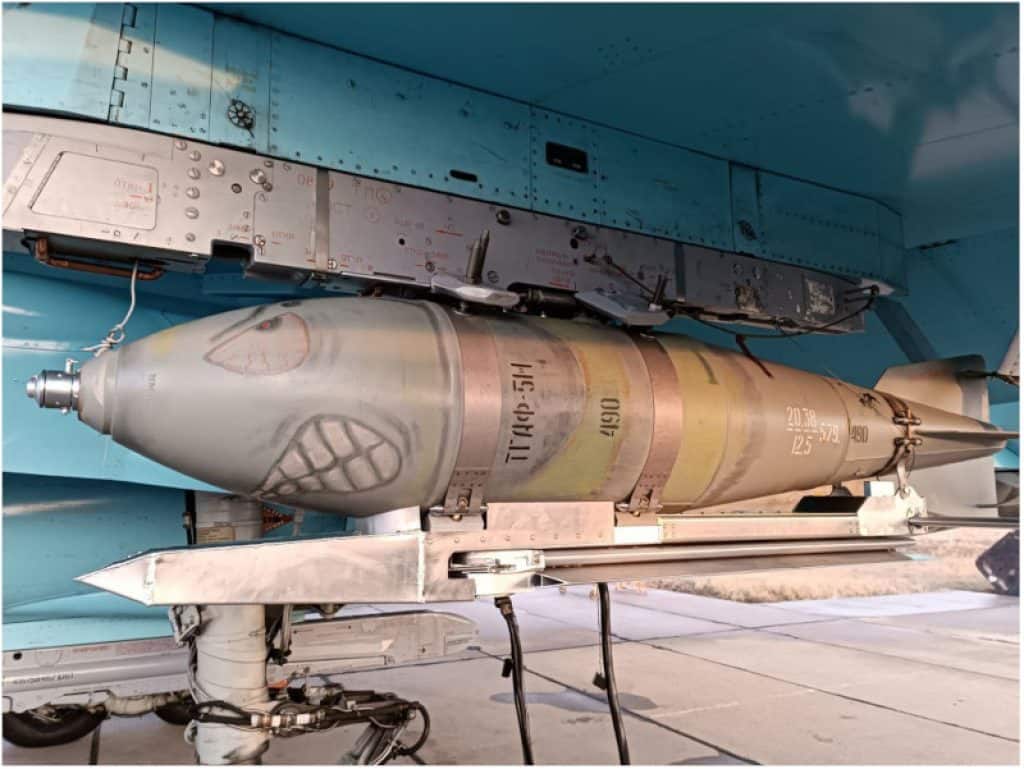
To provide additional range, the Russians last August unveiled a modified version of the UMPK with longer wings. It was fitted on a FAB-500T heat-resistant bomb, which Russia had increasingly been using in place of the M-62 due to its superior aerodynamics. The new version has subsequently been spotted on other 500-kilogram-class bombs, as well.
Unofficial Russiansources have referred to this version as the UMPK-PD (for Povyshennoy Dal’nosti, or Extended Range). This came after Sergei Chemezov, head of the Russian defense conglomerate Rostec, whose subsidiary KTRV makes the UMPK, announced in December 2023 that work was underway on an “improved version” with a “significantly” longer range.
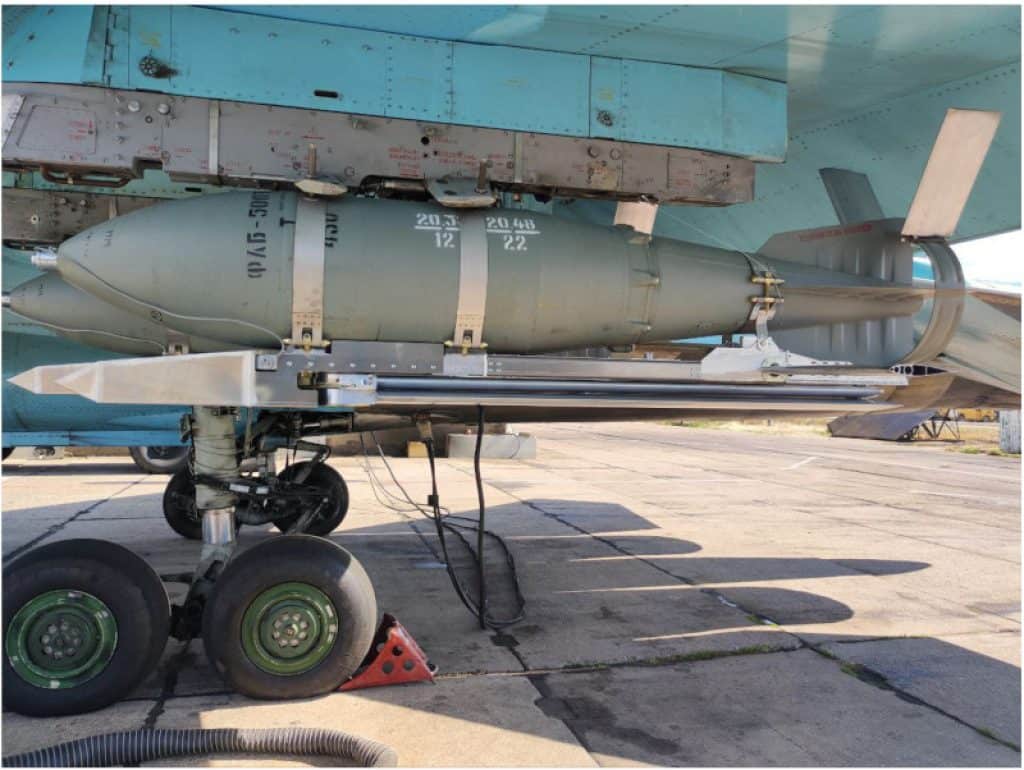
More recently, Borysenko, the Ukrainian official, said Russia had begun using a modified UMPK with larger wings and a range of at least 95 kilometers in the Sumy and Kharkiv regions in May 2025. “We understand that [the Russians] are currently testing these systems, and it’s possible the range could increase further,” he said. It is unclear whether this version—which the Kharkiv Prosecutor’s Office dubbed the UMPK-D (for Dalekobiynyy in Ukrainian or Dal’noboynyy in Russian, meaning Long-Range)—is distinct from the UMPK-PD.
Of note, in late June, Fighterbomber, a Telegram channel that has ties to Russia’s military aviation community, claimed that Russia had developed an even longer-range version called the UMPK-PDD. This is unconfirmed, though Fighterbomber had first revealed the existence of the UMPK and UMPK-PD.
Like the US military, Russia is also pursuing the development of low-cost air-launched cruise missiles, such as the recently unveiled S8000 Banderol. This missile is evidently designed to be launched by Inokhodets remotely piloted aircraft and, according to Ukrainian military intelligence, is being adapted for Mi-28-series attack helicopters as well.
While details about some of these new munitions remain scarce, what is clear is that Russia’s Air Force and Naval Aviation have recognized their need for large quantities of inexpensive standoff munitions and are working to meet that requirement. Whether Russia will address its shortcomings in destroying enemy air defenses is another story—and a problem that will be much harder to solve.