On July 26, the Israeli military announced that it would begin “a series of actions aimed at improving the humanitarian response in the Gaza Strip.” The decision came after weeks of increasing pressure on Israel, including from world leaders, regarding the humanitarian situation in the territory. The Israel Defense Forces (IDF) stated that the changes in its methods came as a directive from the “political echelon” in Israel and after a situational assessment. The IDF also said that the shift in activity would “refute the false claim of deliberate starvation in the Gaza Strip.”
The changes in aid distribution followed the breakdown of ceasefire talks between Israel and Hamas in Qatar. The negotiations had taken place throughout July and were expected to result in a 60-day ceasefire. However, US envoy Steve Witkoff decided to return to Washington on July 24, according to reports.
The latest developments also occurred as IDF Chief of Staff Eyal Zamir warned of fatigue among Israeli reservists. The IDF has emphasized “that combat operations have not ceased. We will continue to operate in the Gaza Strip to return all hostages and to defeat the Hamas terrorist organization, both above and below ground,” the Israeli military said on July 26. Israeli Finance Minister Bezalel Smotrich also said the shift in Gaza could be part of a new strategy.
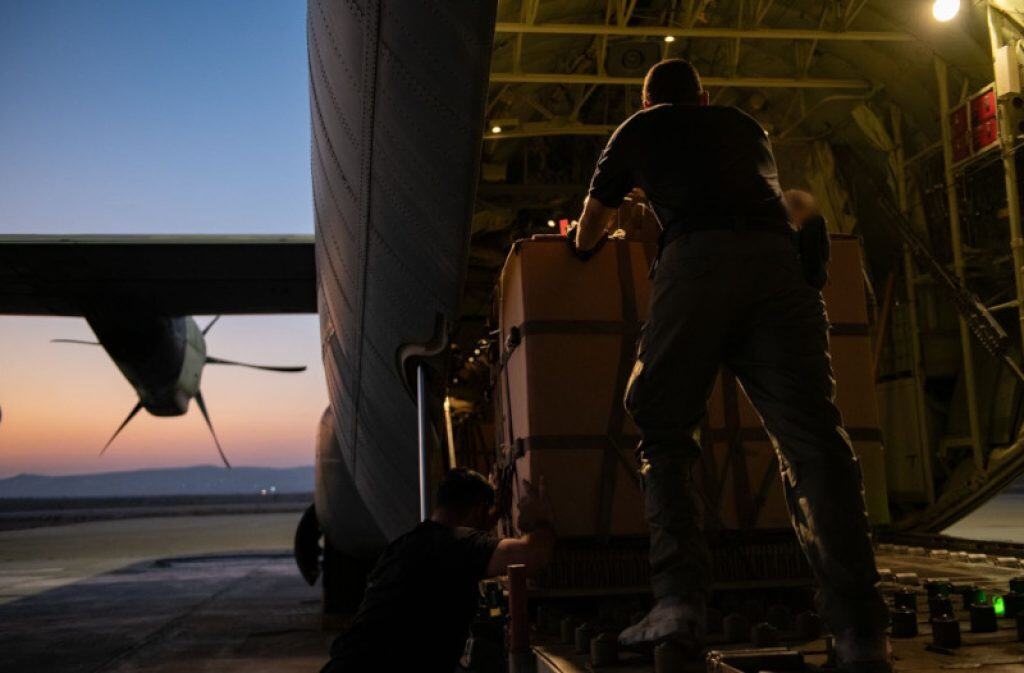
The new Israeli policy includes a number of major changes on the ground in Gaza. Air drops of humanitarian aid will begin again. Air drops backed by several countries had been a feature of the war during the first year of the conflict, and all forms of them stopped when a ceasefire began in January 2025. The Kingdom of Jordan and the UAE restarted their air drops on July 27. Jordan had previously dropped around 1,000 tons of aid to Gaza in 2024.
The IDF also said it would reopen humanitarian corridors in Gaza so that the United Nations could move humanitarian aid within the territory. The IDF has retaken around 75 percent of Gaza since it launched Operation Gideon’s Chariots in May. “The IDF is prepared to implement humanitarian pauses in densely populated areas and will continue to operate to dismantle terrorist infrastructure and eliminate terrorists in the areas of activity,” the Israeli military said on July 26.
In addition, beginning on July 27, the Israeli military started what it called “a local tactical pause in military activity” in some areas of Gaza, essentially a ceasefire from 10 am until 8 pm. “The pause will begin in the areas where the IDF is not operating: Al-Mawasi, Deir al-Balah, and Gaza City, every day until further notice,” the IDF said. These areas make up the 25 percent of Gaza that is held by Hamas. The terrorist group has held Deir al Balah in the central camps, as well as parts of Gaza City and Mawasi throughout the war. Mawasi, an area on the Mediterranean in southern Gaza, was designated early in the war as a humanitarian zone. The use of humanitarian corridors and pauses in fighting was common in 2024, and the IDF has now resurrected these policies.
Another element of the new IDF shift in Gaza was a decision to connect a power line to a desalination plant. “This is expected to supply approximately 20,000 cubic meters of water per day, up from the 2,000 cubic meters supplied until now, to serve about 900,000 residents in the area,” the IDF said.
Israeli President Isaac Herzog praised the new humanitarian efforts on July 27. “In coordination with international partners, Israel is doing its utmost to improve the flow of vital supplies through designated corridors, air drops, and expanded humanitarian zones,” Herzog said. He also called on UN agencies to “ensure that aid reaches those in need without delay.”
Israeli Prime Minister Benjamin Netanyahu visited an Israel Air Force base on July 27 and said that Israel would continue to fight in Gaza until “complete victory.” Several Members of Netanyahu’s coalition government objected to the new aid push in Gaza. The issue of how much aid should enter the territory has been debated throughout the war.
Aid had been cut off on March 3, 2025, after the ceasefire that began in January was not renewed. On May 18, Israel’s Prime Minister’s Office said that “a basic quantity” of food would be allowed into Gaza as Operation Gideon’s Chariots began. On May 26, a new US-backed food distribution initiative, the Gaza Humanitarian Foundation (GHF), started operations in Gaza. By July 27, the GHF said it had distributed 95 million meals.