
-

Generation Jihad | China, Russia, Iran, North Korea: Inside the Axis of Aggressors
China, Russia, Iran, and North Korea aren’t just aligned in rhetoric—they’re actively coordinating to erode American military, economic, and cyber dominance. In this episode, Generation Jihad’s Bill Roggio sits down with Bradley Bowman, senior director of FDD’s Center on Military and Political Power, and Ryan Brobst, CMPP deputy director, to unpack the real-world mechanics behind this dangerous authoritarian convergence.
-

Fighting in Yemen escalates, raising concern of a return to civil war
The Houthis launched drone and missile attacks on Yemeni forces and civilian infrastructure across three of Yemen’s governorates on August 6. The attacks have escalated fighting in the country while the Iran-backed terror group is simultaneously targeting Saudi Arabia and ships in the Red Sea.
-

IRGC-Qods Force commander Qaani travels to Iraq amid pressure over militia weapons
Gen. Esmail Qaani, commander of Iran’s Islamic Revolutionary Guard Corps-Qods Force (IRGC-QF), traveled to Iraq as Baghdad moves forward with legislation to place all weapons under state control. The visit came amid continued Iranian drone and missile attacks on Kurdish opposition groups in the Kurdistan Region of northern Iraq.
-

From Guantanamo Bay to ISCAP: The case of Jamal Kiyemba
In 2002, Jamal Kiyemba, a Ugandan national living in the United Kingdom, was arrested in northwest Pakistan after allegedly attempting to join Al Qaeda in Afghanistan and was sent to the US prison facility at Guantanamo Bay, Cuba. Released in 2006 and sent to Uganda, Kiyemba has since been in and out of prison, most…
-
Generation Jihad | Losing ground: Somalia and Mali’s jihad problem
The US is losing leverage in Somalia as frustration with Mogadishu threatens critical African Union support and risks strengthening Al Shabaab’s hold. In Mali, renewed US airstrikes against JNIM raise a parallel concern—whether air power alone, without a ground strategy or political reform, can contain the group’s advance. Bill Roggio and Caleb Weiss examine these…
-

Analysis: North Korean missile deployment raises urgency of Ukraine’s Starlink plea
North Korea is reportedly dispatching as many as 120 additional ballistic missiles to Ukraine as the embattled country searches for ways to destroy Russian missile launchers.
-

Sudanese Armed Forces gains in civil war force strategic adjustment from paramilitia rival
The Sudanese military’s recapture of the Al Sadarat highway marks its most significant success against the Rapid Support Forces (RSF) in the fourth year of the Sudanese civil war. However, the RSF’s shift toward tribal mobilization and the growing role of foreign-backed drone warfare suggest the conflict’s broader cycle of adaptation and attrition will continue.
-
Afghan United Front commences operations against Taliban
The Afghan United Front has emerged as the first major Pashtun-led resistance organization to launch operations against the Taliban. The group’s likely focus on operations in southern Afghanistan would expand resistance organizations’ historical focus in the country’s north.
-
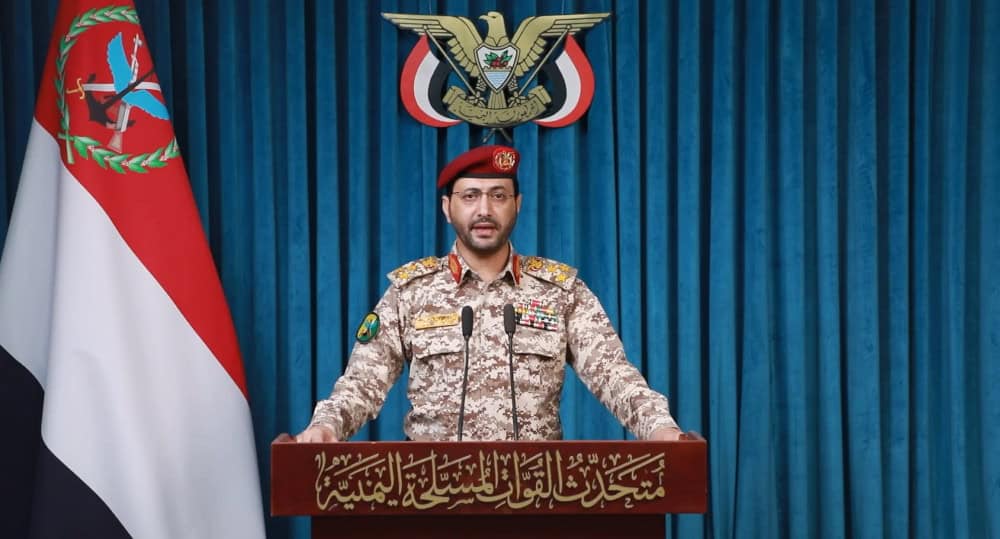
Houthis escalate attacks in Red Sea and on Saudi Arabia, Riyadh evaluates options
Yemen’s Houthis claimed attacks on eight Saudi-linked vessels as well as energy facilities and an airport to enforce its blockade of the kingdom. Saudi Arabia is reportedly pursuing a diplomatic path to de-escalate the conflict or military options if necessary.
-

Iraq pressured by regional countries to rein in Iran-backed militias as new data on extent of attacks released
Iraq faces mounting pressure to rein in the militias while balancing tensions with neighboring countries, the US, and Iran. The Kurdistan Region of northern Iraq has come under nearly 1,000 drone and missile attacks by Iran and its proxies since late February, underscoring the growing threat posed by Tehran’s network of militias.
-
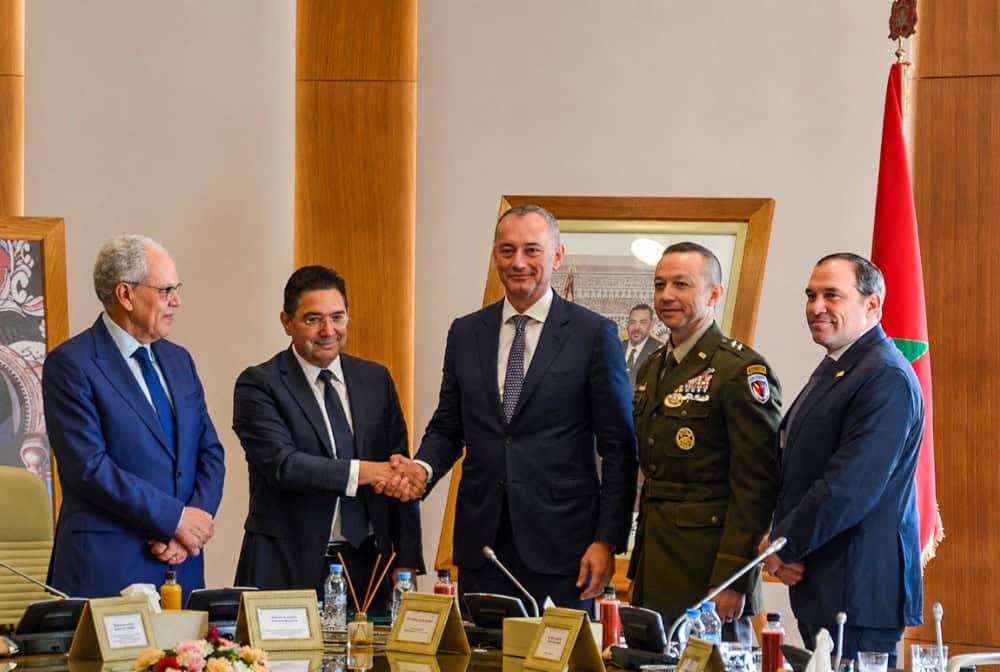
Board of Peace announces Hamas disarmament agreement, IDF reports 32 Gaza ceasefire violations July 10–31
US President Donald Trump announced a 15-point Board of Peace roadmap transferring Gaza’s governance and security responsibilities. The plan links verified Hamas disarmament to phased Israeli withdrawal, but sequencing remains disputed.
All Articles
-
Nosferatu
The antiwar Left continues to lament the American involvement in Iraq and support the “morally acceptable” Iraqi “resistance” as a “legitimate expression of Iraqi self-determination” . In doing so, they knowingly align themselves with the forces of darkness. Ansar al-Sunnah, an Islamist Iraqi terrorist group that has pledged fealty to al Qaeda sanctions the operations of the most barbaric nature. Charles Johnson reports on a MEMRI TV translation of the Al-Iraqiya TV program that airs the confessions of captured terrorists. This particular terrorist cell whips, murders, dismembers and guts a captured policeman to rig him as a bomb: Interviewer: To…
-
The Draft
The antiwar movement continues to support the Iraqi insurgents despite the abject violence and terrorism they direct against the Iraqi people. Arthur Chrenkoff points to a post by Mike Whitney of the Axis of Logic, extolling the virtues of the Iraqi insurgency and decrying the actions of the American hegemon: The greatest moral quandary of our day is whether we, as Americans, support the Iraqi insurgency. It’s an issue that has caused anti-war Leftists the same pangs of conscience that many felt 30 years ago in their opposition to the Vietnam War. The specter of disloyalty weighs heavily on all…
-
An Empty Insurgency
While the Iraqi insurgency has shown an aptitude for dispensing violence, the question remains as to what exactly the insurgents and al Qaeda have to offer as an alternative political plan. Donald Sensing weighs in with an insightful post (which must be read in full), comparing the Iraqi insurgency and the strategy advocated by Carlos Marighella in the Minimanual of the Urban Guerrilla. Marighella believed that abject violence would lead to brutal repression by state security forces, and drive the people to support the insurgency. Reverend Sensing rightly points out that the alternative to the elected government is a return…
-
Transitions
The hunt for Zarqawi continues, while the Iraqi government moves forward in establishing the transitional government. Raids are being conducted in the town of Ramadi, and reports indicate US and Iraqi forces have sealed exits to the city. Meanwhile a Ramadi hospital is searched based on intelligence that Zarqawi was there. The search came up empty handed. Dan Darling, terrorism analyst, the blogosphere’s terrorologist and fellow Winds of Change team member, reports on the intelligence information recovered from Zarqawi’s laptop. According to Mr. Darling, Zarqawi is using PGP (Pretty Good Privacy) encryption, which apparently can be cracked (with much effort)…
-
Of Pirates and Terrorists
An often overlooked theater in the Global War on Terror is the world’s oceans, a vital highway of the globalized world economy. Al Qaeda has shown an interest in attacking shipping in the past, including the failed attack on the USS The Sullivans and the successful attack on the USS Cole in 2000, and the successful attack on the French oil tanker Limburg in 2002. Attacks on shipping allows al Qaeda to disrupt the global economy, divert resources to protect the seas, and serves as vehicle for recruiting (the video from the USS Cole attack was used extensively in al…

-
The Net
Task Force 626, a streamlined version of Task Force 121 that captured Saddam Hussein and killed his sons, believes they are on the trail of Zarqawi. Marine Gen. Sattler divulged several weeks ago that Zarqawi was close to capture several times by the 1st Marine Expeditionary Force stations in the restive al-Anbar province, and ABC News follows up with a report that Zarqawi was nearly detained in Ramadi (hat tip to Chester): On Feb. 20, the alleged terror mastermind was heading to a secret meeting in Ramadi, just west of Fallujah, where he used to base his operations, the official…
-
The Desired Effect
Iraq’s insurgency is only as strong its local Sunni supporters will allow it to be. Without the local support infrastructure of the Sunni tribes, the foreign terrorists of al Qaeda will have an increasingly difficult time mounting effective large scale attacks against Coalition forces and the Iraqi government. Arthur Chenkoff’s special correspondent Haider Ajina reports two large Sunni political parties that sat out of January’s elections have had a change of heart, and will participate in the next round: “The following is a translation of a headline and article in the April 23rd Edition of the Iraqi Arabic newspaper Nahrain:…
-
The Greatness of God?
Ansar al-Sunnah (Islamic Army in Iraq), an ally of al Qaeda in Iraq, has claimed credit for shooting down a privately owned Bulgarian Mi-8 helicopter. While the exact cause of the downing has not been determined (machinegun fire, RPG or surface-to-air missile), the most likely cause would be an RPG directed at the tail rotor of the helicopter. This is a technique perfected by al Qaeda, who trained Somali Islamists of al-Itihaad al-Islamiya in the infamous “Black Hawk Down” battle in Mogadishu, Somalia in 1993: Because intelligence had determined that the RPGs did not represent an air defense threat, the…
-
Desperate Taliban
Coalition forces mount Operation Vigilance in Afghanistan to preempt potential Taliban and al Qaeda offensives that may be planned for the spring. According to Lt. Gen. David Barno, the senior commander in Afghanistan, the terrorists have lost the initiative after 3 ½ years of fighting and successful elections last fall, and are “desperate” to regain it: “As these terrorist capabilities grow more and more limited, the hard-core fanatics will grow more and more desperate to try and do something to change the course of events in Afghanistan Terrorists here in Afghanistan want to reassert themselves and I expect that they will…
-
Camp Gannon Revisited
Two new accounts of the al Qaeda assault on Camp Gannon in Husaybah appear in USA Today and the Washington Post. By both accounts, Marine Lance Corporal Joshua Butler is due to receive some medals for his heroism in the fight. He repeatedly exposing himself to fire, and destroyed two of the suicide vehicles – a dump truck and a fire truck – while under fire from about thirty dismounted terrorists. Corporal Anthony Fink and First Sgt. Don Brazeal also acted bravely when destroying an enemy position, possibly killing up to 11 terrorists. Marines responded to the attack by deploying…
-
www.zarqawi.com
As Iraq’s insurgency diminishes in its ability to affect the transition to a democratic state, Al Qaeda in Iraq digs in for the long haul. Evan Kohlmann reports on the discovery of a new web site being built by al Qaeda in Iraq. This site was discovered after a mistake was made by a jihadi programmer who humorously refers to himself as “Terrorist 007”: Several weeks ago, credible representatives of Abu Musab al-Zarqawi’s Al-Qaida faction in Iraq announced that they would soon be opening their own Al-Qaida website on the Internet, featuring propaganda materials, communiqu
-
The Iraqi Beat
The war rages in Iraq. On the military front, Coalition troops continue the hunt for al Qaeda and local terrorists and insurgents. A combined US and Iraqi task force conducted a complex raid north of Baqubah to arrest a suspected leader of the insurgency: About 1,000 soldiers of the 3rd Brigade’s 1st Battalion, 30th Infantry Regiment, 2nd Battalion, 69th Armor Regiment, 2nd Battalion, 34th Armor Regiment and 500 members of the 32nd Iraqi Army Brigade participated in the attack. The U.S. Air Force also provided close air support, which included AC-130 gunships and F-16 fighter aircrafts, Warren said. No casualties…
-
Desperate Terrorists
Al Qaeda has followed through on its plan to attack US bases on a larger scale. The Washington Post reports that Camp Gannon, a US post on the Syrian border, was attacked by a formation of al Qaeda fighters. As stated in last week in A Change in Tactics, direct assaults on American and Iraqi bases by platoon and company sized elements would not go well for al Qaeda. Attacks of this nature force the terrorists to expose themselves to the Coalition’s military strengths of training, leadership, firepower, armor, fortified positions, air-to-ground support, artillery support and surveillance: The raid Monday…
-
Driving the Wedge
The prophet’s predictions of political failure in Iraq have been discredited just over a week after being uttered. The Iraqi transitional assembly has chosen Kurdish Jalal Talabani as president, along with Shiite Adel Abdul Mahdi and Sunni Ghazi al-Yawar as vice presidents. They immediately appointed Shiite Ibrahim al-Jaafari as prime minister, and he is now tasked to form a government [the Council on Foreign Relations has a quick primer on the leaders of the transitional government and the responsibilities of the new government]. The Iraqi assembly has engaged in a spirited debate over several issues. The suggestion of a woman…
-
Entrapment
Iraq, as Princeton’s Michael Doran observed, was intended to be the graveyard of America’s counteroffensive against terror. Instead the enemy dug the grave for themselves. What we are seeing now is not simply the rout of a few armed men, but terror’s greatest defeat in modern times. Wretchard the Cat of Belmont Club, in Campaign Iraq has provided the United States a unique opportunity to engage al Qaeda in the heart of the Middle East. After the assault of Afghanistan, the rout of the Taliban and the inevitable scattering of al Qaeda, a new front was needed to draw out…
-
War in the Magic Kingdom
Saudi Arabia continues to physically battle the dragon it created, while refusing to deal with the underlying ideological problem in the Magic Kingdom – the support of the radical Wahhabi strain of Islam, the foundation of al Qaeda and the wellspring of Islamist extremism. A three day battle in the heart of the Wahhabi stronghold of Al-Ras ended with the death of 14 al Qaeda terrorists, including two of the most wanted men in Saudi Arabia, Kareem al-Mojati, a founder of al Qaeda in Saudi Arabia and explosives expert with international contacts, and Saud al-Otaib. This was followed by the…
-
A Change in Tactics
The recent attacks on Abu Ghraib prison provide an interesting window into the mindset and tactics of al Qaeda in Iraq. Austin Bay reports the goal of the attacks on Abu Ghraib is to amplify the propaganda effect of Abu Ghraib. No doubt this is true, as the mere mention of the name drives the antiwar elements into a fit of frenzy. Al Qaeda’s own statements on the assault show it is being used for political purposes; “Your brothers in the al Qaeda Organization (for Holy War) in Iraq launched a well-planned attack on Abu Ghraib prison, where Muslim women…
-
Exodus and Ascent
As the Iraqi government continues their attempts to pull the leaders of the Sunni led insurgency from the battlefield and into the political spectrum, the insurgency continues to lose the power to influence the future of Iraq via violence. Robert F. Worth of the New York Times reports Sheik Harith al-Dari, “a leading spokesman for Iraq’s disaffected Sunni Arabs” and leader of the Sunni Muslim Scholars Association is negotiating with the government to bring in Sunni fighters. The Muslim Scholars Association has openly supported the insurgency and has called for the boycott of the January election. While al-Dari’s demands are…
-
Great Games
The United States’ worldwide military posture provides valuable information how the US plans to address present and future threats. The US redeployment from the European theater marks the end of the Cold War strategy of protecting Europe from the threat of the now-defunct USSR. The shift of American forces to the East – Central Asia and the Middle East, and South – the Horn of Africa, reflects the new areas of concern for the United States. In the Asia Times, Ramtanu Maitra documents the proliferation of US bases in Central Asia, and posits the purposes are to surround Iran (a…
-
Out of the Bottle
“The democratic genie is out of the bottle”. An update on the status of democratic progress in the Middle East, and how the United States is leveraging diplomacy to promote democracy in the region.
