North Korea has begun dispatching a ballistic missile unit to Russia to help bombard Ukraine, which is already struggling to defend its skies, Ukrainian military intelligence official Andrii Cherniak told Reuters this week. This is the latest exchange in a relationship that has deepened considerably since Moscow’s full-scale invasion of Ukraine in 2022. The development adds greater urgency to Kyiv’s request for permission to use the Starlink satellite internet service to help hunt and strike missile launchers inside Russian territory.
DPRK missile deployment
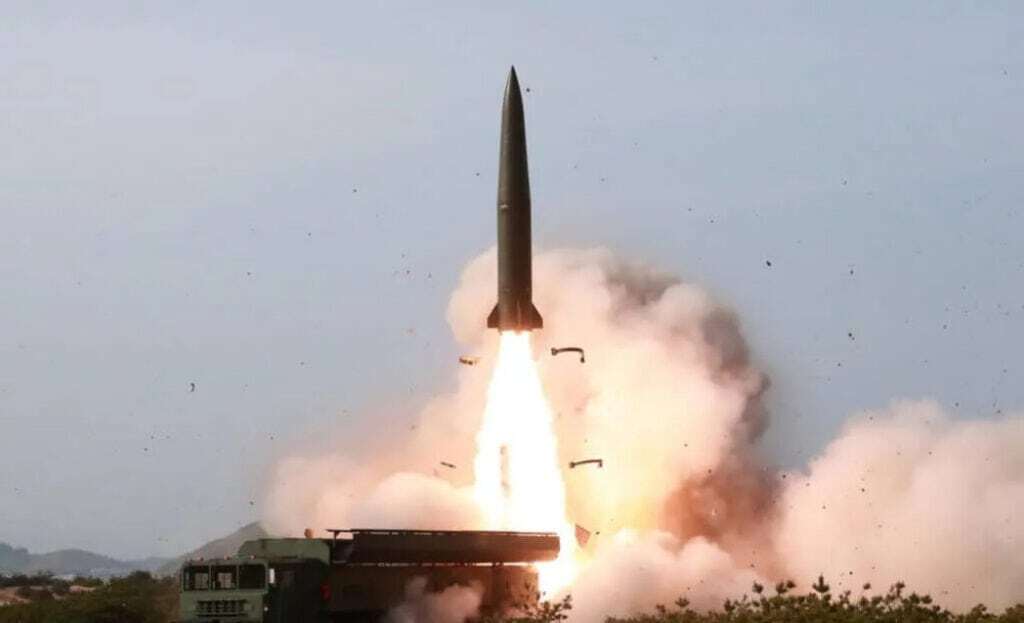
Cherniak said the North Korean unit comprises around 90 troops and is equipped with KN-23 and KN-24 short-range ballistic missiles (SRBMs), which Pyongyang first supplied to Moscow in late 2023. The unit has begun deploying to the Voronezh region, which borders Ukraine, he stated. The official indicated the unit will be attached to Russia’s 112th Missile Brigade, which operates the Iskander-M operational-tactical missile system, capable of firing both SRBMs and various cruise missiles.
The exact role that the North Korean troops will play in Russian missile operations remains unclear, Reuters added. Earlier in the war, Ukrainian and South Korean intelligence said North Korean personnel had supported launches of DPRK-made missiles and taught Russian troops how to operate the systems.
Moscow expects that the new North Korean deployment will include six launchers and 120 missiles, Cherniak stated, citing intelligence from undisclosed sources. By comparison, Russia produces roughly 50 to 60 9M723-series SRBMs for the Iskander-M system per month. The Ukrainian official said that Pyongyang has already dispatched a fresh batch of 40 KN-23/24s and some troops to Russia, with further plans to be finalized during high-level negotiations next month.
Cherniak confirmed that Russia had drawn from that recent batch in a deadly strike last week that killed as many as 10 members of a family when a North Korean missile slammed into their home near the city of Kryvyi Rih. That attack reportedly marked the first time Ukraine had recorded a strike involving DPRK missiles since August 2025.
Deepening military cooperation between Russia and North Korea
The North Korean missiles carry larger warheads than Russia’s 9M723s but are less precise, often resulting in civilian casualties. Initially, many of them missed their targets by wide margins or failed mid-air, but Moscow subsequently helped Pyongyang improve their accuracy. Meanwhile, the North Koreans have worked to expand production capacity.
In early 2025, Ukraine’s then-military intelligence chief, Lt. Gen. Kyrylo Budanov, said Russia had received around 150 North Korean SRBMs and was expected to get another 150 later that year. In his Reuters interview, however, Cherniak said that Pyongyang had sent Moscow a total of just 150 SRBMs between late 2023 and August 2025.
That pace suggests the additional missiles have only now begun to arrive. At the same time, Ukrainian intelligence has consistently estimated that Russia retained a stockpile of around 50 North Korean SRBMs since summer 2025, according to media reports. Thus, the reason for the gap in Russian usage on them is unclear.
In addition to missiles, Pyongyang has supplied Moscow with millions of artillery munitions and other arms. After the two countries signed a mutual-defense pact in 2024, North Korea deployed some 15,000 troops to help expel Ukrainian forces from Russia’s Kursk region. Last week, Ukrainian President Volodymyr Zelenskyy said that intelligence indicated Moscow wants another 30,000 North Korean troops and had been preparing since June to receive them in the Voronezh region.
In turn, Russia has provided North Korea with an array of military equipment, technical know-how, and other assistance. Moreover, the North Koreans’ experience in Kursk afforded them valuable experience in modern warfare, particularly regarding the employment of and defense against drones. The new missile deployment will offer another learning opportunity.
Exacerbating the ballistic missile threat to Ukraine
While its position on the battlefield has improved compared to last year, Ukraine faces growing challenges with air defense. The country relies on the US-made Patriot air defense system to combat ballistic missiles, but Ukraine lacks enough Patriot batteries to defend its vast territory and is now desperately short on Patriot Advanced Capability-3 (PAC-3) interceptor missiles for those it does have. Washington, its stocks drained by the Iran war, is reluctant to provide many more, as are Ukraine’s European backers. American PAC-3 production is growing, but cannot yet keep pace with demand, and alternative solutions will not bear fruit for some time.
Moscow is seizing on this vulnerability. Supported by earlier investments to increase production, recent weeks have witnessed a spate of deadly barrages featuring 9M723, RM-48U, and Tsirkon missiles. Although Ukraine continues to defeat the vast majority of long-range one-way attack drones and subsonic cruise missiles, it shot down only 29 of 195 ballistic missiles in July, according to official Ukrainian statistics. And it has downed almost none of the more than 50 launched so far in August.
Lacking sufficient capacity to intercept Russian “arrows,” Ukraine is looking for ways to kill the “archer.” In recent weeks, Kyiv has asked that it be allowed to use Starlink, provided by Elon Musk’s SpaceX, inside Russia.
Ukrainian military communications have relied on Starlink since 2022. Kyiv’s forces have had success in using drones controlled via Starlink to strike dynamic targets on occupied Ukrainian land. However, SpaceX restricts Starlink access inside Russia’s internationally recognized borders, from where its forces typically launch ballistic missiles.
If that restriction were lifted, Ukraine could use Starlink-controlled drones to hunt for and destroy these launchers. It could potentially also strike identified launchers and related targets with Western or Ukrainian missiles, including ballistic missiles that Ukrainian industry is currently developing.
So far, though, Musk has reportedly rebuffed Kyiv’s requests. Resolving the matter will likely require White House intervention.