
|
|
|
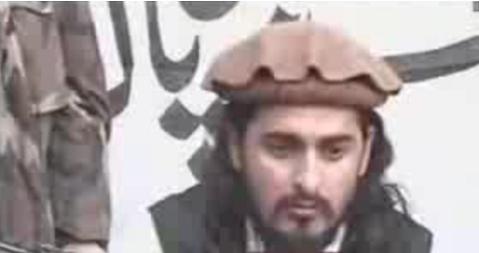
Taliban commander Hakeemullah Mehsud at a press conference in Peshawar last year. He is behind the attacks on NATO convoys in Khyber and Peshawar, and took credit for the May 27 complex assault in Lahore. |
The Taliban followed up yesterday’s deadly attack in the eastern city of Lahore with three bombings in Peshawar, the provincial capital of Pakistan’s insurgency-racked Northwest Frontier Province, and a suicide attack in Dera Ismail Khan. Police and soldiers were the target of the attacks.
In the opening salvo, the Taliban detonated two bombs just minutes apart in a central bazaar in Peshawar. The initial blast killed six civilians and wounded more than 70 people.
The Taliban followed up the bombings by ambushing police forces as they responded to the attack. The Taliban placed shooters on the rooftops and fired on police in the streets. Two of the Taliban attackers were killed and two more were captured.
Shortly after the attack in the bazaar, a suicide bomber detonated at a checkpoint manned by paramilitary troops. Two of the troops were killed and three more were wounded in the attack.
The Peshawar attacks were followed by another suicide attack in the district of Dera Ismail Khan. A suicide bomber targeted a police checkpoint in the main town and killed three people. Twelve more people were wounded in the attack, including seven policemen.
Peshawar has been the scene of several large attacks over the past two weeks. On May 16, the Taliban detonated a car bomb near an ice cream shop and Internet cafe. Ten civilians were killed and more than 75 were wounded in the strike. On May 22, the Taliban detonated a car bomb outside a cinema in the busy Khyber Bazaar. Ten civilians were killed and more than 75 were wounded.
The security situation has deteriorated to the point where the city has been described as under siege. The Taliban have been enforcing Islamic law in regions of Peshawar and have ordered cinemas and CD and video shops to close.
Taliban take credit for yesterday’s assault in Lahore
Hakeemullah Mehsud, the senior deputy of overall Taliban commander Baitullah Mehsud, took responsibility for yesterday’s complex assault on police and intelligence headquarters in a secured region of Lahore. Twenty-three people, including police and officials from the Inter-Service Intelligence agency, were killed after an assault team opened fire on security personnel and stormed the ISI headquarters, while the truck was detonated in front of the police headquarters, leveling the building.
“We have achieved our target,” Hakeemullah told Reuters. “We were looking for this target for a long time. It was a reaction to the Swat operation.” The military has been battling the Swat Taliban, led by Mullah Fazlullah, and is slowly advancing in the district.
Hakeemullah also threatened to conduct more attacks in Pakistan’s major cities. “Residents should leave the cities of Islamabad, Rawalpindi, Lahore, and Multan,” he said, warning that government institutions will be targeted.
Hakeemullah is one of the Taliban’s most able commanders and is a rising star in the Pakistani Taliban. He commands the Taliban forces in Arakzai, Khyber, and Kurram tribal agencies, as well as in some regions in Peshawar. He also is a cousin of Baitullah and Qari Hussain Mehsud, the notorious Taliban commander who trains child suicide bombers in South Waziristan.
Hakeemullah has been leading operations against NATO’s supply lines in Khyber and Peshawar. His forces have been behind raids that have led to the destruction of more than 600 NATO vehicles and shipping containers. The raids have also destroyed two vital bridges. Pakistan has closed the Khyber Pass to NATO traffic six times since September 2008 because of the attacks. The raids on the supply columns moving through Khyber have forced NATO to search for alternative supply routes into Pakistan.
In December 2008, Hakeemullah imposed sharia, or Islamic law, throughout Arakzai.
Pakistani security forces and the US have recently tried to kill Hakeemullah. He was the target of a series of Pakistani strikes in the Arakzai tribal agency in mid-April. On April 1, the US targeted a meeting in Arakzai with a Predator attack aircraft after receiving intelligence that Hakeemullah might be in attendance.
Another Taliban group takes credit for Lahore attack
A previously unheard-of group that calls itself the Tehrik-i-Taliban Punjab, or the Movement of the Taliban in Punjab, also took credit for the Lahore assault. The Punjabi Taliban group said it carried out its attack in retaliation for the Swat offensive and claimed more attacks are in the pipeline.
“Tehrik-i-Taliban Punjab asks Muslims in Pakistan to stay away from areas where the enemy is ‘taking advantage’ of them, so that they are not harmed by jihadi attacks,” according to a Turkish-language press release posted on the Internet and translated by the SITE Intelligence Group.
The Punjab Taliban is likely a front group for the numerous Punjabi terror groups that have based operations in Pakistan’s tribal areas. The Jaish-e-Mohammed, Lashkar-e-Taiba, Harakat-ul-Jihad-al-Islami, Harakat-ul-Mujahideen, Lashkar-e-Jhangvi, and a host of Pakistani jihadi terror groups have established branches in the northwest. The Jaish-e-Mohammed calls itself the Fedayeen-e-Islam. It operates from South Waziristan and is closely allied with Baitullah’s Taliban forces.

8 Comments
The Army will win in Malakand only to realize that the rest of the NWFP is now under Taliban rule. Surpised DIK isn’t marked red yet.
Peshawar under siege, Lahore terrorized, Karachi in open revolt and Taliban commanding from Quetta. I wonder if anyone in the (relatively) cloistered capital realizes that they will win the battle and lose the war?
Well, they did promise to rain chaos on the cities of Pakistan. On the other hand, it was inevitable that they were going to do this anyway, and they have been preparing for some time.
The army is capable to win if they have no sympathatic feeling towards taliban. They announce bounty on the commanders which means that these culprits are no more in Swat. They may have taken shelter in chitral or orakzai and when army will declare operation over they will re emerge. This HIDE & SEEL game will continue. The best way is the operation at a time in the whole belt to prevent escape.
Those who object drone attacks should realize the fact that in all operations real culprits never targeted but in drone attacks there are successful hits. Hakimullah Mehsud is moving over in inbroad day light why gunship helecopters can”t locate him? This is the question that intellegence agencied can answer.
These attacks on everyday people, has the purpose of strong arming the government into another peace deal.
The Taliban doesn’t provide anything but killing and hyper religion spiced with drugs. Overtime, human nature of wanting a secure future will do the Talibs in.
The Thunder Run has linked to this post in the blog post From the Front: 05/29/2009 News and Personal dispatches from the front and the home front.
The Taliban is operating freely among the population from what I can gather in the article. People are either too afraid to respond or are supporting this movement. Has the Pakistani military done anything to publicize the atrocities of the Taliban to others in Pakistan? Not even Pakistan but just the NWF or just Swat? I’m a fan of full spectrum combat operations but what I’m seeing so far is one spectrum.
I’m speaking on my own ignorance of the region, but these are human beings being killed in warm blood. They are living their lives and being slaughtered in the mean time. There must be some kind of negative impact the Paki military can garner against the Taliban with this. At some point, the people are going to be tired of this and fight back. How much will they take?
Hakeemullah also threatened to conduct more attacks in Pakistan’s major cities. “Residents should leave the cities of Islamabad, Rawalpindi, Lahore, and Multan,” he said, warning that government institutions will be targeted.
GOVERNMENT INSTITUTIONS LIKE ICE CREAM SHOPS, CD AND VIDEO STORES, INTERNET CAFES, CIMEMA’S AND SCHOOLS WHERE CHILDREN GO.
THEN BEAT YOUR WOMEN AND TAKE YOUR SON’S TO BE SUICIDE BOMBERS.
KILLING AND MAIMING THOSE WHO ARE JUDGED BY THEM NOT TO BE GOOD MUSLIMS.
We have to keep in mind that its probably not that the people don’t know, but that its so common place that its hardly news. Desensitization and all that.