US forces kill al Qaeda in Iraq's deputy commander
|
| Abu Qaswarah. Image courtsey of Multinational Forces Iraq. |
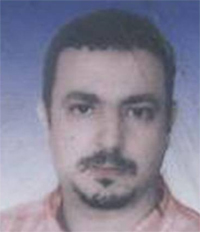
US forces struck a major blow against al Qaeda in Iraq's beleaguered network. Abu Qaswarah, al Qaeda in Iraq's second in command, was killed in the northern city of Mosul during a targeted raid ten days ago.
Abu Qaswarah, who is also known as Abu Sara, was killed during an intelligence-driven raid on "a key command and control location" in Mosul on Oct. 5. He was the terrorist who detonated the suicide vest that killed three women and three children after being shot by Coalition Forces.
"Evidence after the operation indicates he was shot by Coalition forces who were acting in self defense and that he detonated his suicide vest after receiving mortal wounds from Coalition forces," Lieutenant Commander David Russell, a Public Affairs Officer in Baghdad, told The Long War Journal. "The innocent Iraqi victims were three women and three children who were also killed during the operation. This deliberate disregard for the safety of innocent Iraqi lives is characteristic of Abu Qaswarah's nefarious operations."
The raid, likely carried out by the special operations hunter-killer teams of Task Force 88, resulted in five al Qaeda operatives killed, including Abu Qaswarah. Multinational Forces Iraq was able to positively identify Abu Qaswarah as being killed after the raid.
The US military described Abu Qaswarah as the senior operational commander and second in command to Abu Ayyub al Masri, al Qaeda's leader in Iraq. Qaswarah was "a charismatic AQI [al Qaeda in Iraq] leader who rallied AQI's northern network in the wake of major setbacks to the terrorist organization across Iraq," Multinational Forces Iraq stated. Prior to being appointed al Masri's deputy, he severed as al Qaeda's emir, or leader, in northern Iraq.
Like al Masri and much of al Qaeda in Iraq's senior leadership, Abu Qaswarah was a foreigner. Qaswarah was a Moroccan citizen "who trained with al Qaeda in Afghanistan." He had "had historic ties to AQI founder Abu Musab al Zarqawi and senior al Qaeda leaders in Afghanistan and Pakistan," the US military stated.
Abu Qaswarah also "directed the movement of foreign terrorists into northern Iraq," Multinational Forces Iraq said. Al Qaeda in Iraq has almost exclusively relied on ratlines from northwestern Iraq to move foreign fighters into the country. But that number has dwindled to about a dozen foreign fighters entering Iraq, down from a peak of almost 150 in 2006.
In addition to directed suicide attacks against civilians and the US and Iraqi military, Qaswarah also served as al Qaeda's enforcer. "Abu Qaswarah reportedly killed foreign terrorists who wanted to return to their home countries instead of carrying out attacks against Iraqi citizens," the US military stated.
The US military said Abu Qaswarah's death will "cause a major disruption" to al Qaeda in Iraq's network as he was a key link in coordinating al Qaeda's operations and operatives. "His death will significantly degrade AQI operations in Mosul and Northern Iraq, leaving the network without a leader to oversee and coordinate its operations in the region."
Al Qaeda in Iraq has attempted to regroup in Mosul and the surrounding areas since it was defeated in central and much of northern Iraq. The Iraqi and US military has heavily targeted al Qaeda's senior leadership since late 2007. Much of al Qaeda in Iraq's senior leadership is said to have fled to Pakistan and Afghanistan.
Al Qaeda forums are suggesting jihadi recruits flock to Afghanistan instead of Iraq. The US military has intercepted communications between al Qaeda in Iraq and al Qaeda's senior leadership in Pakistan that show al Qaeda has suffered a major setback during 2007 and 2008.
READER COMMENTS: "US forces kill al Qaeda in Iraq's deputy commander"
Posted by ST333 at October 15, 2008 11:29 AM ET:
Well done men, that is a big kill. If we can get those 5 troubled provinces under complete control, I believe we can draw down on a quicker time line then what has been laid out. Paul, rest assured there are task forces like TF88 in Afghanistan as we speak. We had boots on the ground in Pakistan in the last month and you can bet the house it was the cream of our crop. As Iraq continues to improve, we will be able to redeploy ground forces and other resources to the Afghan theater. I feel your frustration and I share your passion but we just aren't in the position to open a front in Pakistan nor would it help our cause to invade a sovereign country still considered an ally.
Posted by Rhyno327/lrsd at October 15, 2008 12:13 PM ET:
I feel both you guys. Yes, there are small teams conducting ops in the FATA, which P-stan CEDED a long time ago, we just don't hear it. It shows though. The strikes against HVT's and thier minions have to have some confirmation from the ground, and P-stani "soveriegnty" is a long running joke. Sooner or later, a decision will have to be made whether to use Coalition airpower in the tribal areas. They cannot carry out offensive ops in A-stan if they are protecting their camps and compounds. The US and P-stan can both issue denials, or the truth can come out that certain elements in the Pak military and ISI are helping the militants, and we have no choice. Last May there were 30-50 camps. In Sept. there were over 160! You mean to tell me the P-stani's did NOT know? C'mon now, thats bull**it...they knew, and they helped, as they continue to do. Zadari does not have the power to rein in his army or his intel service. I hope Barack Obama gets elected and throws down the gauntlet. You will, or WE WILL. I go over it in my head every so often, it is FRUSTRATING. Put the strike packages together, and let them have it. Tell he Pak military to stay outta the way. We need to hurt them, and that means hitting them where THEY live. I bet violence in A-stan takes a nosedive.
Posted by C. Jordan at October 15, 2008 1:30 PM ET:
Bravo! Another one bites the dust!
Posted by Ammo Guy at October 15, 2008 4:14 PM ET:
My apologies Bill, as always - sometimes I get carried away...sigh. I'm sure I'll be hearing from DJ soon :o) Keep up the great work.
Posted by KaneKaizer at October 15, 2008 4:21 PM ET:
This reminds me of the reports from a few months ago where it was believed al-Masri and the other top AQI leaders fled to Waziristan. If AQI's #2 man was still in Iraq, is it more likely that al-Masri is still somewhere in Iraq as well? I've been waiting for him to be killed for a long time.
Posted by TS Alfabet at October 15, 2008 8:05 PM ET:
"This reminds me of the reports from a few months ago where it was believed al-Masri and the other top AQI leaders fled to Waziristan. If AQI's #2 man was still in Iraq, is it more likely that al-Masri is still somewhere in Iraq as well? I've been waiting for him to be killed for a long time."
Kane, be careful what you wish for... you might just get it. There are alot of folks inside and outside of AQI who think Al Masri is one of the biggest reasons why AQI has failed so badly since Zarqawi was killed. By demanding absolute allegiance to his caliphate from all the other insurgent groups, he assured a splintering and pushed many insurgents into the arms of the U.S.
Posted by Noocyte at October 16, 2008 2:23 AM ET:
Bravo, TF88!
As AQI continues to be decimated, its cause shown again and again to be hopelessly lost, then we may see more and more Jihadi-wannabes heeding the call to flock to the Af-Pak theater rather than Iraq. Naturally, this would be a boon to the Iraqi people, who would finally have the breathing space to grow their economy and solidify their government. This in turn could very well create the conditions for a more rapid redeployment of US troops to pursue other missions.
At the same time, though, the relatively massive influx of foreign fighters who would suddenly rush to support the Taliban could help to create the conditions for the COIN operations which could defeat them. The tribes of the rugged lands bordering Afghanistan and Pakistan are a fiercely independent and notoriously xenophobic lot. If recent history is any indication, these newly-arrived Jihadis will, in fairly short order, conduct themselves in as abominable a manner as they have wherever they have planted their blighted feet. I cannot imagine that, over time, this will sit well with the indigenous tribes. More Lashkars may form, which could be turned, given the presence of a more well-manned, concerted force, ably directed by Gen. Petraeus from his new perch atop CENTCOM.
I know, "I'm smelling a lot of 'if' coming off this plan." But it strikes me as a plausible scenario, if the situation is as adroitly read and exploited as our pre-eminent warrior-scholar was able to do in the Land of the Two Rivers.
Posted by TS Alfabet at October 16, 2008 11:47 AM ET:
Good thoughts, Noocyte.
Add to that the perspective of Nibras Kazimi (Iraqi and resident scholar at the Hudson Institute), in the hirabi's world, Iraq was the 'sexy' place for jihad. They had declared it the new caliphate. Being forced to give up on that dream and schlep back to caves and camps in Afghanistan and the Pak tribal areas is NOT what the hirabis want to do and does not help them recruit new cannon fodder.
Posted by Neo at October 17, 2008 9:49 PM ET:
"Piggybacking on Noocyte's comment - just imagine how kindly the Afghanis will take to an influx of more foreigners. This could be something good."
I think I will go with a more mixed assessment of the situation. There are two aspects to this, first the local reaction to the Taliban's wanton violence, and second their reaction to foreign Arab leadership of Al Qaeda.
In the end the Taliban's propensity for crude violence that will create enemies for them, but the Pashtun reaction can be expected to be mixed. Working against us is a insular warlike culture of the Pashtuns. Don't underestimate the propensity for Pashtun population to support armed causes. There is a long history behind Pashtun militarism going back past the modern era. Countering this is a strong tendency toward factionalism among the various Pashtun tribes. If the Taliban is seen as making war more amongst Pakistani's and fellow Pashtun's than on American troops, tribesmen may increasingly take an adversarial view of the Taliban.
Al Qaeda and its Arab leadership have so far gotten around the Pashtun disdain for outsiders. Some of this is due to the recent political support from the Arabs during the Soviet occupation and after. Cultural and religious ties to Arab outsiders go back much further with Arab traders establishing themselves along the silk route and intermarrying with the local Pashtun population over the last millennia. Arabs are also Islamic co-religionists in that they are both part of the Islamic Ummah, Arabs occupying a central position of prestige in relation to the history of Islam, even if equality is explicitly stated within Islam.
Americans by contrast are true outsiders. Even among Pashtun supporters of the Karzai government, the Americans are seen more a means to an end, rather than a truely long term player in internal Afghan affairs. To the extent we are seen as providing some political stability and a way out of inter-ethnic rivalry, we are tolerated, at least by those Afghani's that aspire to some sort of modernization and economic development. We are still seen by many as some relief from grinding poverty and continuous warfare, however temporary our stay may be.