|
|
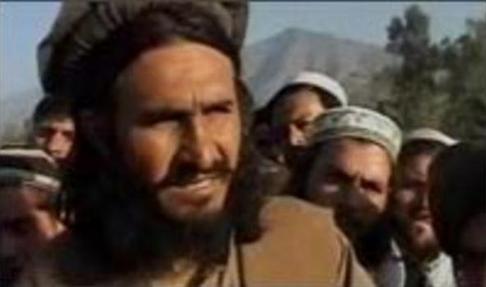
| Faqir Mohammed. Click image to view slideshow of Taliban leaders in Pakistan and Afghanistan. |
With two peace deals signed between the Taliban and the Pakistani government in the northern areas of the Northwest Frontier Province, and progress being made with negotiations in South Waziristan, the Pakistani government is touting its three-point plan to “end militancy.” The Taliban, meanwhile, say they will continue to attack NATO and allied forces in Afghanistan.
During a funeral for a slain local journalist today in the Bajaur tribal agency, Faqir Mohammed said the Taliban would continue to strike at NATO and allied forces inside Afghanistan, as is their religious duty. “We will not attack government positions and whoever indulges in such an attack will be treated as an enemy,” Faqir said, addressing 5,000 mourners and supporters of the Taliban. “We are Muslims and the enemy of infidels. We will continue our jihad in Afghanistan as long as the foreign allied forces are there.”
Faqir’s vow to attack US forces comes the same day as Pakistan’s foreign minister said the government has “a comprehensive strategy to address militancy and terrorism and our strategy has three broad elements: political, socio-economic and military.”
“We believe that military action alone will not be effective in permanently ending the phenomenon of terrorism,” said Foreign Minister Shah Mahmood Qureshi. “We are reaching out to the tribal leaders and notables as part of the political element of our overall strategy in fight against terrorism.”
Qureshi said this program would halt attacks both inside and outside of Pakistan. “The political engagement is possible only with those who renounce militancy and violence; don’t allow the use of Pakistan’s territory against any other country; and do not help foreign terrorist elements to find hideouts in Pakistan’s territory,” the Associated Press of Pakistan reported based on Qureshi’s statements.
|
|
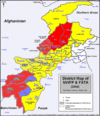
| Red agencies/ districts controlled by the Taliban; purple is de facto control; yellow is under threat. |
Faqir Mohammed’s statements, as well as the action of the Taliban, will prove to be an embarrassment for the Pakistani government. The US and Afghanistan have expressed grave concerns about the negotiations with the Taliban, and believe the agreements will do little to curb terrorism both inside and outside of Pakistan’s borders. The Pakistani government has vigorously defended its policies.
NATO has reported a marked increase in attacks since the agreements were signed and is sending reinforcements to Afghanistan’s border with Pakistan in an attempt to halt the flow of Pakistani and al Qaeda fighters in Afghanistan.
Background on Faqir Mohammed
Faqir is the second in command of the Tehrik-i-Taliban Pakistan – the Movement of the Taliban in Pakistan – and the leader of the Taliban contingent in the Bajaur tribal agency. The Movement of the Taliban in Pakistan encompasses Taliban movements in the tribal agencies of North and South Waziristan, Khyber, Orakazi, Bajaur, Mohmand, and Kurram, as well as the settled districts of Swat, Bannu, Tank, Lakki Marwat, Dera Ismail Khan, Kohistan, Buner, and the Malakand division. The Pakistani Taliban is led by Baitullah Mehsud, who is currently in negotiations with the government.
Faqir is also the leader of the formerly outlawed Tehrik-e-Nifaz-e-Shariat-e-Mohammadi (TNSM – the Movement for the Implementation of Mohammad’s Sharia Law). The TNSM was banned by the Pakistani government in 2002. The terror group has been implicated in terrorist activity inside the country, including a suicide attack on Pakistani Army training base in Dargai in the Northwest Frontier Province in October 2006. The attack killed over 45 soldiers. Faqir has sheltered Ayman al Zawahiri, al Qaeda’s second in command. An attack in Damadola in January 2006 on Faqir’s compound was aimed at Zawahiri.
In October 2006, an airstrike on the Chingai madrassa, which doubled as a Taliban training camp, killed up to 84 Taliban, including Liaquat Hussain, the leader of the madrassa, and Faqir’s deputy. The attack came just days before the expected signing of the Bajaur Accord in October 2006.
Just prior to the Chingai raid, Faqir openly praised al Qaeda and Osama bin Laden. Faqir referred to bin Laden and Taliban leader Mullah Omar as “heroes of the Muslim world,” and he vowed joint efforts to fight the “enemies of peace” in the Bajaur Agency. Faqir calls the United States the enemy of peace. Under the leadership of Faqir Mohammed, Bajaur has become an al Qaeda command and control center that is used to launch operations into eastern Afghanistan. Kunar, the Afghan province that borders Bajaur, is one of the most violent in Afghanistan.
The Pakistani government inked a peace deal with Faqir in March 2007, which the Taliban broke shortly afterward.
For more information on the terms of the peace agreements, see:
Pakistani government inks peace deal with Swat Taliban
Pakistan is negotiating a new peace agreement with Baitullah Mehsud (South Waziristan)
Pakistan releases Taliban leader, signs peace deal with outlawed Taliban group (Bajaur, Malakand Division)