|
|
|
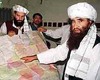
Jalaluddin Haqqani with his son Nasrudin. Click to view. |
As the Taliban’s insurgency in Pakistan escalates, the US and Afghan National Army have identified Pakistani-based Siraj Haqqani as the primary threat to security in eastern Afghanistan. Siraj Haqqani, the son of the influential Taliban leader and former defense minister Jalaluddin Haqqani, was described as “one of the most influential insurgent commanders in eastern Afghanistan” who has “vied for the lead role as the Islamic Republic of Afghanistan’s prime antagonist.”
Siraj is believed to be dangerous not only for his connections with the Afghan Taliban, but with al Qaeda’s central leadership. “Siraj is part of a younger, more aggressive generation of Taliban senior leadership that is pushing aside the formerly respected elders,” said Army Lieutenant Colonel Dave Anders, the director of operations for Combined Joint Task Force-82, which oversees operations in eastern Afghanistan. “Now, the Haqqani network is clearly in the hands of Siraj, and the face of it is evolving, becoming more violent and self serving.”
The younger Haqqani’s “extended reach brings foreign fighters from places like Pakistan, Uzbekistan, Chechnya, Turkey and Middle Eastern countries into Afghanistan,” said Major Chris Belcher, a spokesman for Combined Joint Task Force-82. This represents a growing trend to internationalize the Afghan jihad by bringing in foreign fighters and using tactics such as suicide attacks, which were rare in the past.
Siraj is believed to have eclipsed his father in power and influence, and is said to “rival Mullah Omar for the Taliban leadership,” said Belcher. “In many ways, he’s simply smarter and more respected.”
“He is growing more and more powerful within the Taliban networks, and some would argue his authority exceeds that of elder leaders, who Siraj may believe are becoming obsolete,” said Belcher. “The younger leaders demonstrate little respect for the elder leadership. They have become more brutal. They disregard the former motivations for fighting, and they tend to look for opportunities to displace or undermine the old leadership.”
US and Afghan forces are now actively working to dismantle the Haqqani Network, which is active in Khost, Paktia, Paktika, Ghazni, Logar, Wardak, and Kabul provinces and provides support to Taliban networks in Kunar, Nangarhar, Helmand, and Kandahar provinces. “A desired effect of these operations has been to disrupt the Haqqani network,” said Anders. Thirty members of the Haqqani Network have been captured during recent operations in eastern Afghanistan.
“Siraj Haqqani is the one who is training, influencing, commanding and leading,” Anders said. “Kidnappings, assassinations, beheading women, indiscriminate killings and suicide bombers – Siraj is the one dictating the new parameters of brutality associated with Taliban senior leadership.”
Siraj’s ascension to power may partly due to the decline of his father’s health. Jalaluddin has long been believed to be ill, and rumors have persisted he died in June after a bout of hepatitis.
Jalaluddin Haqqani is a leader of the Taliban in North Waziristan. “He became close to Osama bin Laden during the jihad and after the Taliban took control, he served as minister of tribal affairs in its government,” PBS’ Frontline reported in an extensive feature on the senior Haqqani.
The Haqqani family runs several mosques and madrassa, or religious schools, inside of North Waziristan. The Pakistani government closed down the Haqqani-run Manba Ulom madrassa after the US commenced Operation Enduring Freedom in Afghanistan, but it was reopened in 2004. Syed Saleem Shahzad, who interviewed Siraj in 2004, described the Manba Ulom madrassa as “a center of jihadi activities, and where top Taliban and al-Qaeda commanders meet.”
The US military put a $200,000 reward out for Siraj and 11 other mid-level Taliban, al Qaeda, and other allied commanders. Also included with Siraj were Abu Laith al Libi, al Qaeda’s military commander in Afghanistan, and Tahir Yuldashev, the leader of the al Qaeda-aligned Islamic Movement of Uzbekistan.