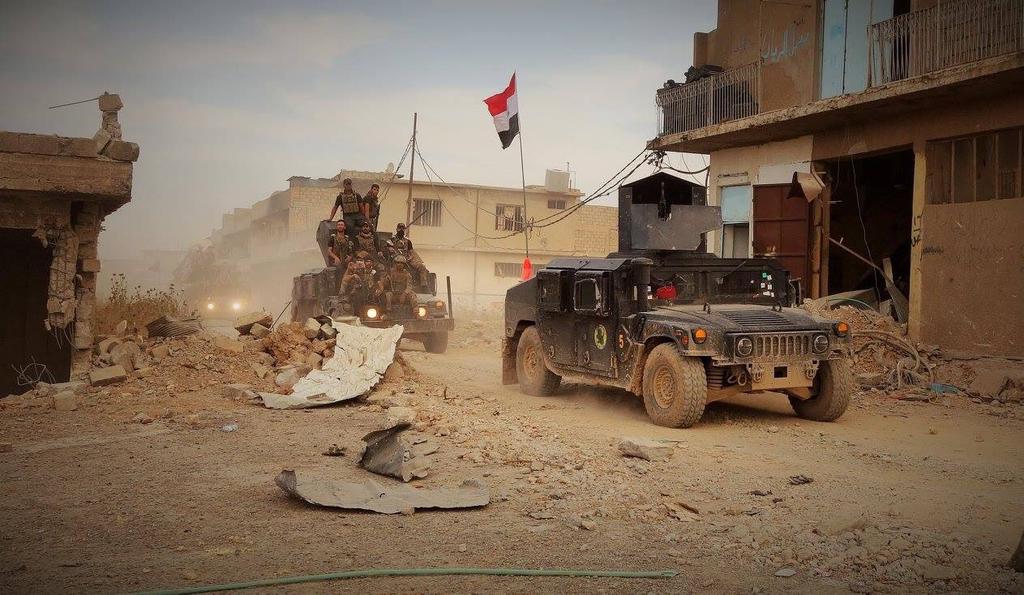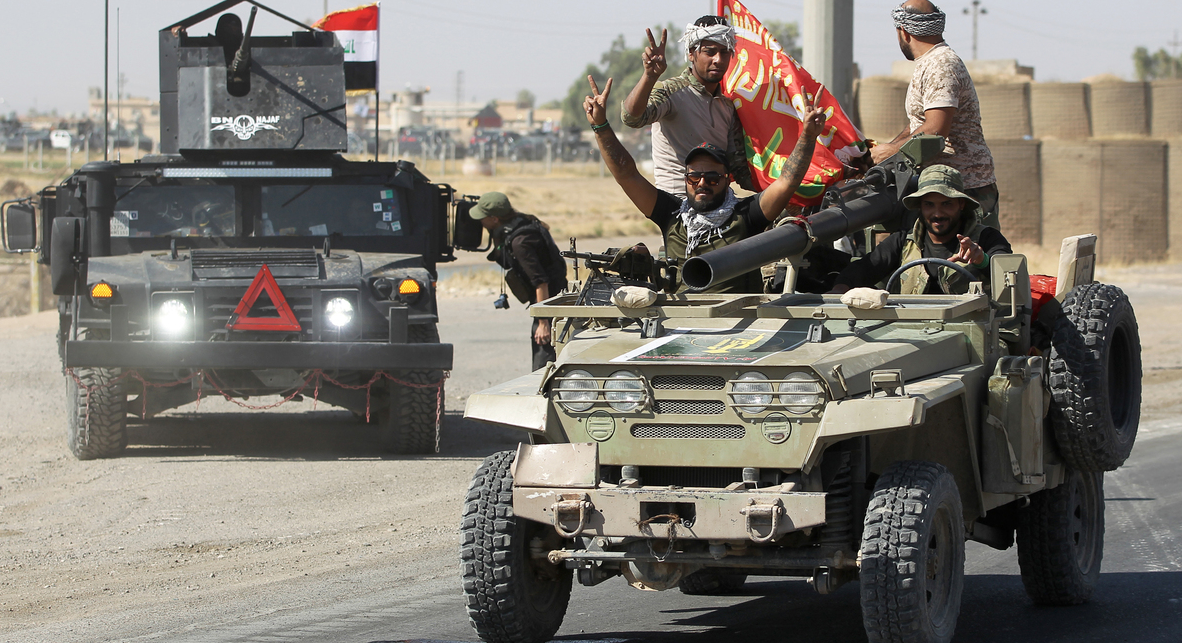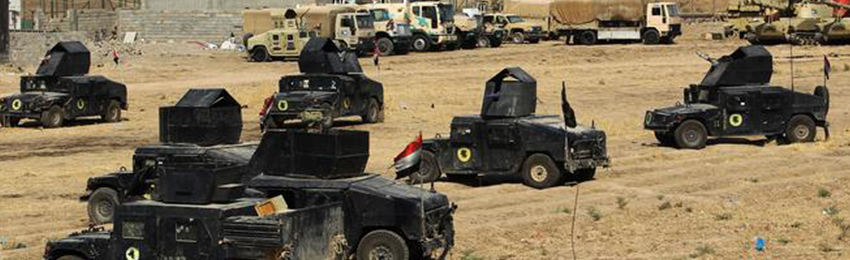
Iran-backed Shia militias target 2 U.S. bases in Iraq
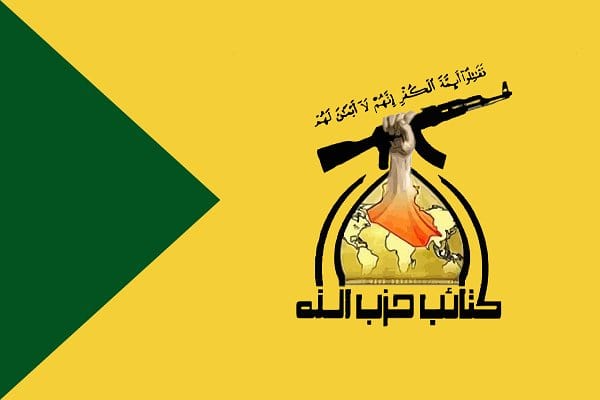
The attacks took place as Hezbollah Brigades, a dangerous Iranian proxy, threatened U.S. forces in Iraq with “the fire of Hell” if American did not withdraw its troops from Iraq.

The attacks took place as Hezbollah Brigades, a dangerous Iranian proxy, threatened U.S. forces in Iraq with “the fire of Hell” if American did not withdraw its troops from Iraq.

Falih al-Fayyadh, the Chairman of the Iran-backed Popular Mobilization Forces and the former National Security Advisor to the Iraq’s Prime Minister, was identified as a member of an “Islamic Revolutionary Guard Force Qods Force supported crisis cell” that supported attacks on protesters in 2019.

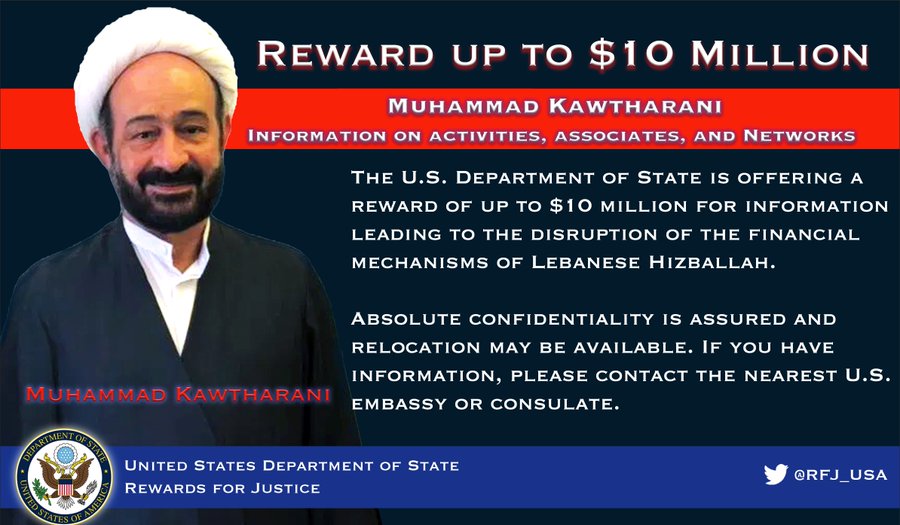
Hezbollah operates closely in Iraq alongside Iran’s Islamic Revolutionary Guards Corps to prop up and support Shia militias hostile to the U.S. and the West. Muhammad Kawtharani has played a key role in Hezbollah’s operations.

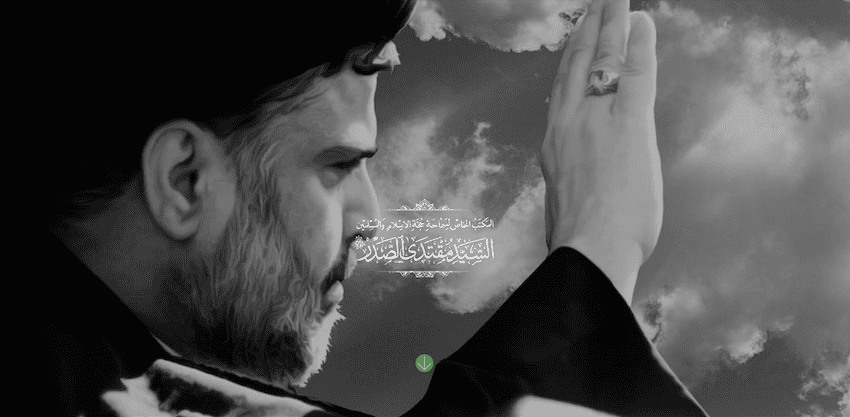
Muqtada al Sadr has reactivated two of his longstanding militia forces in Iraq in response to the U.S. killing Qods Force commander Qassem Soleimani.

Following a deadly rocket attack on a U.S. base in Iraq and subsequent U.S. airstrikes in response, the Iranian-backed Hezbollah Brigades threatens to further retaliate by continuing to target U.S. troops.

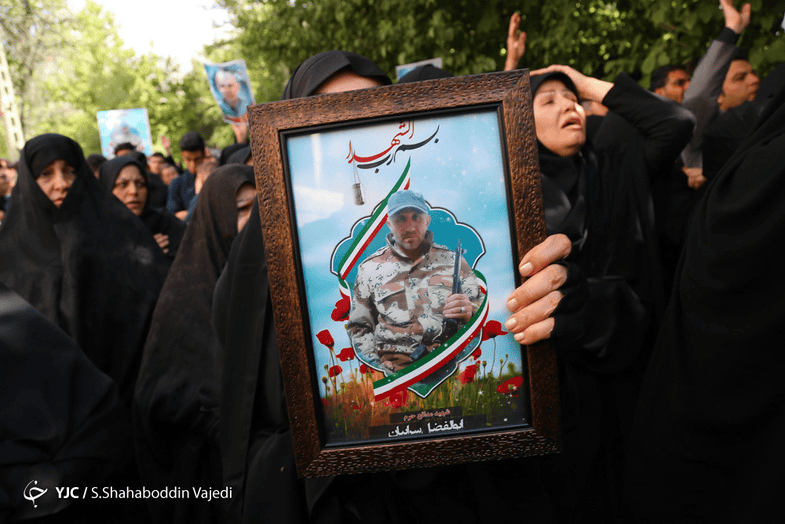
Both Iranian media and media linked to Iraq’s Popular Mobilization Forces have reported different narratives surrounding the events of a purported explosion at an Iraqi base last week. However, Iranian media has confirmed at least one Iranian was killed at the base.

While the Treasury designation focuses on the four Iraqis’ links to Hezbollah, which is described as “a terrorist proxy for the Iranian regime that seeks to undermine Iraqi sovereignty and destabilize the Middle East,” it practically ignores the fact that one of them is the Secretary General of the Imam Ali Battalions, or Kata’ib Imam Ali, a key component of the Popular Mobilization Forces, an official military arm of the Iraqi state that reports directly to the prime minister.

Iran has its tentacles all over Iraq, and the United States has no one to blame but itself. It is a bipartisan failure dating back to the March 2003 invasion. The seeds of this failure can be seen in the interrogation transcripts of Qayis Khazali, the leader of the Mahdi Army’s Special Groups and Asaib Ahl al Haq.
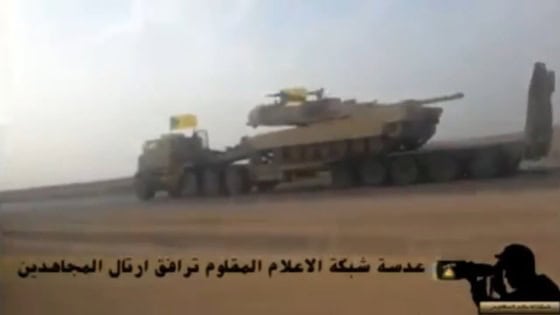
The report also notes that the US State Department has pressed the Iraqi government for the return of the tanks, but this has not happened.

The Syrian military has taken full control of Deir Ezzour, while Iraqi troops and Iranian supported militias ejected the Islamic State from Al Qaim.

CJTF-OIR made the statement despite the fact that it was abundantly obvious that the Iraqi government sought to seize Kirkuk from the Kurdish Peshmerga, and had signaled its intentions days before.

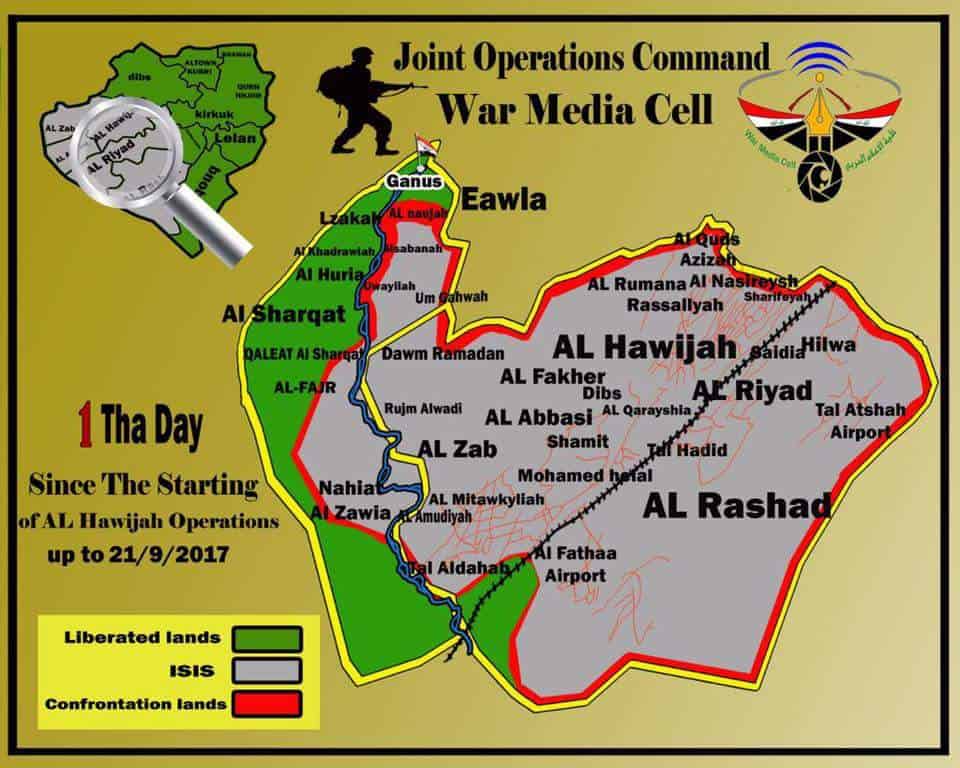
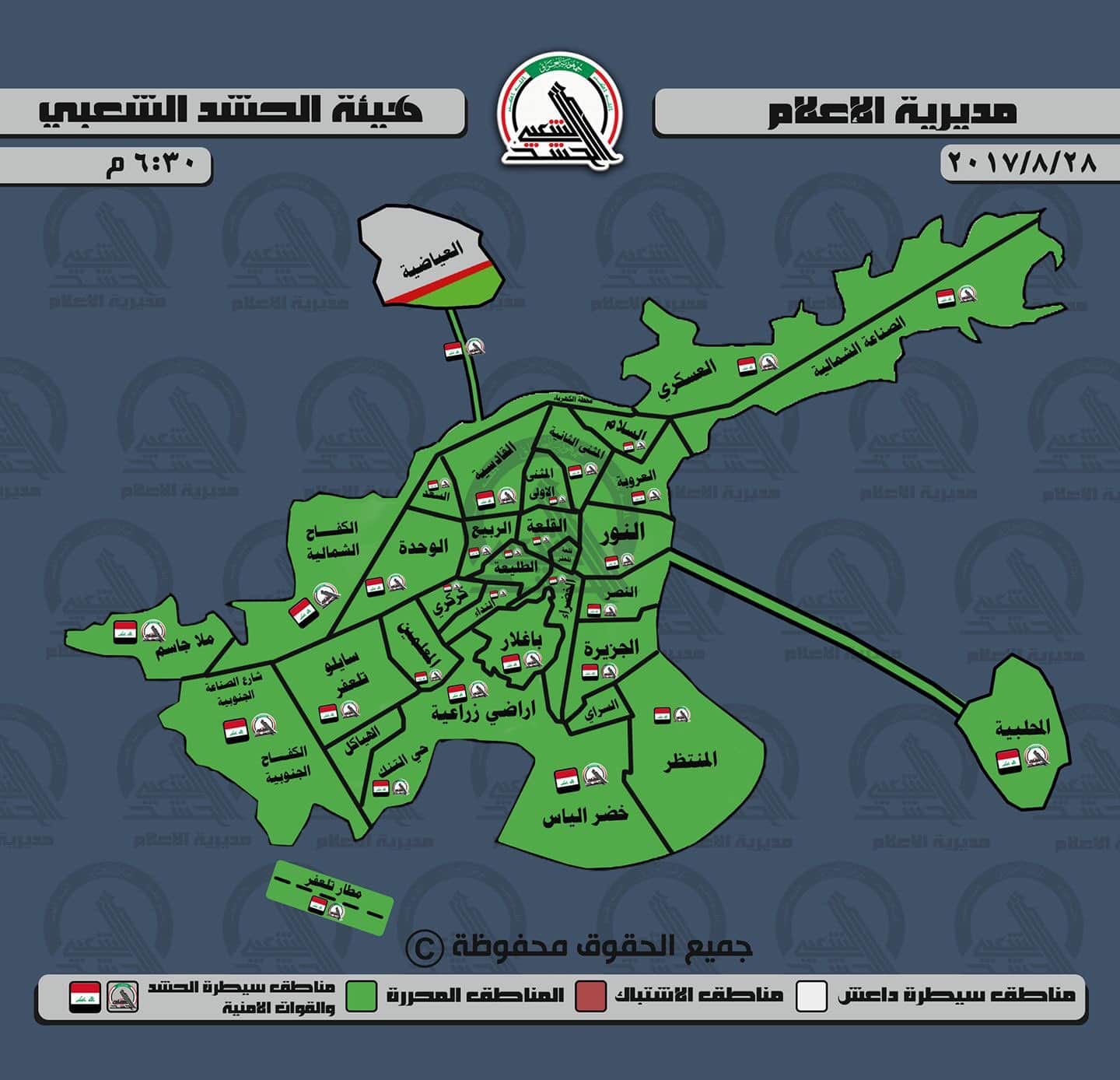
The Iraqi government quickly capitalized on its victory against the Islamic State in the adjacent city of Hawija and turned its energy on the secessionist Kurds in Kirkuk. The rapid offensive exposes deep fault lines in the anti-Islamic State coalition and within Kurdish politics.

Islamic State forces still control a small pocket of villages to the north and east of the town, but are now surrounded.

The Iraqi government launched a new offensive against the Islamic State in the Hawijah pocket earlier today. Hawijah is considered one of the group’s two remaining strongholds inside Iraq. The other is in the western Anbar province, where the Iraqi government began new operations on Sept. 19.

The Iraqi government announced the liberation of Tal Afar in northern Iraq earlier today. The offensive to retake the city began on Aug. 20 and progressed quickly. Three Iraqi army divisions, the Counterterrorism Service, Federal Police, the Popular Mobilization Forces and Kurdish Regional Government Peshmerga all took part and were backed by the US-led coalition.

Combined Joint Task Force – Operation Inherent Resolve said that Iraq’s Iranian-backed militias “deserve a share of the credit for their sacrifices” in the battle to liberate Mosul, yet calls for Iraqis to unite to prevent the return of the Islamic State.

Along with Iran, Hezbollah helped the PMF “with training and planning, and with weapons and equipment” to the Popular Mobilization Forces with the knowledge of Iraq’s prime minister, according to Abu Mahdi al Muhandis.

The establishment of Iraq’s Popular Mobilization Forces (PMF) is an extension of Iran’s plan to export the revolution, which keeps war against Sunni extremists from reaching the country’s borders, a senior adviser to the commander of the Islamic Revolutionary Guard Corps Qods Force argues.

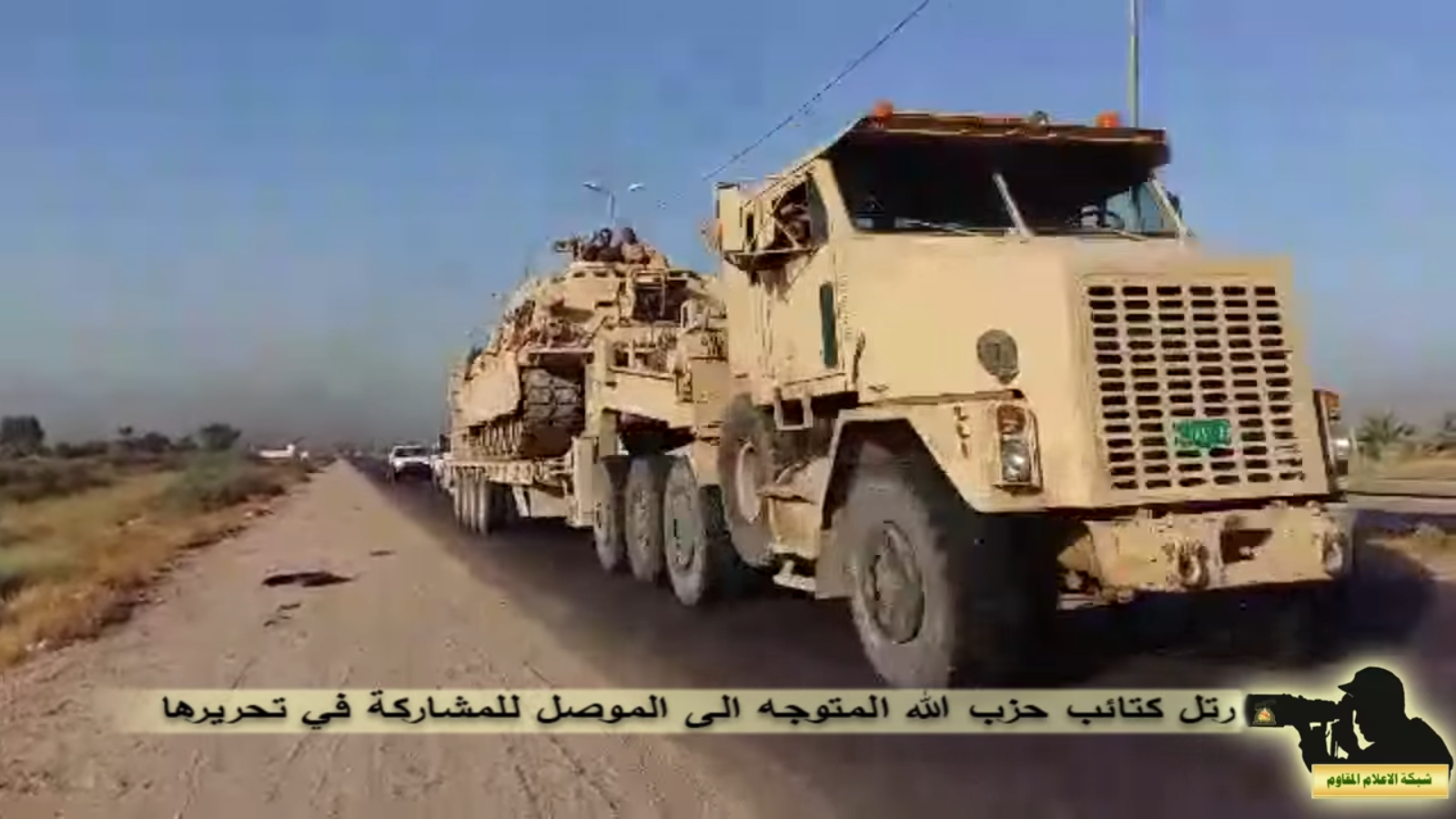
At least 11 rocket launchers, four howitzers (including two US-made M198 howitzers), one American-made M1 Abrams, and one US M88 Recovery Vehicle were spotted in a Hezbollah Brigades convoy moving towards Mosul.

The Iranian-backed Iraqi Shia militia has shown off a considerable troop deployment to the frontlines of Aleppo just days after Iranian media reported the move.

The Iraqi Prime Minister’s order will establish Iraq’s own IRGC, institutionalizing Tehran’s influence in the country. This development follows similar trends in Iran and Lebanon.

A senior advisor to the commander of the Islamic Revolutionary Guards Corps – Qods Force vowed that Iranian forces would continue to fight in Iraq and Syria until the last Islamic State and “takfiri” fighters are killed. The statement signals the entrenchment of Iranian military assets in Iraq and Syria and the two countries continue to be mired in civil wars.

Iranian media reported that the head of Iranian-backed Iraqi Popular Mobilization Forces left the front lines of Fallujah yesterday to brief a senior cleric in Najaf, who praised the forces and stressed the protection of civilians.

Abu Ezrael, a famous commander in Iranian-backed Shiite militias who has burned an Islamic State fighter alive, taped a message addressing both the enemies and friends of Iran.

Senior Iraqi Shia militia leader Abu Mahdi al Muhandis told a reporter that the second phase of the Fallujah operation was imminent. He criticized US airstrikes in Fallujah and announced his forces were prepared to enter the city if requested.

“We want to be a third power in Iraq,” the commander of Saraya Khorasani said. “Why can’t the Hashd [Popular Mobilization Force] be like the Revolutionary Guard in Iran?”

Akram al Kaabi, the leader of the Iranian-supported Harakat al Nujaba militia that is based in Iraq and an integral part of the Popular Mobilization Forces, has said that he follows Iran’s supreme leader and would participate in a coup if ordered to do so.

Sayyid al Shuhada said it would “strike and destroy” Saudi interests, not just in Iraq, but inside the kingdom. The militia, which operates as part of the Iraqi government, Iran, and the US-backed Popular Mobilization Committee, is led by Abu Mustafa al Sheibani, a dangerous commander who is listed by the US as a global terrorist.
Testimony to the House Committee on Foreign Affairs Subcommittee on Terrorism, Nonproliferation, and Trade on the US counterterrorism strategy in Syria. “The West’s involvement is ad hoc, tactical and reactionary.”

The Islamic State has brutally executed four men who belonged to the Iraqi and Iranian-backed Popular Mobilization Forces (PMF). The executions are a response to the PMF’s own slayings of Sunnis, the Islamic State says.