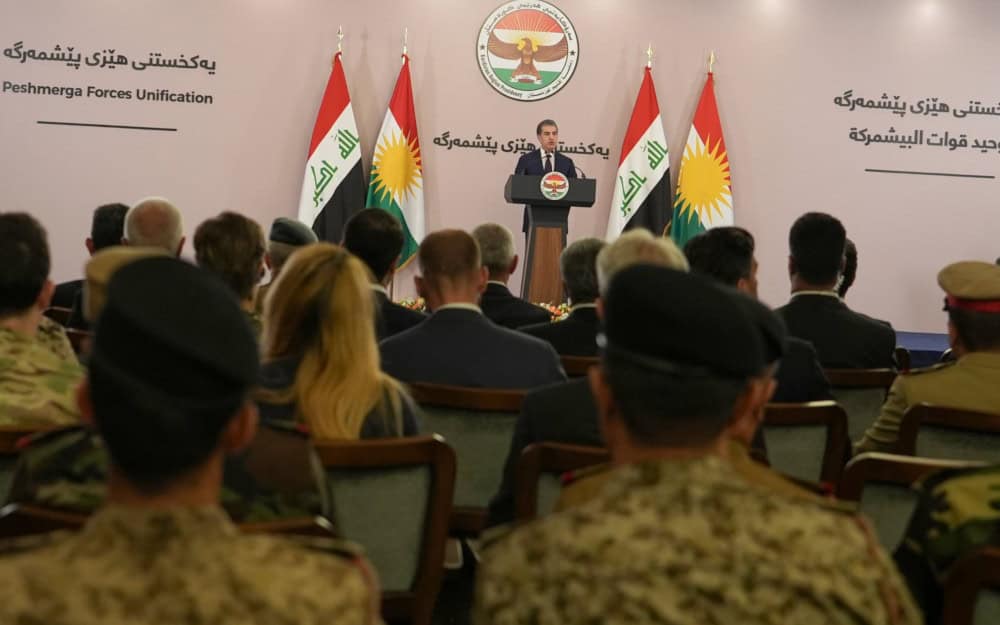
Iran conducted a drone attack against the Democratic Party of Iranian Kurdistan (PDKI), a Kurdish Iranian dissident group, in Iraq’s northern Kurdistan Region on October 12, according to the PDKI. The attack follows a drone attack on October 8 that targeted a camp of Kurdish refugees from Iran north of the Kurdistan Regional Government (KRG) capital of Erbil. Iran has carried out more than 1,000 drone and missile attacks on northern Iraq since February 28, when Israel and the US began strikes on Iran. Kurdistan Region President Nechirvan Barzani criticized some of the actions of Kurdish Iranian groups, expressing a desire to keep the region out of conflict, in a speech on October 12.
The latest Iranian attacks came after US forces withdrew from Iraq on September 30. There has been concern in the Kurdistan Region that the withdrawal will leave the region less protected, as US forces maintained air defenses in and around Erbil.
KRG authorities have been cautious about criticizing Iran amid the recent attacks. Interior Minister Rebar Ahmed spoke at the Middle East Research Institute (MERI) Forum in Erbil on October 13. He noted that the Islamic State remained a threat to the region but didn’t appear to highlight Iran as a concern, according to a Kurdistan24 report.
The PDKI said on October 12 that one of its camps near the city of Koya was targeted by a drone at 12:05 pm. “Iran launched another drone attack on the PDKI’s Azadi Camp near Koya in the Kurdistan Region of Iraq, where families of PDKI members reside,” the group stated. “This marks the third attack on the camp in just two weeks. Since the outbreak of the US-Israel-Iran war, Iran has attacked the PDKI more than 165 times.”
The October 8 attack in Khabat district north of Erbil also targeted a complex housing families, according to local reports. There were no reported casualties.
Iran has long complained about the presence of Kurdish Iranian opposition groups in northern Iraq and sought to have Baghdad crack down on them, as well as conducted numerous attacks.
In a Rudaw Media Network interview on October 8, Iranian Consul General Faramarz Asadi “accused foreign powers of pressuring five Iranian Kurdish opposition parties into forming an alliance shortly before the outbreak of the war.” He was referring to a coalition of Iranian Kurdish parties that formed in January and February 2026. “They formed an alliance from within [the Kurdistan Region’s] territory and issued a statement declaring that they would stand alongside and cooperate with anyone who attacks the Islamic Republic,” Asadi told Rudaw. Iran calls the Kurdish groups “terrorists.”
The PDKI, which has members in northern Iraq and in Iran, rejected Iran’s accusations. It called the Alliance of Political Forces of Iranian Kurdistan a “political decision aimed at cooperation and coordination to achieve the legitimate aspirations of the Kurdish nation in its own homeland. It is not evidence supporting the accusations Tehran has leveled against them.” Reports since March indicated that the US had backed a Kurdish uprising in Iran, but it did not materialize.
Amid Iranian threats, the PDKI has sought to distance itself from potential cross-border military operations. The group said on October 12 that it would not send its Peshmerga fighters into Iran. The term “Peshmerga” is the same name the Kurdistan Region of northern Iraq uses for its armed forces, but the two are separate entities.
“We have discussed this with both the Iraqi government and the Kurdistan Regional Government [KRG]. We have decided and pledged that we will not turn Iraqi Kurdistan or Iraq into a rear front,” Khalid Azizi, the PDKI spokesperson, told Rudaw.
President Barzani criticized the Kurdish Iranian opposition groups in a speech at MERI on October 12. “Iranian Kurdish opposition groups, unfortunately, acted very irresponsibly, placing the Kurdistan Region in a dire situation and under immense risk,” Barzani, who has sought to keep the KRG out of the conflict in Iran, said.