Two Kurdish Iranian opposition groups claimed they were targeted by Iranian attacks on May 5 and 6. The Komala of the Toilers of Kurdistan and the Kurdistan Democratic Party of Iran (PDKI) said camps used by their forces were targeted. The new attacks are part of a wider campaign being waged by Iran and Iranian-backed militias in Iraq against Kurdish Iranian opposition groups that have facilities in the semi-autonomous Kurdistan Region of northern Iraq. Iran and its proxies have also repeatedly targeted US diplomatic facilities and other targets in Iraq.
PDKI said in a statement on May 6 that its camp at Girde Chal (Grdachal), north of Erbil, had been struck by two drones. It said the site “serves as a residence for the families of PDKI members.” Kurds from Iran have moved to the Kurdistan Region of northern Iraq over the last few decades, and some of them joined Kurdish opposition groups. The members sometimes live in compounds, bases, or camps linked to a group.
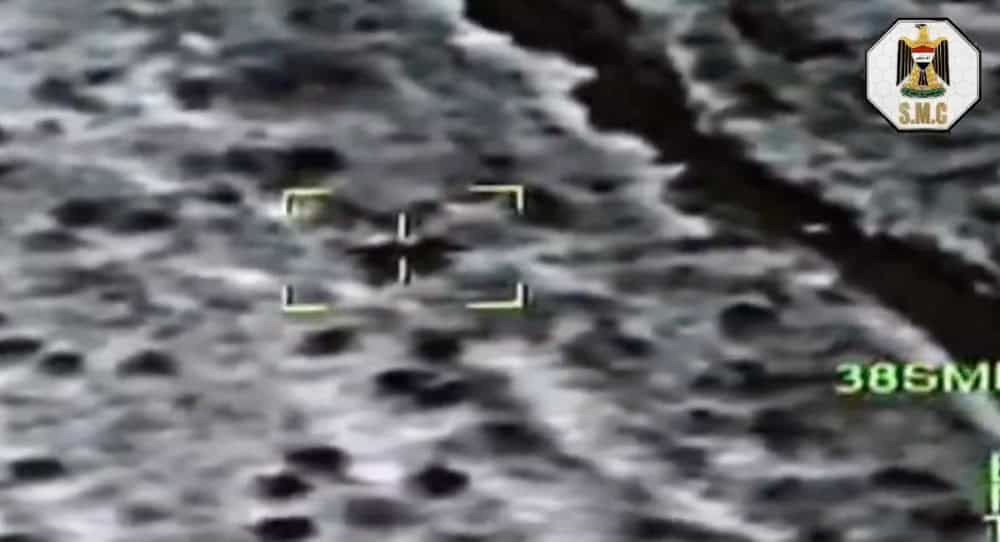
“The Girde Chal attack followed a strike on the night of Tuesday, 5 May 2026, against Komala’s Sourdash camp in the vicinity of Sulaymaniyah,” PDKI noted. A video posted online showed an explosion, and the sound of a drone could be heard.
The PDKI statement accused the Iranian Islamic Revolutionary Guard Corps (IRGC) of being behind the attacks. “These attacks form part of a sustained military campaign by the Islamic Republic. Since the outbreak of armed hostilities between Iran and the US and Israel, the Iranian regime has systematically attacked PDKI’s civilian camps, targeting medical and educational facilities in the Kurdistan Region of Iraq,” the group added. It also said the targeted area consists of “civilian houses, clinics, and classrooms.” A separate PDKI camp near Koya was attacked on April 30 and April 27, the Rudaw Media Network reported. In addition, the site at Girde Chal was attacked on April 17.
On the evening of May 5, a camp linked to the Komala Party, another Kurdish Iranian opposition group, was also attacked. “Two drones struck Surdash [sic] camp in the border areas of Sulaimani province in the Kurdistan Region late Tuesday, causing material damage but no casualties were reported,” Rudaw Media Network noted. The Komala Party has three factions. Two of the factions are members of a coalition of Kurdish Iranian groups that also includes PDKI.
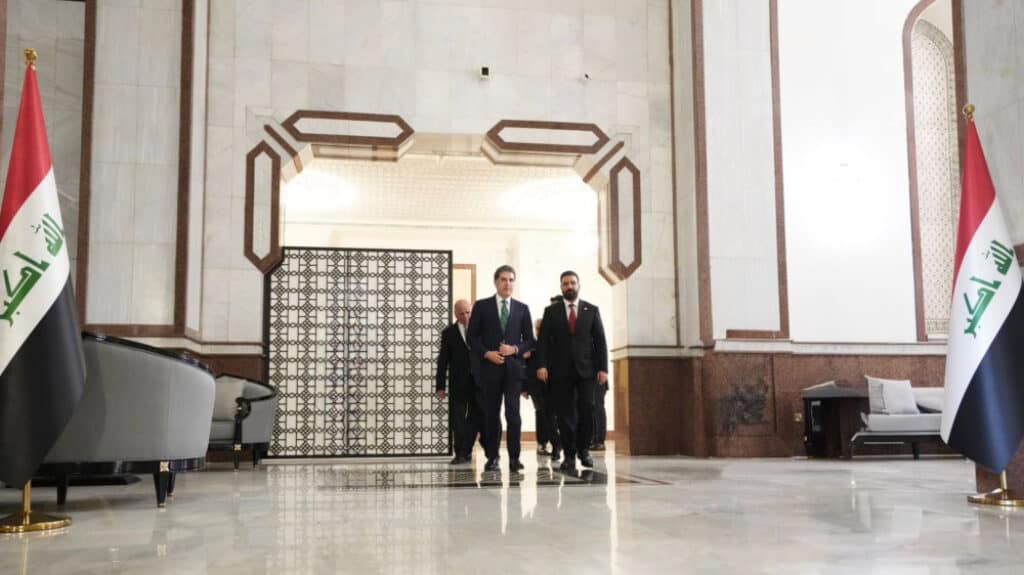
The attacks on the Kurdistan Region come as Iraq’s new Prime Minister-designate Ali al Zaidi recently made a trip to Erbil to meet with Kurdish officials. The leaders of the Kurdistan Region have been meeting with Iraqi politicians ahead of the formation of a new government.
Zaidi also spoke with US Secretary of War Pete Hegseth on May 6, who “congratulated [Iraq] on the occasion of our mandate to form the new government,” Zaidi noted. “The call also covered bilateral relations between the two countries across various fields, particularly those related to security cooperation, in accordance with the provisions of the Strategic Framework Agreement between Iraq and the United States,” the prime minister-designate stated.
The attacks on the Kurdistan Region are part of Iran’s continued attacks in the region, despite the ceasefire with the US. Iran attacked the UAE with drones and missiles on May 5. That day, Kurdistan Regional Government Prime Minister Masrour Barzani spoke with UAE President Mohamed bin Zayed Al Nahyan and condemned the “recent attacks” on the UAE. Barzani did not mention Iran in the statement.
On May 6, new data was released on the number of Iranian-backed attacks on US targets in Iraq since February 28. “U.S. facilities in Iraq have experienced over 600 attacks since the onset of war, according to a senior U.S. official, underscoring how Iran-aligned militias in Iraq have turned the country into a major proxy battleground between Washington and Tehran,” The Wall Street Journal reported.
This tally adds to some of the information provided by Kurdish groups. Komala said it has faced 70 attacks in northern Iraq. PDKI said on May 1 it had been attacked 114 times since the conflict began. “Between 28 February and 20 April 2026, the Kurdistan Region was subjected to 809 attacks. These resulted in the deaths of 20 civilians and left 123 others injured,” the Kurdistan Regional Government said.
The US has increased efforts to target Iranian-backed militias in Iraq. On May 5, the US State Department’s Rewards for Justice Program offered a $10 million reward for information on Harakat Hezbollah al Nujaba leader Akram Abbas al Kabi. It is the fourth reward offered by the US in the last month for Iranian-backed militia leaders in Iraq.