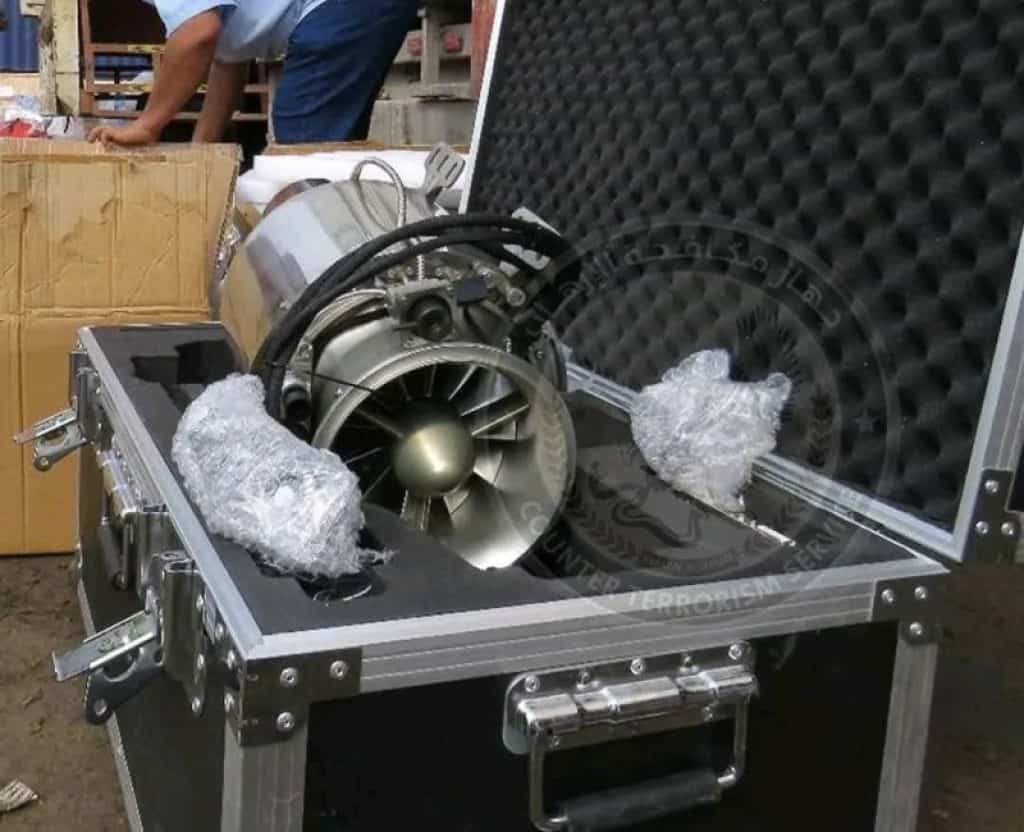
On August 6, counterterrorism authorities in Aden announced the seizure of weapons intended for the Houthis. The materials were aboard a ship coming from China that planned to dock at Hodeidah port in Houthi-controlled Yemen. However, airstrikes on that port have caused substantial damage, requiring the ship to dock in the port of Aden, which is controlled by the anti-Houthi Southern Transitional Council (STC). There, counterterrorism personnel, along with police, port officials, and other authorities, intercepted the shipment.
According to US Central Command (CENTCOM), the shipment included “drones, jet propulsion systems, wireless devices, and advanced control components.” In addition, Yemen analyst Mohammed al Basha noted that the load included manufacturing components, indicating that the Iran-backed terrorists are attempting to develop a domestic manufacturing capacity.
The Houthis have been sourcing numerous components, especially for drones, from China. In August 2024, the National Resistance Forces (NRF), an anti-Houthi armed force on Yemen’s West Coast, intercepted a shipment of Chinese components for hydrogen fuel cells intended for use in advanced drones. In March 2025, commercially available Chinese drone components were intercepted at the Yemen-Oman border en route to the Houthis.
Other recently intercepted smuggled shipments have indicated that the Houthis are rearming and repairing damaged infrastructure.
On August 9, anti-Houthi forces intercepted cranes used to offload container ships in the southern governorate of Lahj. According to the smugglers, the cranes were intended for use in Hodeidah port, where the existing infrastructure has been damaged by successive Israeli and US airstrikes.
In early July, the NRF announced one of the largest weapons interceptions to date. According to CENTCOM, “The NRF intercepted and seized over 750 tons of munitions and hardware to include hundreds of advanced cruise, anti-ship, and anti-aircraft missiles, warheads and seekers, components as well as hundreds of drone engines, air defense equipment, radar systems, and communications equipment. According to the NRF, there were manuals in Farsi, and many of the systems were manufactured by a company affiliated with the Iranian Ministry of Defense that is sanctioned by the United States.”
The shipment also included small arms and weapons systems, including the Ghadir anti-ship cruise missile, an Iranian system that the Houthis highlighted in their footage of the attack on Eternity C, a Liberia-flagged bulk carrier, in July.
Additionally, the presence of surface-to-air missiles called into question the Houthis’ domestic production claims. The Yemeni terrorists downed at least seven US Reaper drones in a matter of weeks during the US air campaign against the group earlier this year, claiming they were shot down with domestically manufactured systems. However, the July weapons seizure highlighted the Houthis’ ongoing reliance on imported Iranian systems.