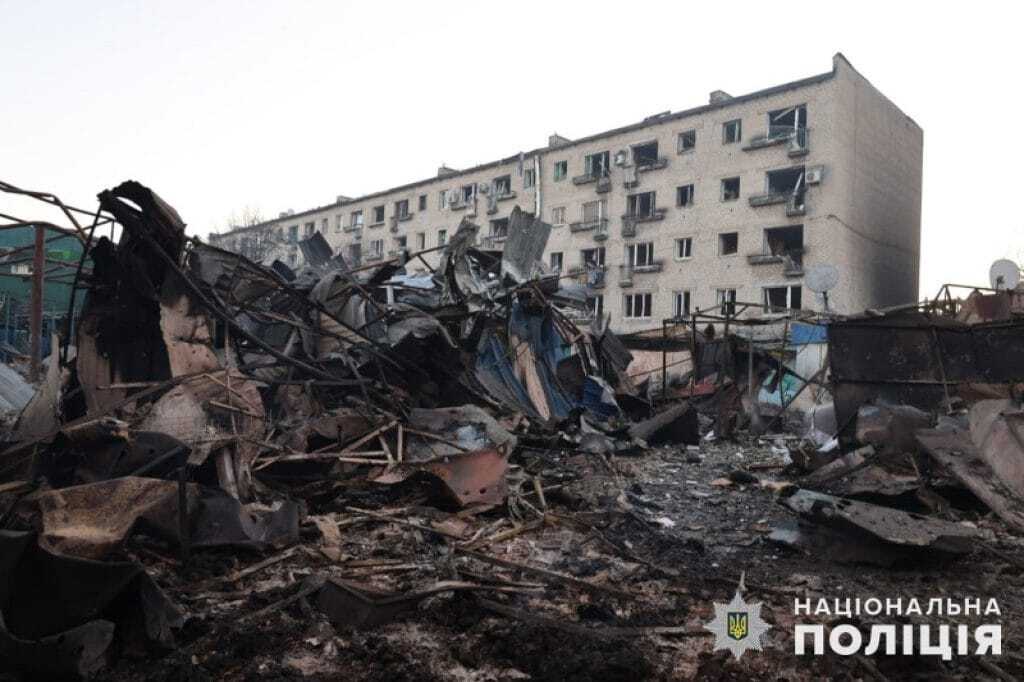
Ukraine’s 1st “Azov” Corps has been tasked with containing Russian advances near the city of Dobropillia in eastern Ukraine, the unit announced on August 12. The situation in that area has deteriorated sharply in recent days, raising concerns about the stability of Ukraine’s defense there.
“Several days ago,” the corps “assumed responsibility for the designated defense area in the Pokrovsk sector,” it stated on social media, referring to the area near the city of Pokrovsk, located around 15 kilometers south of Dobropillia. “The situation remains complex and dynamic,” it noted. “Units within the corps have planned and carried out actions to block enemy forces in the area.”
Ukrainska Pravda confirmed that Azov Corps forces are now fighting near Dobropillia. “This area was previously under the responsibility of the Pokrovsk Tactical Group, which, as Ukrainska Pravda’s military sources say, was completely failing to hold the defence on this section of the front,” the outlet reported.
The Azov Corps was formed earlier this year as part of an ongoing reform in which Ukraine is transitioning to a corps-based force structure and disbanding its tactical and operational-tactical groups, temporary command bodies responsible for specific parts of the front. The Azov Corps was built around the Ukrainian National Guard’s 12th “Azov” Brigade, which is one of Ukraine’s most capable units despite Western scrutiny over its far-right roots. The Azov Brigade was previously known to be fighting near Toretsk, another small city in the Donetsk region, though another brigade from the Azov Corps was already in the Pokrovsk sector.
For weeks, Pokrovsk and the adjacent city of Myrnohrad, together home to around 100,000 residents before the 2022 invasion, have faced a growing threat of encirclement. Russia has been trying to take the Pokrovsk-Myrnohrad agglomeration since last year, but is now close to cutting key roads into the cities after having wrapped around their northern flank.
Meanwhile, since late July, Russian forces have penetrated at least 15 kilometers deep near Dobropillia, according to DeepState, a respected Ukrainian analytical outfit that tracks battlefield developments using open-source data and information from troops. Russia may have reached the road from Dobropillia to Kramatorsk, a key logistics hub in Donetsk Oblast.
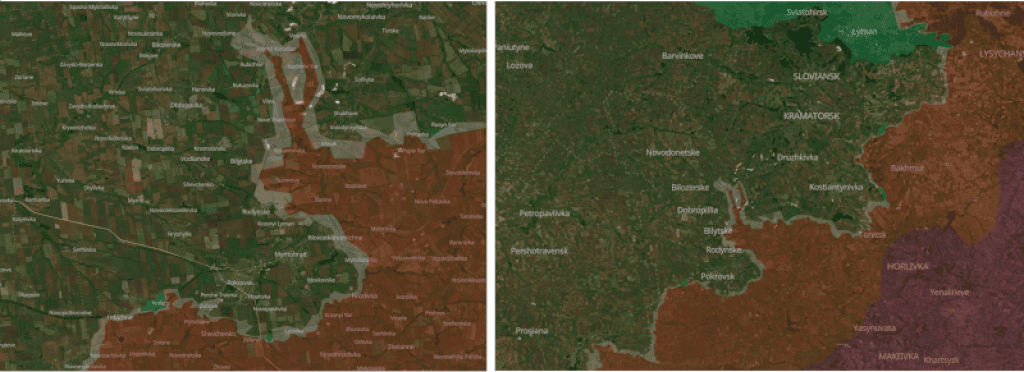
Reportedly, small groups of Russian dismounted infantry infiltrated through gaps in Ukraine’s lines and established footholds in several villages to bring up additional troops. This is in keeping with Russia’s current modus operandi across the front.
In recent months, Russia has mainly been attacking with small groups of infantry moving on foot (sometimes with cloaks that mask their heat signatures) or on motorbikes or utility terrain vehicles (UTVs). Russian soldiers typically seek to infiltrate as deep as they can through Ukraine’s porous, undermanned lines, then hunker down and wait for reinforcements. This approach results in heavy attrition but plays to Moscow’s advantage in manpower and can make it difficult for Ukrainian drone crews to destroy all the attackers.
In preparation for assaults, the Russians pound Ukrainian positions with glide bombs, artillery, and drone strikes. In concert, Russian drone units, particularly from the elite Rubicon Center, have sought to isolate pockets through frequent first-person view (FPV) drone strikes—including with wire-guided models immune to electronic warfare—on roads up to 20 kilometers deep or more. This approach resembles what Russia did in Kursk Oblast last winter and spring.
In addition to denying supplies to Ukrainian drone crews, Russian forces, led by Rubicon, have gotten better at suppressing or destroying those crews and intercepting their drones. These efforts challenge Ukraine’s ability to rely on drones of various types, coupled with mines and artillery, to thwart Russian assaults and compensate for a shortage of manpower.
At least so far, Russia has not managed to exploit its tactical success near Dobropillia to achieve an operational breakthrough. This sort of breakthrough is something Russia has proven unable to attain, despite holding the strategic initiative since fall 2023. Russian forces can breach Ukrainian lines through small-unit attacks, but they cannot mass armor and mechanized infantry to punch through and advance into the depths of Ukraine’s defense. This lack of penetration stems, in part, from Ukrainian adaptations, particularly its use of drones to spot and strike attacking forces quickly. Even small-scale attacks with armored vehicles have grown increasingly rare.
As analyst Rob Lee has noted, it is possible that Russia’s improvement in countering Ukrainian drone crews could help set the conditions for successfully massing forces. However, poor force quality following years of heavy attrition will still hinder Russia’s ability to scale attacks. And over time, Ukraine may find ways to counter Russian adaptations.
That said, the Ukrainian leadership has faced criticism for its decisions. Rather than trading space for maximal attrition of Russian forces, Kyiv requires units to cling to positions to retake them even when they are at risk of being encircled or located on unfavorable terrain. Fighting from inside pockets results in higher casualties and elongates the line of contact, necessitating more forces to hold it. Counterattacks to retake minor villages may similarly waste manpower and materiel.
These choices exacerbate Ukraine’s low manning levels in frontline units and paucity of reserves and incentivize false reporting up the chain. Due to a lack of reserves, Ukraine has repeatedly had to rush units from one sector to put out fires in another. Often, elements of one brigade get split off and attached to other formations, undermining cohesion.
Lieutenant Colonel Bohdan Krotevych, former chief of staff of the Azov Brigade, publicly raised some of these issues on Monday, calling for Ukraine’s top general to be replaced.