The head of engineering for the Egyptian Armed Forces, Major General Tahir Abdullah, announced today that authorities had successfully demolished 154 of 276 tunnels between Egypt and Gaza. At least 137 tunnels were destroyed twice, Abudallah said, as smuggling operations had resumed within them after they were first targeted.
Abdullah stressed that authorities are working nonstop to close the tunnels. According to Ma’an News Agency, the 276 tunnels were “previously unknown.” A recent Reuters report stated that the number of tunnels between Gaza and Egypt was around 1,000. Other reports have put the number higher, while still others have said it is much lower.
Today’s announcement comes after a number of reports in April of successful operations against smuggling, in particular the smuggling of weapons, in the Sinai and near Egypt’s border with Libya. In February, Essam Haddad, national security adviser to Egyptian President Mohammed Morsi, said Egypt was targeting smuggling tunnels between Egypt and Gaza because “[w]e don’t want to see these tunnels used for illegal ways of smuggling either people or weapons that can really harm Egyptian security.”
Today authorities also announced the seizure of a lifeboat that was being smuggled from Egypt to Gaza. And yesterday, security forces seized 10 vehicles that were being smuggled to Gaza and destroyed at least one tunnel. In addition, in the western part of Egypt, near the Salloum land port, authorities interdicted a cache of drugs and weapons.
|
|
| Weapons and drugs seized by Egyptian authorities on May 5. |

On May 1, authorities announced a successful operation against a weapons smuggling attempt through the Salloum land port, a key crossing between Egypt and Libya. On the same day, a smuggling tunnel that was approximately 16 feet wide and 13 feet deep was destroyed near Rafah.
On April 28, authorities announced the seizure of a number of missiles near Siwa, not far from the Libyan border. Three days earlier, Egyptian authorities announced they were questioning an 11-member jihadist cell that was apprehended the week before. The cell, which was said to include Egyptian, Palestinian, and Lebanese citizens, was plotting to target an Egyptian military installation in Rafah.
|
|
| Missiles seized by Egyptian authorities on April 28. |

On April 24, authorities seized and performed a controlled detonation of an explosives cache found in el Arish. The day before, authorities interdicted a number of weapons in western Egypt near Libya. On April 22, authorities discovered weapons and drugs in a raid in the Sinai that resulted in the arrest of at least one person.
On April 20, the Interior Ministry announced it had provided Sinai police with heavier weapons to help target “hostile targets.” On the same day, authorities said they had successfully demolished a “giant” smuggling tunnel between Egypt and the Gaza Strip.
Five days earlier, a weapons cache, including mines and antiaircraft weaponry, which was destined for the Gaza Strip, was seized by authorities in the Sinai. A second cache of weaponry also in the Sinai was discovered later in the day. The previous day, authorities seized a number of automatic weapons from a vehicle traveling near the El Salam Bridge.
On April 13, authorities prevented the smuggling of weapons, money, and drugs at the Salloum land port. The day before, authorities found a weapons cache that included TNT and antitank mines in el Arish
On April 10, four suspected jihadists in the possession of weaponry were arrested by Egyptian authorities in Rafah. A couple of days later, authorities seized a variety of arms and ammunition from a weapons cache approximately three miles from the border with Israel. On the same day, a second cache of weapons was discovered in central Sinai.
|
|
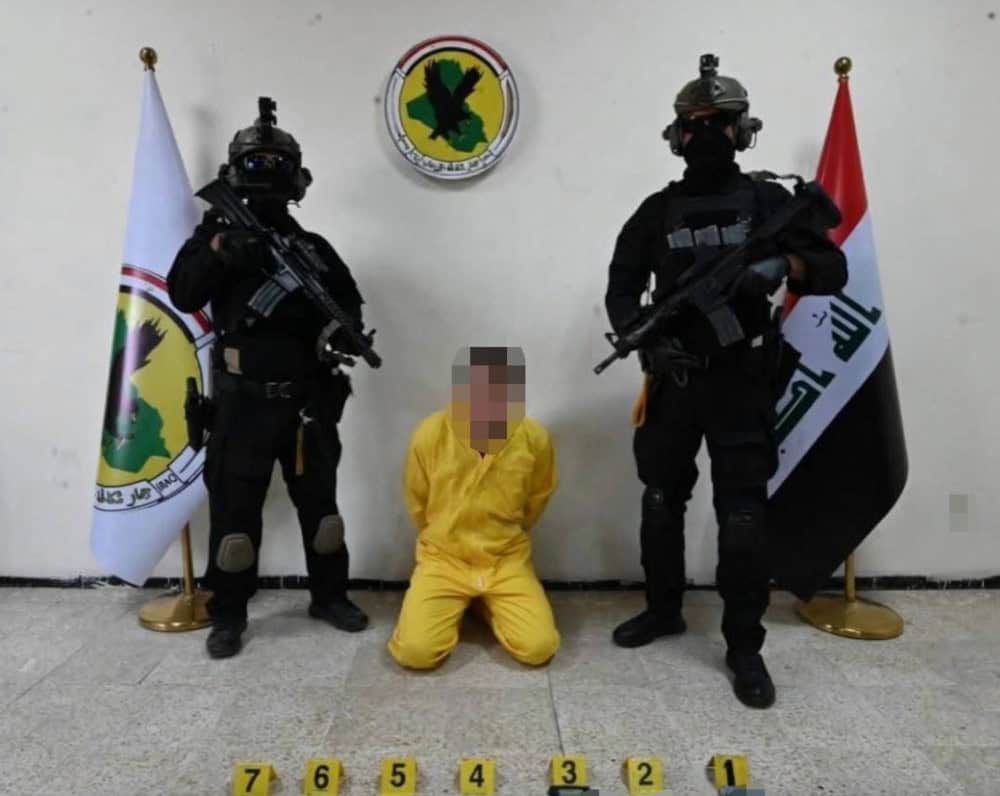
| Four suspected jihadists arrested in Rafah on April 10. |

Two days before these discoveries, authorities seized an explosives cache in Rafah that was intended to be smuggled into the Gaza Strip. And on April 2, Egyptian authorities arrested 15 suspected Islamist militants in the Sinai, and seized a weapons cache in the Sinai that included antiaircraft missiles.
Although these announcements may appear minor, recent reports suggest that increased operations in the Sinai, among other factors, have prevented Hamas from replenishing its weapons arsenal since the end of Operation Pillar of Defense in November. According to the Tower, Egyptian and Israeli officials have both stated that since the end of Pillar of Defense, “no long-range missiles have entered Gaza.”