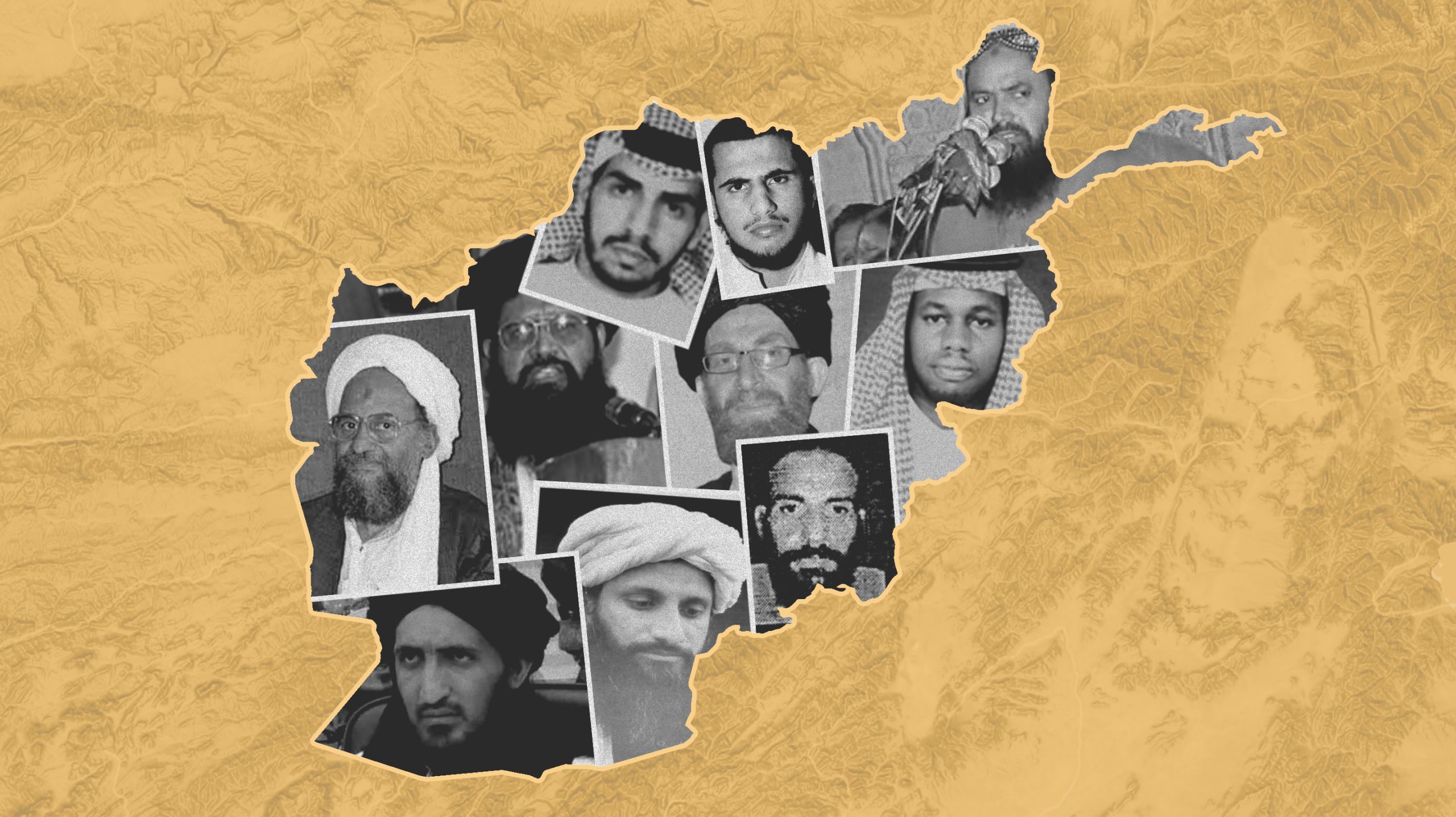
On Thursday, Joshua Foust published an article at PBS’s Need to Know that, though avoiding the term “constructive disengagement,” mirrors the arguments advanced by Bronwyn Bruton’s report for CFR, and those made by Fareed Zakaria in the wake of the bombings al Shabaab executed in Uganda. Though constructive disengagement is often advanced as a minor-league panacea to Somalia’s ills, I tend to have several issues with the way arguments for this solution are constructed, and Foust’s article is no exception. Using Foust’s piece as a basis for discussion, this entry will analyze some of the general problems with the advocacy of constructive disengagement.
I should say up front that I both like and respect Foust. He is smart, typically well-researched, and has little tolerance for sloppy, dishonest, or illogical argumentation. Thus, though I will argue at length that various oversimplifications in the way he frames aspects of the Somalia conflict unfairly shape his conclusion, I do not attribute this to dishonesty on his part. Rather, I think that his unfamiliarity with the Horn of Africa coupled with an over-reliance on the conclusions proffered by various secondary sources causes Foust’s thinking to reflect some of the unwarranted conventional wisdom that can be found in a certain segment of the literature.
Were the Islamic Courts an Islamic bogeyman?
One of the presumptions common to all arguments for constructive disengagement is that the threats of Islamism or jihadism in Somalia have been massively overstated by Western analysts. As Foust writes: “[T]he West seems to obsess on the messy southern part of Somalia, a region almost settled in 2006 by a confederation of Islamist factions, but then disbanded and thrown back into chaos by a misguided U.S. policy that sees Islamic boogeymen [sic] around every corner.” Thus, in Foust’s view, the West’s misperceptions extend back to the Ethiopian invasion of Somalia in 2006, when it intervened on behalf of the UN-recognized transitional federal government, and pushed the Islamic Courts Union (ICU) back from areas that it had come to control. This invasion was supported financially, and in other ways, by the US, and I know of no analyst who would argue that the invasion has gone well. Thus, several sources — including Marc Lynch, Martin Fletcher, Matt Yglesias, and the Los Angeles Times editorial page — have argued that the real threat was caused by the invasion itself. As the Los Angeles Times put it: “Al Shabab probably would not exist were it not for the disastrous failure of U.S. policies in Somalia.”
But the fact that the Ethiopian invasion has been frankly disastrous does not prove that the ICU was in fact “relatively moderate” (Lynch’s words), or that al Shabaab would have been marginalized within the ICU absent the invasion. I do not want to revisit the question of what the proper response to the ICU’s rise would have been (a question beyond the scope of this already long entry), but instead challenge the view that the ICU should clearly be understood as a relatively moderate Islamist movement. (I should note that it’s not clear this is precisely Foust’s position, but it’s an argumentative thread that tends to run through advocacy of constructive disengagement, and is suggested by his “Islamic bogeymen” remark.)
Bill Roggio, in a devastating response to one of Yglesias’s contributions to this debate, has pointed out a number of reasons that the ICU was seen as a threat in 2006. Roggio’s response is worth reading in full for those who are interested in this historical question, but I will highlight a few critical points. First, Roggio notes that known al Qaeda operatives served as leaders within the ICU; in fact, one reason I am deeply skeptical of the idea that Shabaab would have been marginalized absent the Ethiopian invasion is that Shabaab’s founder, Aden Hashi ‘Ayro, was the prot